Preview
 Send
Send Share
Share
 Details
 Guide
Guide

 Download
 Similars
 X-Ray
X-Ray Diaporama
 Stats
StatsLandscape

 Read More
Giclée / Art Print
Museum-quality giclée or canvas print with fast production and flexible finish options. ( Buy Hand Made Painting Switch to Digital Image)




































Pick from our preset sizes that match the artwork's original proportions.

You may enter your own dimensions to fit a specific frame or space. If your selected size does not match the original image's proportions, we will either crop the artwork or extend the image with a mirrored or solid-fill edge. A digital mockup will be sent for your approval before production begins.
Please note that the on-screen preview does not reflect the actual cropping or extension. Only the mockup will accurately show the final composition.
While custom sizes are available, we recommend selecting a dimension from the predefined list to preserve the original proportions.
Worldwide Delivery () in 2 weeks instead of standard 4/5 weeks. (26 September)

Free Worldwide Express Shipping

High-Quality Linen Canvas

Full Shipping Insurance

Customs Tax Refund Guarantee

True Color Matching Guarantee

100-Day Return Policy (Defects Only)

100% Money-Back Guarantee

Bulk Discount Offer
 Glass option is only available in size under 110 CM

Landscape
Giclée / Art Print
Reproduction Size
-


Total Price
$ 81
Artist Biography
John Edward Brett: A Pioneer of Scientific Landscape Painting
John Edward Brett (1830-1902) stands as a pivotal figure in British Pre-Raphaelite art, distinguished by his unwavering dedication to meticulous observation and artistic representation of the natural world. Born in Lincolnshire, England, Brett’s formative years instilled within him a profound fascination for geology and botany – passions that would irrevocably shape his artistic vision and propel him to become one of the foremost landscape painters of his era. Unlike many of his contemporaries who prioritized idealized beauty, Brett approached nature with a scientist's rigor, meticulously documenting geological formations and plant species with unparalleled accuracy. This commitment to scientific detail wasn’t merely an intellectual pursuit; it served as the bedrock for his artistic endeavors, informing his compositions and imbuing them with palpable realism.- Early Life & Education: Brett's upbringing fostered a love of science alongside artistic inclination. He studied at Lincoln Art School and later honed his skills at the Royal Academy in London, absorbing influences from artists like Turner and Ruskin – figures who championed the revival of medieval art and advocated for a return to naturalistic representation.
- The Cornish Influence: Brett’s artistic breakthrough occurred during his expeditions to Cornwall, where he embarked on extensive geological surveys alongside fellow Pre-Raphaelites. The rugged coastline, dramatic granite tors, and vibrant flora captivated him, inspiring a prolific output of paintings depicting these landscapes with breathtaking detail.
- Technique & Style: Brett’s distinctive style is characterized by thick impasto brushstrokes—a technique deliberately chosen to convey the texture and physicality of stone and vegetation. He employed glazing methods to achieve luminous color palettes that captured the subtleties of light and atmosphere, mirroring Ruskin's belief in the importance of capturing “the spirit of place.”
Notable Works & Artistic Achievements
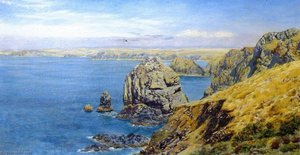
Brett’s oeuvre encompasses a remarkable range of subjects, reflecting his multifaceted interests. Among his most celebrated paintings are "Cape Cornwall from Whitesand Bay," "Head of a Young Boy," and "The Glacier of Rosenlaui"—each demonstrating his mastery of landscape painting and his ability to convey profound emotional resonance. “Cape Cornwall” exemplifies his meticulous geological rendering, capturing the grandeur of Cornwall’s coastline with astonishing precision. Similarly, “Head of a Young Boy,” showcases Brett's skill in portraiture alongside his commitment to realism. However, it was "The Glacier of Rosenlaui" that cemented his reputation as a visionary artist—a monumental canvas depicting the sublime beauty of Switzerland’s glacial landscape and embodying Ruskin’s aesthetic ideals.- “Cape Cornwall from Whitesand Bay” – Demonstrates Brett's geological accuracy and masterful use of impasto technique.
- “Head of a Young Boy” – Exemplifies Brett’s ability to blend realism with psychological insight.
- “The Glacier of Rosenlaui” – Considered a cornerstone of Pre-Raphaelite landscape painting, reflecting Ruskin's influence and capturing the majesty of Alpine scenery.
Legacy & Historical Significance
John Edward Brett’s contribution to British art extends far beyond his individual paintings. He championed Ruskin’s aesthetic philosophy—a belief that art should serve as a conduit for moral instruction and inspire contemplation of the natural world—establishing himself as one of the foremost voices advocating for scientific observation within artistic practice. His meticulous depictions of landscapes resonated deeply with Victorian audiences, fostering an appreciation for geological science and bolstering the Pre-Raphaelite movement’s commitment to portraying nature truthfully. Today, Brett's artworks continue to inspire admiration for their technical brilliance and emotional depth—testaments to his enduring legacy as a pioneer of scientific landscape painting and a champion of Ruskinian ideals.
John Edward Brett
1830 - 1902 , United Kingdom
Quick Facts
- Artistic Movement Or Style: Pre-Raphaelite art
- Artists Who Influenced This Artist:
- William Holman Hunt
- John Ruskin
- Date Of Birth: 1830
- Full Name: John Edward Brett
- Nationality: British
- Notable Artworks:
- Cape Cornwall from Whitesand Bay
- Head of a Young Boy
- The Glacier of Rosenlaui
- Place Of Birth: United Kingdom