- Home

- Print on canvas
- John Duncan Fergusson
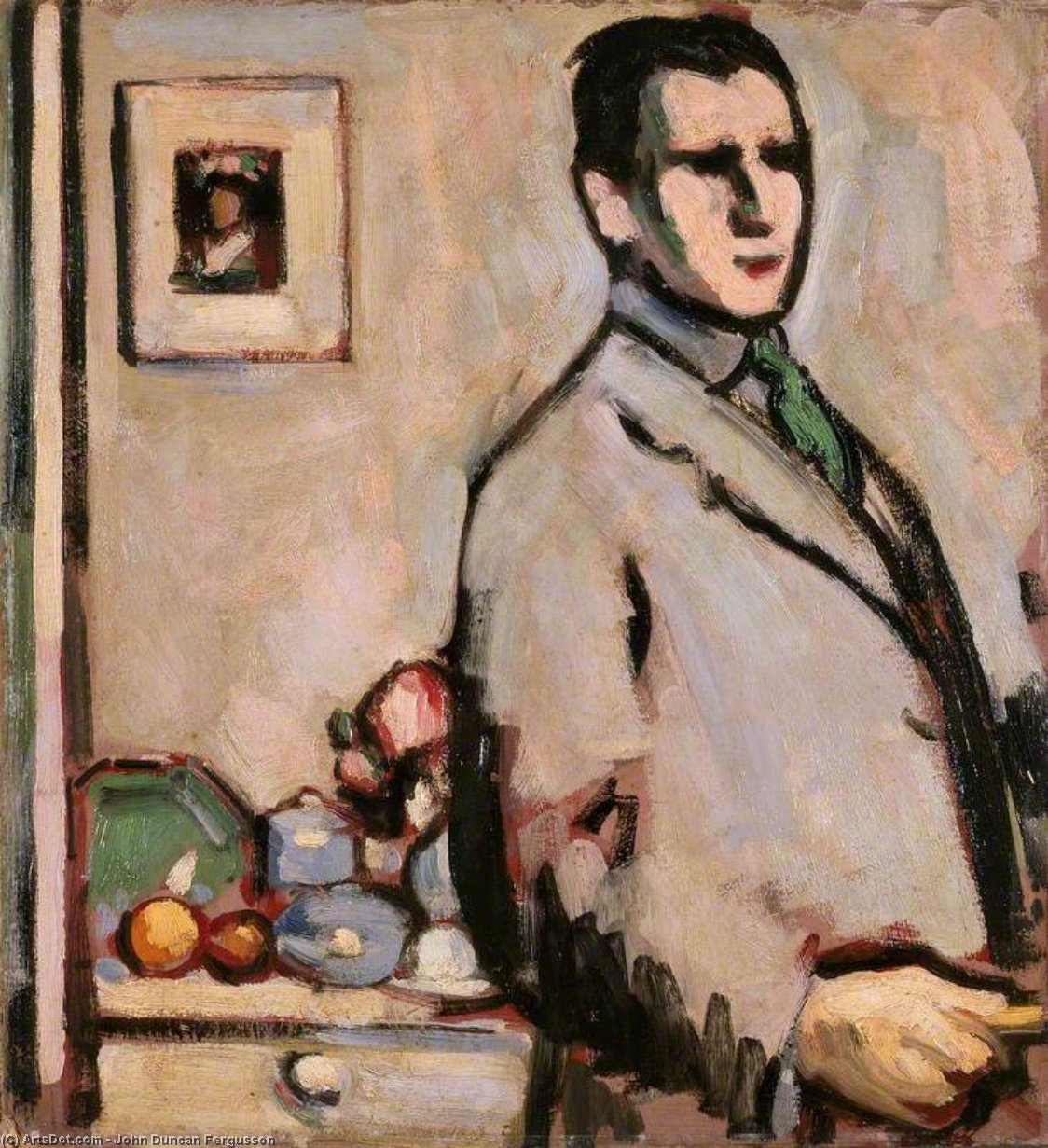
- Self Portrait -
 Buy Painting
 Send
Send Share
Share
 Details

 Download
 Similars
 X-Ray
X-Ray Diaporama
Self Portrait -
 Read More
Giclée / Art Print
Museum-quality giclée or canvas print with fast production and flexible finish options.




































Pick from our preset sizes that match the artwork's original proportions.

You may enter your own dimensions to fit a specific frame or space. If your selected size does not match the original image's proportions, we will either crop the artwork or extend the image with a mirrored or solid-fill edge. A digital mockup will be sent for your approval before production begins.
Please note that the on-screen preview does not reflect the actual cropping or extension. Only the mockup will accurately show the final composition.
While custom sizes are available, we recommend selecting a dimension from the predefined list to preserve the original proportions.
Worldwide Delivery () in 2 weeks instead of standard 4/5 weeks. (22 July)

Free Worldwide Express Shipping

High-Quality Linen Canvas

Full Shipping Insurance

Customs Tax Refund Guarantee

True Color Matching Guarantee

60-Day Return Policy (Defects Only)

100% Money-Back Guarantee

Bulk Discount Offer
 Glass option is only available in size under 110 CM

Self Portrait -
Giclée / Art Print
Reproduction Size
-


Total Price
-
Artist Biography
A Life Immersed in Colour: The Journey of John Duncan Fergusson
John Duncan Fergusson, a name synonymous with the vibrant energy of the Scottish Colourists, was more than just a painter; he was a conduit for modernism, translating the radical shifts happening across Europe into a distinctly Scottish visual language. Born in Leith, Edinburgh, in 1874, his path to artistic renown wasn’t straightforward. Initially considering a career in naval surgery, Fergusson quickly discovered that his true calling lay not in healing bodies but in capturing the essence of life on canvas. This early divergence speaks volumes about a restless spirit, one constantly seeking new forms of expression and unafraid to abandon convention. His initial training at the Trustees’ Academy proved stifling; he found its rigid structure ill-suited to his burgeoning artistic vision, opting instead for self-directed study and extensive travel across Europe – a journey that would irrevocably shape his aesthetic sensibilities. These early explorations weren't merely geographical; they were voyages into different ways of seeing, of feeling, and ultimately, of painting.Parisian Awakening and the Embrace of Modernity
The pivotal moment in Fergusson’s artistic development arrived with his first trip to Paris in 1898. Immersing himself in the city's vibrant art scene, he was profoundly impacted by the Impressionists at the Salle Caillebotte. This exposure wasn’t simply about adopting a new technique; it was an awakening to the possibilities of light and colour as expressive forces. He began to understand that painting could be less about meticulous representation and more about capturing fleeting moments, subjective impressions, and the emotional resonance of a scene. However, Fergusson didn't remain tethered to Impressionism for long. The burgeoning movement of Fauvism – with its bold, non-naturalistic colours and simplified forms – exerted an equally powerful influence. He embraced this radical approach, recognizing in it a freedom that allowed him to convey not just what he *saw*, but how he *felt*. This embrace of Fauvist principles became a defining characteristic of his mature style, setting him apart from many of his contemporaries. His relationship with American illustrator Anne Estelle Rice also proved crucial during this period; she became both a muse and an artistic companion, encouraging her own creative pursuits while frequently appearing as a subject in his portraits.The Scottish Colourist and a Unique Artistic Voice
Upon returning to Scotland, Fergusson became a central figure within the group that would become known as the Scottish Colourists – alongside Samuel Peploe, Francis Cadell, and George Hunter. While each artist possessed a unique style, they shared a common commitment to capturing the beauty of their native land through vibrant colour palettes inspired by French Impressionism and Post-Impressionism. However, Fergusson’s contribution was particularly distinctive. He wasn't simply replicating what he had learned in Paris; he was synthesizing those influences with his own Scottish sensibility, creating a style that was both modern and deeply personal. Andre Dunoyer de Segonzac eloquently captured the essence of Fergusson’s art, describing it as “a deep and pure expression of his immense love of life.” This sentiment encapsulates the emotional intensity present in his work – a vitality that radiates from canvases depicting bustling street scenes, intimate portraits, and evocative landscapes. His paintings aren't merely representations; they are celebrations of existence, imbued with a palpable sense of joy and energy.Legacy and Lasting Influence
Fergusson’s commitment to fostering a vibrant artistic community extended beyond his own painting practice. In 1940, he founded the New Art Club in Glasgow, which later evolved into the New Scottish Group of Painters, with Fergusson serving as its first president. This demonstrated his dedication to providing opportunities for emerging artists and promoting progressive art within Scotland. The establishment of a permanent gallery dedicated to his work in Perth in 1992 solidified his place in Scottish art history, ensuring that future generations could experience the power and beauty of his paintings. Today, his works are held by institutions like the University of Stirling, and continue to captivate audiences with their bold colours, expressive brushwork, and unwavering celebration of life. John Duncan Fergusson’s contribution to modern British art is undeniable. He redefined how Scotland's landscapes and people were represented on canvas, bridging the gap between European artistic trends and a distinctly Scottish identity. His legacy continues to inspire artists today, cementing his position as one of the most important figures in 20th-century Scottish art – a true master of colour and emotion.
John Duncan Fergusson
1874 - 1961 , United Kingdom
Quick Facts
- Artistic Movement Or Style: Scottish Colourism, Fauvism
- Artists Or Movements Influenced By This Artist: ['Scottish Colourists']
- Artists Who Influenced This Artist:
- Whistler
- Matisse
- Picasso
- Date Of Birth: March 9, 1874
- Date Of Death: 1961
- Full Name: John Duncan Fergusson
- Nationality: Scottish
- Notable Artworks:
- People and Sails at Royan
- Fiacre In Spanish Street
- The Japanese Statuette
- Place Of Birth: Leith, UK