Romantic Landscape Painting
Flatford Mill (John Constable)
John Constable (1776–1837) made Flatford Mill. It belongs to the Romantic Landscape Painting movement. It is made in acrylic on canvas. It is kept at Tate Britain in London, United Kingdom.
- Acrylic On Canvas
- Tate Britain, London

 Preview

 Hand Made Oil Painting
 Send
 Share
 Fact sheet


 Download
 Similars
 X-Ray
 Diaporama
 Q&A

 Stats
Flatford Mill, in brief
- Title
- Flatford Mill
- Artist
- John Constable (1776–1837)
- Artist born in
- East Bergholt, United Kingdom
- Medium
- Acrylic On Canvas
- Where to see it
- Tate Britain, London, United Kingdom
- Movement
- Romantic Landscape Painting
- Subject
- landscape painting, rural scene, river mill, british art, light & shadow, pastoral imagery
What does Flatford Mill depict?
Flatford Mill: A Symphony of Light and Rural Tranquility
John Constable’s Flatford Mill, completed in 1816-17, stands as a cornerstone of Romantic landscape painting—a testament to the burgeoning fascination with capturing the sublime beauty of the English countryside. More than just a depiction of a riverside scene, it embodies a profound philosophical stance: Constable sought not merely to represent what he saw but to convey the very essence of rural life and its connection to the divine.
Composition and Observation
The painting’s visual arrangement is deceptively simple yet meticulously crafted. Constable expertly utilizes perspective—a technique pioneered by Leonardo da Vinci—to create a convincing illusion of depth, drawing viewers into the tranquil expanse of the River Stour. At its heart lies a modest boat moored on the bank, anchoring the eye and establishing a sense of stillness. Scattered around are figures – notably a gentleman on horseback – adding movement against the backdrop of rolling hills and a sky brimming with fluffy cumulus clouds. The inclusion of a bird perched atop a tree branch subtly reinforces the painting’s connection to nature, mirroring Constable's belief that art should aspire to reflect God’s creation.
The Language of Light and Color
Constable’s artistic brilliance resides primarily in his masterful manipulation of light. He employs atmospheric perspective—a technique where distant objects appear paler and less detailed—to heighten the sense of depth and convey the ethereal quality of dawn or dusk. The dominant hues are soft golds and muted blues, reflecting the golden glow of sunrise and the cool serenity of the river water. These colors aren’t merely decorative; they communicate emotion – warmth, peace, and contemplation. Constable's brushstrokes are loose and expressive, capturing the fleeting effects of light on foliage and water surfaces with remarkable accuracy.
Historical Context and Artistic Significance
Painted during a period marked by intellectual ferment—the Romantic movement—Flatford Mill reflects the broader artistic preoccupation with emotion and imagination. Influenced by thinkers like Rousseau and Wordsworth, Constable sought to elevate landscape painting beyond mere topographical representation. He aimed to evoke feelings of awe and wonder, prompting viewers to contemplate the grandeur of God’s universe and their own place within it. This ambition aligns perfectly with the prevailing ethos of the time—a rejection of Enlightenment rationalism in favor of subjective experience.
A Legacy Enduring Through Reproduction
OriginalUniqueArt.com recognizes Flatford Mill's enduring appeal, offering meticulously crafted oil painting reproductions that faithfully preserve Constable’s artistic vision. These reproductions utilize archival-quality pigments and canvases, guaranteeing longevity and ensuring that the painting’s luminous colors and textural nuances remain vibrant for generations to come. It’s a chance to bring home a piece of Romantic art history—a timeless symbol of beauty and tranquility.
Which museum holds Flatford Mill?
Tate Britain
London, United Kingdom
The Origins and History of Tate Britain The foundations of Tate Britain were laid by Sir Henry Tate, whose vision established a dedicated space for the nation's artistic output. The institution opened its doors on 21 July 1897, initially operating under the name National Gallery of British Art. This early period focused on securing a permanent home for the country's visual history, building a collection that would grow alongside the changing landscape of British creativity.


High-resolution images of Flatford Mill

John Constable, Flatford Mill, Tate Britain. Public domain.
Questions on Flatford Mill, answered
Where can I see the original "Flatford Mill" by John Constable?
You can see the original "Flatford Mill" at the Tate Britain, London, United Kingdom.
What technique was used for "Flatford Mill" by John Constable?
"Flatford Mill" is executed in acrylic on canvas.
What subjects appear in "Flatford Mill" by John Constable?
The subjects of "Flatford Mill" are landscape painting, rural scene, river mill, british art, light & shadow, pastoral imagery, romanticism, constable.
Is "Flatford Mill" by John Constable in the public domain?
"Flatford Mill" by John Constable is in the public domain - its copyright has expired. This status governs how the image of the work may be reproduced.
Which artist is "Flatford Mill" attributed to?
"Flatford Mill" is attributed to John Constable.
What art movement does "Flatford Mill" by John Constable belong to?
"Flatford Mill" by John Constable belongs to the Romantic Landscape Painting movement. This movement provides the stylistic context of the work.
What stage of John Constable's development does "Flatford Mill" represent?
Within John Constable's career, "Flatford Mill" falls in the Mature Period. The phase helps compare it with the artist's other works.
Why is the copyright status of "Flatford Mill" what it is?
"Flatford Mill" by John Constable is in the public domain - its copyright has expired. Copyright terms are measured from the artist's death, and John Constable died in 1837.
Is "Flatford Mill" held in the country of its creator?
Yes - the artwork is kept in the artist's home country. John Constable was born in United Kingdom, and the original "Flatford Mill" is held in a museum in United Kingdom.
About the artist, John Constable
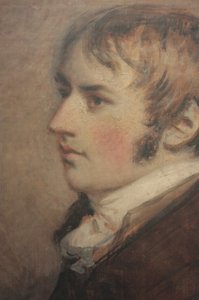
1776–1837, United Kingdom
John Constable
Early Life, Family and Training John Constable was born in 1776 in the village of East Bergholt, Suffolk. He was the second son of Golding and Ann (Watts) Constable. His father was a prosperous corn and coal merchant who owned Flatford Mill. This connection to the river and the local trade meant that the rhythms of the water and the movement of goods were part of the household's daily life.
Also by John Constable
 The Hay Wain1821
 View of Salisbury Cathedral from the Bishop's Grounds1823
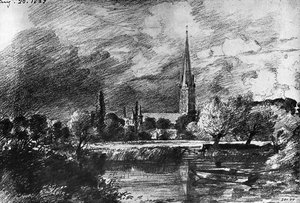 Salisbury cathedral
 The Hay-Wain (detail)1821

Essays around Flatford Mill
 Capturing the English Landscape: The Timeless Mastery and Romantic Legacy of John ConstableExplore the profound legacy of John Constable. Discover how his mastery of light, atmosphere, and the English landscape redefined Romantici…
 10 Iconic Masterpieces That Defined Romantic Landscape PaintingJourney through the sublime beauty of Romantic landscape painting. Explore 10 iconic masterpieces by legends like Friedrich and Turner that…
 Mastering the English Landscape: The Top 25 Artworks by John ConstableImmerse yourself in the soul of the English countryside with our curated guide to John Constable's top 25 masterpieces. Explore the emotive…