

 Preview
 Send
Send Share
Share
 Details

 Download
 Similars
 X-Ray
X-Ray Diaporama
Large raven


 Read More
Giclée / Art Print
Museum-quality giclée or canvas print with fast production and flexible finish options. ( Buy Hand Made Painting Buy Image)




































Pick from our preset sizes that match the artwork's original proportions.

You may enter your own dimensions to fit a specific frame or space. If your selected size does not match the original image's proportions, we will either crop the artwork or extend the image with a mirrored or solid-fill edge. A digital mockup will be sent for your approval before production begins.
Please note that the on-screen preview does not reflect the actual cropping or extension. Only the mockup will accurately show the final composition.
While custom sizes are available, we recommend selecting a dimension from the predefined list to preserve the original proportions.
Worldwide Delivery () in 2 weeks instead of standard 4/5 weeks. (22 August)

Free Worldwide Express Shipping

High-Quality Linen Canvas

Full Shipping Insurance

Customs Tax Refund Guarantee

True Color Matching Guarantee

60-Day Return Policy (Defects Only)

100% Money-Back Guarantee

Bulk Discount Offer
 Glass option is only available in size under 110 CM

Large raven
Giclée / Art Print
Reproduction Size
-


Total Price
$ 81
Collectible Description
Artist Biography
Johanasie Illauq: Sculpting the Spirit of the Arctic
Born in 1949 in Clyde River, nestled on Baffin Island in Canada’s vast and breathtaking Arctic territory, Johanasie Illauq is a profoundly significant figure within Inuit art. His work transcends mere representation; it's an embodiment of his culture’s deep connection to the land, its mythology, and the enduring spirit of Chamanism – a belief system interwoven with the natural world and spiritual practices that have shaped Inuit life for millennia. Illauq’s sculptures, primarily crafted from serpentinite and stéatite, are not simply objects; they are powerful conduits to ancestral stories, embodying the essence of his people's history and worldview.
Illauq’s artistic journey began within a community steeped in tradition. The Inuit culture, historically reliant on hunting and deeply connected to the rhythms of the seasons, has long expressed itself through art – carving, weaving, and storytelling. Illauq’s early influences were undoubtedly shaped by this rich heritage, absorbing the techniques and symbolic language passed down through generations. However, he quickly developed a distinctive voice, characterized by an intense realism combined with a profound understanding of the spiritual significance embedded within each form. His work is frequently described as rooted in the traditions of Chamanism – a belief system that emphasizes communication with spirits, healing rituals, and a deep respect for the interconnectedness of all living things. This connection to the spirit world is palpable in the intensity of his gaze and the powerful presence of his subjects.
The Language of Stone: Technique and Symbolism
Illauq’s mastery lies not just in his artistic vision but also in his technical skill. Working primarily with serpentinite and stéatite – stones readily available in the Arctic landscape – he demonstrates an extraordinary ability to coax form from their rugged surfaces. The process is demanding, requiring immense patience, precision, and a deep understanding of the stone’s inherent qualities. He meticulously chips away at the material, revealing intricate details through painstaking labor. His sculptures often depict animals central to Inuit life: caribou, seals, polar bears, and particularly the raven – a creature holding complex symbolic meaning within the culture, representing both wisdom and trickery, creation and destruction.
The symbolism embedded in Illauq’s work is rich and layered. The realistic portrayal of animals isn't merely observational; it’s imbued with spiritual significance. Each curve, each feather, each expression carries a narrative – a connection to the animal’s spirit, its role in the ecosystem, and its place within Inuit cosmology. Serpentinite, often dark and textured, is frequently used for depictions of powerful animals like bears and seals, while stéatite lends itself beautifully to capturing the delicate features of birds and caribou. The use of negative space – strategically left uncarved – further enhances the sculptures’ expressive power, creating a sense of movement and dynamism.
Major Works and Recognition
Illauq's career has garnered significant recognition within the art world. His sculpture ‘Large raven,’ created in 1988, stands as a testament to his skill and vision. This piece, now part of the collection at the Musée national des beaux-arts du Québec, exemplifies his ability to capture both the physical form and the spiritual essence of the subject. The intricate details, combined with the powerful presence of the raven, create an arresting image that speaks volumes about Inuit culture and beliefs.
Beyond ‘Large Raven,’ Illauq’s work has been exhibited internationally, including in France and Belgium, further establishing his reputation as a leading contemporary Inuit artist. His sculptures have consistently commanded high prices at auction, reflecting their artistic merit and cultural significance. The consistent interest in his art underscores the growing appreciation for Indigenous voices and perspectives within the global art market.
A Living Legacy
Despite his age, Johanasie Illauq remains an active artist, continuing to create works that reflect his deep connection to his heritage. He is a living embodiment of Inuit artistic tradition, preserving and evolving it for future generations. His sculptures are not merely beautiful objects; they are vital links to the past, powerful expressions of the present, and enduring symbols of Inuit resilience and cultural identity. Illauq’s work serves as a poignant reminder of the importance of safeguarding Indigenous cultures and supporting artists who carry within them the stories and wisdom of their ancestors.

johanasie illauq
1949 - , Canada
Quick Facts
- Artistic Movement Or Style: Chamanism & Inuit culture
- Date Of Birth: 1949
- Full Name: Johanasie Illauq
- Nationality: Canadian (Inuit)
- Notable Artworks: ['Large raven (1988)']
- Place Of Birth: Clyde River, Canada
Related Articles

Bronze Sculptures That Defined Art History | OriginalUniqueArt
Journey through art history with our Top 10 bronze sculptures! Explore masterpieces by Rodin, Michelangelo & more. Discover stories behind iconic statues and find museum-quality reproductions for your home decor at OriginalUniqueArt.com.

The Enduring Form: Exploring Themes & Techniques in Sculpture Across Historical Periods
Explore the rich history of sculpture from ancient masterpieces to contemporary innovations. Discover key techniques, influential artists & investment potential for discerning art collectors.
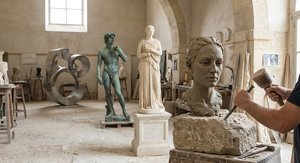
The Enduring Form: Sculpture Across History, Technique & Emotional Resonance
Explore the rich history of sculpture with OriginalUniqueArt. Discover key techniques, influential artists & investment potential for discerning collectors. Expert insights into valuing and collecting timeless masterpieces.

Bronze Age to Modern Masters: 10 Sculptures That Redefined Art | OriginalUniqueArt
Journey through art history with 10 legendary bronze sculptures – from Michelangelo's David to Rodin’s Thinker. Explore the stories, techniques & timeless beauty of these masterpieces. Find museum-quality reproductions & elevate your home decor on OriginalUniqueArt.com.

The Enduring Allure of Marble in Art History: From Classical Sculpture to Modern Abstraction
Explore the captivating history of marble sculpture from ancient Greece to modern art. Discover renowned artists like Canova & Michelangelo, carving techniques, and investment insights at OriginalUniqueArt.


