Send
Send Share
Share
 Details
 Guide
Guide

 Download
 Similars
 Diaporama
 Stats
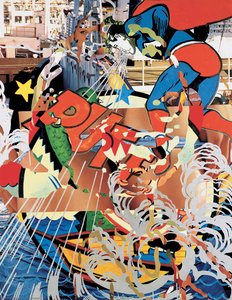
StatsKaldor Public Art Project 10: Jeff Koons 1995


 Read More
Giclée / Art Print
Museum-quality giclée or canvas print with fast production and flexible finish options. ( Buy Hand Made Painting Switch to Digital Image)




































Pick from our preset sizes that match the artwork's original proportions.

You may enter your own dimensions to fit a specific frame or space. If your selected size does not match the original image's proportions, we will either crop the artwork or extend the image with a mirrored or solid-fill edge. A digital mockup will be sent for your approval before production begins.
Please note that the on-screen preview does not reflect the actual cropping or extension. Only the mockup will accurately show the final composition.
While custom sizes are available, we recommend selecting a dimension from the predefined list to preserve the original proportions.
Worldwide Delivery () in 2 weeks instead of standard 4/5 weeks. (25 September)

Free Worldwide Express Shipping

High-Quality Linen Canvas

Full Shipping Insurance

Customs Tax Refund Guarantee

True Color Matching Guarantee

100-Day Return Policy (Defects Only)

100% Money-Back Guarantee

Bulk Discount Offer
 Glass option is only available in size under 110 CM

Kaldor Public Art Project 10: Jeff Koons 1995
Giclée / Art Print
Reproduction Size
-


Total Price
$ 81
A Monument to Innocence Amidst Urban Decay
In the heart of Sydney’s urban landscape, where the concrete pulse of the city meets the edge of contemporary expression, stands a marvel that defies the traditional boundaries of sculpture. The Kaldor Public Art Project 10, featuring Jeff Koons’ monumental masterpiece Puppy, serves as a breathtaking intersection of Pop Art aesthetics and profound emotional resonance. Created in 1995 for the Museum of Contemporary Art (MCA), this ambitious undertaking did more than just occupy space; it transformed the viewer's perception of what public art could achieve. The sculpture acts as a striking testament to the power of scale, using its massive presence to bridge the gap between the grit of the city and a sense of pure, unadulterated wonder.
The genesis of this colossal work was rooted in a much more intimate beginning. Koons’ artistic journey toward this floral giant began with White Terrier, a delicate wooden sculpture from 1991 that captured the quiet essence of canine companionship and domesticity. However, through a process of radical expansion, the miniature concept evolved into a macro-scale phenomenon. By inflating the familiar image of a puppy to an architectural dimension, Koons amplifies his core artistic concept: a universal communication of love, warmth, and happiness. For collectors and enthusiasts of high-end decor, this piece represents the ultimate triumph of idea over medium, turning a symbol of domestic affection into a landmark of global significance.
A Symphony of Blooms and Engineering Marvels
To behold Puppy is to witness a remarkable feat of both horticultural artistry and cutting-edge engineering. The execution of this work required a level of precision rarely seen in the realm of sculpture, blending traditional craftsmanship with modern technological advancement. The internal structure is a complex marvel, consisting of thirteen levels of reinforced concrete that were meticulously positioned and hydraulically stabilized. This robust skeleton provides the necessary support for the delicate living skin that defines the piece.
< p>The true magic lies in the vibrant, breathing surface of the sculpture. Utilizing advanced computer modeling, the artists and engineers managed to envelop the framework in a mesh structure that supports over 60,000 flowering plants. A carefully curated palette of impatiens, begonias, marigolds, chrysanthemums, brachyscome, and erigeron creates a lush, multi-textured tapestry that mimics the soft appearance of canine fur. This innovative approach—using living organisms to create a static form—underscores Koons's commitment to exploring the boundaries between the organic and the manufactured, making it an essential study for those interested in the evolution of contemporary materials.The Emotional Resonance of Pop Iconography
Beyond its technical brilliance, Puppy carries a deep symbolic weight that continues to captivate the art world. As a pivotal figure in late 20th-century art, Jeff Koons has mastered the ability to use kitsch and popular iconography to critique and celebrate consumer culture simultaneously. The sculpture evokes a sense of childhood nostalgia, inviting viewers to reconnect with a state of innocence and spiritual lightness. In an era often defined by societal anxieties, the sight of such a vibrant, blooming creature offers a moment of respite and joy.
For the discerning interior designer or art collector, a reproduction of this work offers more than just visual appeal; it brings a sense of narrative depth and emotional warmth to any space. The piece challenges the viewer to find beauty in the monumental and meaning in the everyday. It is an invitation to embrace the spectacular, making it a perfect centerpiece for those seeking to infuse their environments with a sense of wonder, history, and the enduring power of Pop Art.
Artist Biography
A Reflection of Our Times: The World of Jeff Koons
Born in York, Pennsylvania, in 1955, Jeff Koons emerged as a pivotal figure in the late 20th and early 21st-century art world, an artist whose work simultaneously celebrates and critiques consumer culture, kitsch, and the very notion of artistic value. His childhood, steeped in Catholic upbringing, instilled within him a fascination with imagery that would later become central to his aesthetic – a blend of innocence, spirituality, and the often-garish appeal of popular iconography. Koons’s early education at the School of the Art Institute of Chicago and then the Maryland Institute College of Art laid the groundwork for his artistic explorations, but it was his mentorship under Ed Paschke that truly ignited his passion for Pop Art techniques and philosophies. This influence would become a defining characteristic of his evolving style.From Vacuum Cleaners to Inflatables: Early Explorations
Koons’s initial foray into the art world in the 1980s was marked by a deliberate provocation, challenging conventional artistic boundaries. He began exhibiting works that featured everyday objects – vacuum cleaners, for instance – encased in pristine acrylic boxes, illuminated as if they were sacred relics. These weren't simply displays of household appliances; they were commentaries on consumer desire, the pursuit of cleanliness and perfection, and the elevation of the mundane to the realm of art. This series, titled “The New,” questioned what constituted artistic merit and forced viewers to confront their own relationship with material possessions. He didn’t create the objects themselves, but rather selected them, presenting pre-fabricated items as readymades in a manner reminiscent of Marcel Duchamp, yet infused with a distinctly American sensibility. This approach continued with his “Inflatables” series – large, brightly colored sculptures of flowers and rabbits, often placed alongside mirrors to distort reality and evoke the ephemeral joy of childhood. These works weren’t merely playful; they were explorations of perception, memory, and the fleeting nature of happiness.Stainless Steel and Monumental Scale: Achieving Icon Status
The late 1980s and 1990s witnessed Koons's ascent to international recognition with his breathtaking stainless steel sculptures. Pieces like “Rabbit” (1986), a highly polished, mirror-like representation of an inflatable bunny, and the iconic “Balloon Dog” (1994-2000) became instant symbols of contemporary art. These weren’t simply sculptures; they were feats of engineering and craftsmanship, requiring extensive teams of assistants to realize his ambitious visions. The reflective surfaces of these works blurred the lines between object and environment, inviting viewers to become part of the artwork itself. The sheer scale and flawless execution of these pieces commanded attention, solidifying Koons’s reputation as a master sculptor. “Elephant” (1994-2003) further exemplified this monumental approach, showcasing his ability to transform familiar forms into awe-inspiring spectacles. The meticulous detail and polished surfaces weren't accidental; they were deliberate choices designed to evoke a sense of wonder and challenge perceptions of value.Democratizing Art: The Gazing Ball Series and Beyond
Koons’s artistic journey didn’t end with stainless steel. In 2013, he embarked on the “Gazing Ball” series, a project that saw him placing vibrant blue glass spheres atop reproductions of famous sculptures from art history – Michelangelo's David, classical busts, and more. This wasn’t an act of appropriation but rather an attempt to democratize art, making it accessible to a wider audience and prompting viewers to reconsider their relationship with canonical artworks. The gazing ball itself acted as a portal, reflecting both the sculpture and the viewer, creating a dialogue between past and present. This series demonstrated Koons's continued willingness to experiment and challenge artistic conventions. Throughout his career, he has consistently employed a large team of assistants, raising questions about authorship and the role of the artist in the creative process – a practice he defends as integral to realizing his complex designs on a grand scale.A Lasting Legacy: Influence and Historical Significance
Jeff Koons is undeniably one of the most commercially successful living artists, with works fetching record-breaking prices at auction. However, his significance extends far beyond monetary value. He has profoundly impacted contemporary culture, influencing artists across various disciplines and sparking debates about art, consumerism, originality, and the very definition of taste.- Pop Art Heritage: Koons’s work builds upon the foundations laid by Pop Art pioneers like Andy Warhol and Roy Lichtenstein, embracing mass media and popular culture as legitimate subjects for artistic exploration.
- Conceptual Underpinnings: His emphasis on ideas and concepts aligns him with Conceptual art, challenging traditional notions of skill and craftsmanship.
- Embracing Kitsch: Koons’s willingness to embrace kitsch – often dismissed as lowbrow or sentimental – has broadened the scope of what is considered acceptable artistic subject matter.

Jeff Koons
1955 - , United States of America
Quick Facts
- Artistic Movement Or Style: Pop Art, Contemporary Sculpture
- Artists Or Movements Influenced By This Artist: Contemporary Art
- Artists Who Influenced This Artist:
- Andy Warhol
- Roy Lichtenstein
- Ed Paschke
- Date Of Birth: January 21, 1955
- Full Name: Jeff Koons
- Nationality: American
- Notable Artworks:
- Rabbit
- Balloon Dog
- Elephant
- Gazing Ball (Bottlerack)
- Snorkel (Shotgun)
- Place Of Birth: York, USA
Related Articles

Bronze Sculptures That Defined Art History | OriginalUniqueArt
Journey through art history with our Top 10 bronze sculptures! Explore masterpieces by Rodin, Michelangelo & more. Discover stories behind iconic statues and find museum-quality reproductions for your home decor at OriginalUniqueArt.com.

The Enduring Form: Exploring Themes & Techniques in Sculpture Across Historical Periods
Explore the rich history of sculpture from ancient masterpieces to contemporary innovations. Discover key techniques, influential artists & investment potential for discerning art collectors.
Jeff Koons: Irony, Kitsch & the Commodification of Contemporary Art
Explore the complex world of Jeff Koons with OriginalUniqueArt. Discover the irony, kitsch, and market forces behind his iconic sculptures. Expert insights for discerning collectors.

Bronze Age to Modern Masters: 10 Sculptures That Redefined Art | OriginalUniqueArt
Journey through art history with 10 legendary bronze sculptures – from Michelangelo's David to Rodin’s Thinker. Explore the stories, techniques & timeless beauty of these masterpieces. Find museum-quality reproductions & elevate your home decor on OriginalUniqueArt.com.

The Enduring Form: Sculpture Across History, Technique & Emotional Resonance
Explore the rich history of sculpture with OriginalUniqueArt. Discover key techniques, influential artists & investment potential for discerning collectors. Expert insights into valuing and collecting timeless masterpieces.