Preview
 Send
Send Share
Share
 Details

 Download
 Similars
 X-Ray
X-Ray Diaporama
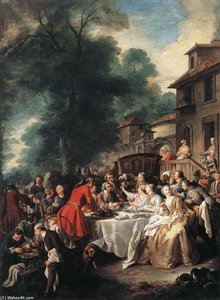
A Hunt Breakfast
 Oil On Canvas
- WallArt
- Rococo
 1737
1737- Early Modern
 55.0 x 45.0 cm
 The Wallace Collection
 Read More
Giclée / Art Print
Museum-quality giclée or canvas print with fast production and flexible finish options. ( Buy Hand Made Painting Buy Image)




P118B $10

P118H $10

P118W $10

P438Z $10

P508JH $12

P508YH $12

P805H $10

P805Z $10

P919BZ $10

P919G $10

P919XJ $10

P959ZH $10

P968JZ $12

W106C $8

W218G $10

W218JH $8

W218Y $10

W307PJ $10

W316G $10

W316PJ $8

W316Y $10

W398PJ $8

W4111J $10

W500HY $15

W500JH $15

W692G $12

W849H $8

W940BG $15

W953PJ $8




Pick from our preset sizes that match the artwork's original proportions.

You may enter your own dimensions to fit a specific frame or space. If your selected size does not match the original image's proportions, we will either crop the artwork or extend the image with a mirrored or solid-fill edge. A digital mockup will be sent for your approval before production begins.
Please note that the on-screen preview does not reflect the actual cropping or extension. Only the mockup will accurately show the final composition.
While custom sizes are available, we recommend selecting a dimension from the predefined list to preserve the original proportions.
Worldwide Delivery () in 2 weeks instead of standard 4/5 weeks. (21 August)

Free Worldwide Express Shipping

High-Quality Linen Canvas

Full Shipping Insurance

Customs Tax Refund Guarantee

True Color Matching Guarantee

60-Day Return Policy (Defects Only)

100% Money-Back Guarantee

Bulk Discount Offer
 Glass option is only available in size under 110 CM

A Hunt Breakfast
Giclée / Art Print
Reproduction Size
-


Total Price
$ 81
Collectible Description
A Glimpse into Aristocratic Elegance
In the soft, dappled light of an eighteenth-century morning, Jean-François de Troy invites us to witness a moment of refined leisure in his masterful composition, A Hunt Breakfast. This exquisite oil on canvas serves as more than just a depiction of a meal; it is a window into the sophisticated social fabric of the French Rococo era. The scene unfolds outdoors, where the lush, verdant backdrop of ancient trees provides a natural cathedral for an assembly of noble figures. As we gaze upon the table, laden with the delicate textures of porcelain, silver, and fine linens, we are transported to a time when every gesture was choreographed by etiquette and every gathering was an opportunity for subtle social display.
< p>The painting captures a profound sense of communal warmth, yet it maintains the poised dignity characteristic of De Troy’s celebrated style. The figures, dressed in the opulent attire of 1737, are caught in various states of engagement—some leaning in to share a whispered confidence, others momentarily lost in the sensory delights of the feast. There is a rhythmic flow to the composition, guided by the placement of the guests and the organic lines of the surrounding landscape, which draws the viewer’s eye through the layers of the gathering, from the intimate foreground to the observant figures lingering in the soft-focus distance.Mastery of Light and Rococo Grace
Technically, A Hunt Breakfast is a triumph of light and texture. De Troy, a painter who bridged the transition from the structured grandeur of the Baroque to the airy lightness of the Rococo, utilizes a palette that breathes with life. The way sunlight filters through the canopy to illuminate the sheen of silk, the glint of a silver spoon, and the porcelain curves of a bowl demonstrates a meticulous command over oil medium. His brushwork is fluid yet precise, allowing for a soft-focus romanticism that enhances the dreamlike quality of this pastoral feast.
For the discerning collector or interior designer, this piece offers an unparalleled sense of historical depth and atmospheric charm. The painting does not merely decorate a space; it anchors it with a narrative of prestige and tranquility. The subtle interplay between the structured social hierarchy of the subjects and the untamed beauty of the forest creates a tension that is both intellectually stimulating and visually soothing. It is a work that invites long periods of contemplation, making it an ideal centerpiece for a room designed to evoke classical elegance and timeless sophistication.
An Invitation to Timeless Luxury
To possess a reproduction of such a significant work is to bring a piece of French history into the modern home. A Hunt Breakfast embodies the essence of "tableaux de mode"—the art of capturing fashion, lifestyle, and the very soul of an era. The emotional impact of the piece lies in its ability to evoke nostalgia for a lost age of splendor, offering a sanctuary of beauty amidst the chaos of contemporary life. Whether placed in a grand dining hall or a quiet study, this painting serves as a testament to the enduring power of classical artistry and the eternal allure of the high-society pastoral.
Artist Biography
A Life Immersed in Aristocratic Splendor
Jean-François de Troy, born into a family steeped in artistic tradition in Toulouse, France, in 1645, emerged as a pivotal figure bridging the Baroque and Rococo periods. His father, Antoine de Troy, was a painter of some renown, providing young Jean-François with his initial grounding in the fundamentals of art. This early exposure, coupled with subsequent studies under Claude Lefèbvre and Nicolas-Pierre Loir in Paris, laid the foundation for a career that would see him become not only a celebrated portraitist but also a favored artist among European royalty. The influence of his father and masters instilled within him a meticulous technique and an appreciation for capturing both physical likeness and the nuances of character – skills he honed throughout his life. He married Jeanne Cotelle, sister-in-law to Loir, further solidifying his position within the Parisian art world.From Royal Commissions to Exiled Courts
De Troy’s early successes stemmed from a combination of talent and astute networking. He quickly gained favor with prominent figures like Madame de Montespan, Louis XIV's celebrated mistress, undertaking tapestry designs and paintings that showcased his burgeoning skill. His ability to portray both religious and mythological subjects with grace and precision established him as a versatile artist capable of tackling diverse themes. However, it was his mastery of portraiture – particularly the depiction of fashionable society – that truly propelled him to prominence. He became *the* painter of choice for the aristocracy, immortalizing their elegance and status on canvas. This period saw him create portraits of Louis Auguste, Duke of Maine, and his wife Louise Bénédicte de Bourbon, cementing his reputation as a chronicler of aristocratic life. A dramatic turn in his career arrived with the exile of King James II to Saint-Germain-en-Laye. De Troy was appointed principal painter to the exiled court, a position that not only provided financial security but also placed him at the heart of European political intrigue and artistic patronage.The ‘Tableaux de Mode’ and Artistic Innovation
While adept at traditional portraiture, Jean-François de Troy is perhaps best remembered for his innovative *tableaux de mode* – “pictures of fashion.” These weren't simply portraits; they were vibrant snapshots of contemporary life, capturing the leisure activities, social customs, and opulent surroundings of the French upper class. Works like ‘Hunt Breakfast’ (1737) and ‘Luncheon with Oysters’ (1735) are prime examples, depicting scenes of refined indulgence and leisurely pursuits. These paintings weren't merely decorative; they offered a glimpse into the values and aspirations of the aristocracy, becoming highly sought-after status symbols in themselves. This unique genre allowed de Troy to showcase his skill in rendering textures – silks, satins, porcelain, and silver gleam with remarkable realism – and his ability to create dynamic compositions filled with subtle narrative details. He wasn’t simply painting people; he was painting a lifestyle.Legacy and Enduring Influence
De Troy's influence extended beyond his own artistic output. As Director of the French Academy in Rome from 1738, he played a role in shaping the next generation of artists, though his tenure was marked by some controversy due to his personal indulgences. He trained numerous students, including his son, Jean-François de Troy (the younger), as well as André Bouys and John Closterman, passing on his technical expertise and artistic sensibilities. His work continued to be admired throughout the 18th century, influencing portraiture and genre painting across Europe. Though he faced some setbacks later in life – a recall from Rome due to personal conflicts – his contribution to French art remains significant. He died in Paris in 1730 at the age of eighty-five, leaving behind a legacy of elegant portraits, captivating *tableaux de mode*, and a lasting impact on the artistic landscape of his time. His paintings continue to be celebrated for their technical brilliance, insightful social commentary, and enduring beauty – testaments to a life dedicated to capturing the splendor of an era. His work offers a fascinating window into the world of the French aristocracy, revealing not only how they looked but also how they lived.
jean françois de troy
1645 - 1730 , France
Quick Facts
- Artistic Movement Or Style: Rococo, Baroque
- Artists Or Movements Influenced By This Artist:
- André Bouys
- John Closterman
- Artists Who Influenced This Artist:
- Claude Lefèbvre
- Nicolas-Pierre Loir
- Date Of Birth: January 9, 1645
- Date Of Death: 1730
- Full Name: Jean-François de Troy
- Nationality: French
- Notable Artworks:
- Richard Talbot, 1st Earl...
- Lady Mary Herbert as Diana
- Jules Hardouin-Mansart
- Elisabeth Jacquet de la...
- Portrait d'un couple en...
- Place Of Birth: Toulouse, France
Related Articles

Rococo's Radiant Legacy: 10 Masterpieces for Your Home |
Indulge in the elegance of Rococo! Explore 10 masterpieces by Fragonard, Boucher & Watteau. Discover the stories behind these iconic paintings and bring timeless art to your home with museum-quality reproductions from .

The Rococo Aesthetic: Opulence, Rebellion & the Pursuit of Pleasure in 18th-Century Art
Explore the opulent world of Rococo art! Discover its origins, key artists like Watteau & Boucher, and lasting influence on design. Expert insights for collectors & enthusiasts.

Charles-André van Loo: A Study in Rococo Portraiture & the French Court's Artistic Dynamics
Explore the elegant world of Charles-André van Loo, a master of Rococo portraiture at the French court. Discover his life, techniques, and enduring influence on 18th-century art. Hand-painted reproductions available.
The Rococo Style: Aristocratic Leisure & the Pursuit of Delight in 18th-Century Art
Explore the opulent world of Rococo art! Discover Watteau, Boucher & Nattier's masterpieces. Expert insights for collectors seeking museum-quality reproductions and custom portraits at OriginalUniqueArt.

The Allure of Elegance in Art: A Historical & Aesthetic Exploration of Refinement & Grace
Explore the exquisite world of Rococo art! Discover its history, masters (Watteau, Boucher & more), and defining elegance. Expert insights for collectors seeking museum-quality reproductions & custom portraits.