
 Preview
 Send
Send Share
Share
 Details
 Guide
Guide

 Download
 Similars
 X-Ray
X-Ray Diaporama
 Stats
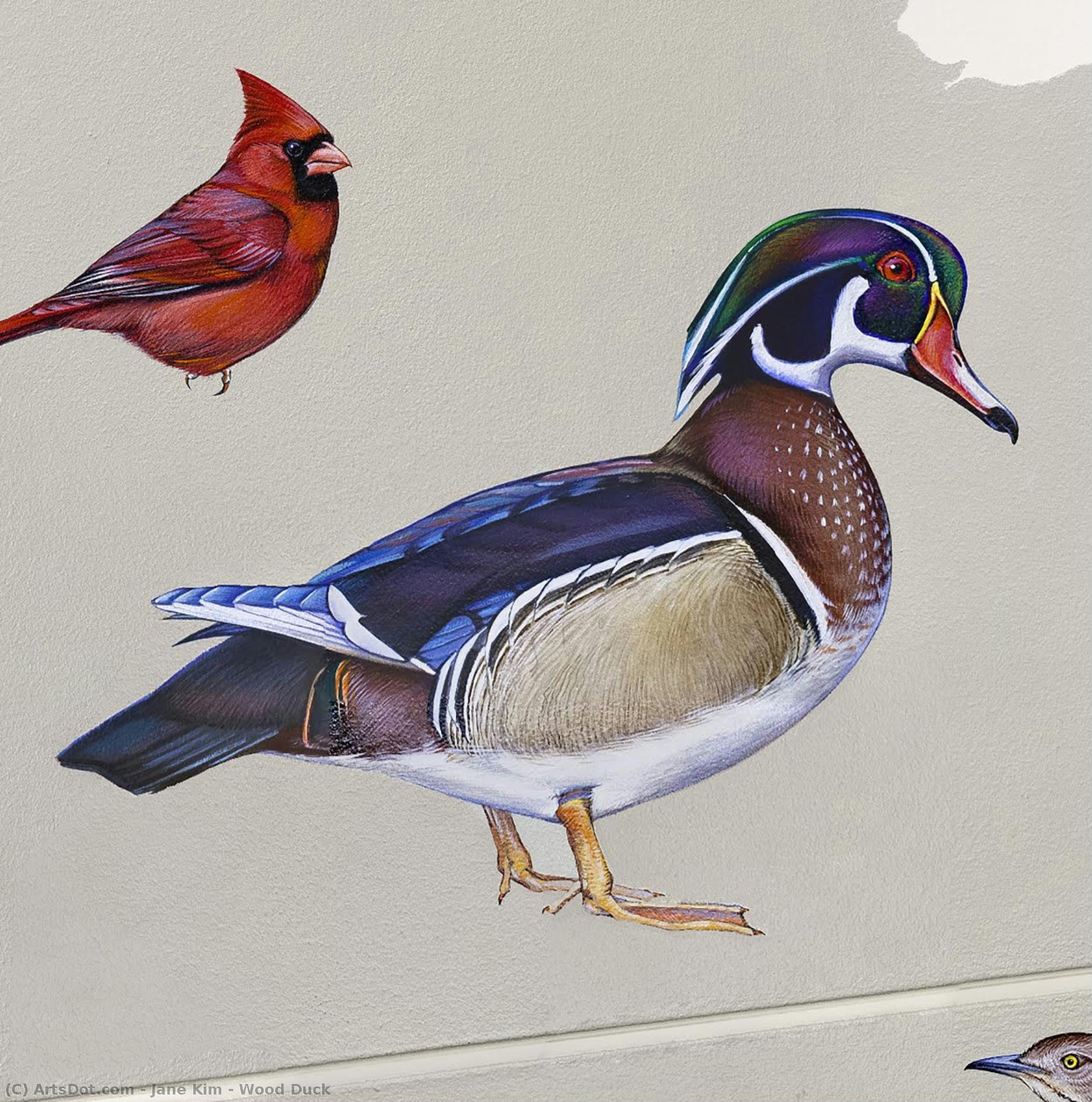
StatsWood Duck


 Read More
Purchase a high-resolution, enhanced digital image, far superior to the online preview.
Each file is meticulously prepared by our in-house specialists using advanced tools and expert manual retouching. We ensure every image has exceptional clarity, precise color accuracy, and fine detail.
The final file is delivered via email within 72 hours, optimized for immediate use in professional, editorial, and print environments. This is the same quality trusted by top-tier design studios, publishers, and galleries.
Digital Image
Download a high-resolution file for personal display, printing, and creative projects. ( Switch to Print Buy Hand Made Painting)
Included in Every Digital Image Order
Expert Digital Delivery, Guaranteed
When you choose OriginalUniqueArt.com, you're not just getting an image - you're receiving a professionally enhanced digital artwork, crafted with precision and backed by a satisfaction guarantee. Here's everything that comes with your order, automatically:

Fast Email Delivery
Your high-resolution digital image file will be emailed to you within 72 hours of ordering - ready for immediate use.

AI-Enhanced Digital File
Your artwork is professionally optimized using advanced AI tools and manual editing, ensuring maximum detail, clarity, and color accuracy.

Free Lifetime Re-Delivery
Accidentally deleted or lost your file? No worries - we'll resend it to you anytime, free of charge.

No Import Fees - Ever
Enjoy your artwork instantly with zero customs, duties, or delivery fees - digital downloads are always tax-free.

Color Accuracy Guarantee
We ensure your digital image reflects the original colors as closely as possible using professional tools and color management.

100-Day Satisfaction Guarantee
If you're not satisfied with your digital image, we'll revise it or refund 100% within 100 days - no questions asked.

100% Money-Back Guarantee
Not satisfied? Get a full refund within 100 days of receiving your digital file - no questions asked.

Bulk Order Discounts
Buy 3 images, save 10% - Buy 5, save 15% - Buy 10+, save 20%. Great for creative projects, galleries, and agencies.
A Symphony in Teal and Crimson: Unveiling Jane Kim’s “Wood Duck”
Jane Kim's "Wood Duck," a breathtaking watercolor illustration rendered with the meticulous detail of scientific precision, isn’t merely a depiction of two birds; it’s an immersion into the vibrant heart of North American wildlife. Completed in 2015 as part of a monumental mural commissioned by the Cornell Lab of Ornithology, this piece stands as a testament to Kim's extraordinary talent and her deep-seated passion for celebrating the natural world through art. The painting captures a male wood duck and a cardinal, positioned against a subtly textured beige backdrop that allows their plumage—a riot of blues, greens, browns, creams, and fiery reds—to command immediate attention. It’s an artwork that speaks to both the scientific rigor of observation and the pure joy of witnessing beauty in its most intricate form.
A Masterclass in Observation and Technique
Kim's technique is a captivating blend of realism and illustrative artistry. The piece appears to be executed primarily with colored pencils, or perhaps a similar fine art medium known for layering and blending—a deliberate choice that lends an incredible sense of texture and depth. Each feather is rendered with painstaking detail, capturing the subtle variations in color and tone that define their unique structure. Soft blending creates smooth transitions between hues, avoiding harsh edges and fostering a feeling of softness and fluffiness, as if you could reach out and gently touch the birds’ feathers. The artist's use of line work is equally precise, defining the contours of the bodies with confident strokes while maintaining an overall sense of fluidity. The composition itself—a deliberate placement of the wood duck on the right and the cardinal to its left—creates a dynamic visual dialogue, inviting the viewer to contemplate their relationship within the broader ecosystem.
Echoes of Audubon and the Legacy of Scientific Illustration
“Wood Duck” resonates deeply with the legacy of John James Audubon, one of the most celebrated ornithologists and artists of the 19th century. Like Audubon’s meticulous studies, Kim's work is rooted in a profound understanding of avian anatomy and behavior. The painting draws inspiration from Audubon’s own detailed illustrations of wood ducks, capturing their characteristic coloration and posture with remarkable accuracy. However, Kim transcends mere replication; she imbues the piece with her own artistic sensibility, adding a layer of contemporary beauty and emotional resonance. The influence of scientific illustration is also evident—a commitment to documenting nature with precision and clarity, while simultaneously elevating it to an object of aesthetic appreciation. The painting’s almost photographic quality speaks to this dedication.
Symbolism and the Language of Nature
Beyond its technical brilliance, “Wood Duck” carries a subtle yet powerful symbolic weight. The wood duck itself is often associated with resilience, adaptability, and the quiet beauty of the wilderness. Its vibrant plumage—a complex tapestry of blues, greens, and browns—represents the richness and diversity of the natural world. The cardinal, with its striking red coloration, symbolizes passion, energy, and a connection to the heart. Together, these two birds embody the interconnectedness of life within an ecosystem. The choice to depict them in this specific pose – the wood duck stepping forward, the cardinal partially turned away—suggests movement, interaction, and a fleeting moment captured in time. The painting serves as a gentle reminder of the importance of conservation efforts and our responsibility to protect these remarkable creatures and their habitats.
This stunning reproduction captures the essence of Kim’s original artwork, offering a timeless tribute to the beauty and wonder of North American wildlife.
Questions & Answers
What technique was used for "Wood Duck" by Jane Kim?
The medium of "Wood Duck" by Jane Kim is acrylic on canvas. Reproductions aim to render the appearance of this technique.
What is the recommended print size for "Wood Duck" by Jane Kim?
The recommended print size for "Wood Duck" by Jane Kim is large.
What are the date and style of "Wood Duck" by Jane Kim?
"Wood Duck" was made in 2015, within the Contemporary Realism movement.
Artist Biography
The Art of Advocacy: The Visionary World of Jane Kim
Jane Kim stands at the intersection of fine art and scientific precision, a painter and science illustrator whose work serves as a vibrant bridge between humanity and the natural world. Born in 1981 and raised in Mount Prospect, Illinois, Kim’s artistic journey is deeply rooted in an intimate observation of life. Her practice, often executed through her Ink Dwell studio, transcends mere decoration; it is a form of visual advocacy designed to promote the protection and celebration of our planet's diverse ecosystems. By blending the meticulous detail of scientific illustration with the grand scale of public murals, she transforms urban landscapes into immersive educational experiences.
Kim’s formal training provided the technical foundation for her unique aesthetic. She earned her B.F.A. in printmaking from the Rhode Island School of Design in 2003, a period that likely honed her appreciation for texture and layered composition. Seeking to deepen the connection between art and ecology, she later attended California State University, Monterey Bay, where she studied scientific illustration, graduating in 2010. This dual expertise allows her to capture the iridescent qualities of plumage and the delicate anatomy of flora with an accuracy that honors the biological reality of her subjects while maintaining a profound emotional resonance.
A Symphony of Scale and Species
The true impact of Kim’s work is perhaps most felt in her large-scale murals, which turn city walls into windows onto vanishing habitats. Her projects are often much more than aesthetic endeavors; they are ecological narratives. One of her most ambitious undertakings was the Migrating Mural, a series of six works spanning 120 miles along California’s Highway 395, featuring the Sierra Nevada bighorn sheep. Such works demonstrate her ability to use public space to foster a sense of shared stewardship for local wildlife.
Her mastery of detail is equally evident in her more concentrated works, such as the monumental Wall of Birds at Cornell University's Lab of Ornithology. Completed in 2015, this massive piece depicts 243 modern bird families, rendered at life size and superimposed upon a map of the earth. In pieces like South Island Wren or Jocotoco Antpitta, Kim invites viewers into a meditative state, using a layered painting technique that builds richness through visible brushstrokes and a vibrant palette. Through these works, she captures the fragility of endangered species, turning every stroke of paint into a plea for conservation.
Legacy and Ecological Connection
Beyond the technical execution, Kim’s significance lies in her ability to weave social and historical narratives into the natural landscape. Her Flora From Fauna series in Redwood City, California, serves as a poignant example, commemorating the lost chrysanthemum industry of the 1920s and the history of Japanese immigrants in the region. This ability to intertwate human history with ecological study defines her contribution to contemporary art.
Whether through her residency at the de Young Museum or her presence on corporate campuses, Kim continues to push the boundaries of where art can live and what it can achieve. Her work remains a testament to the power of observation, reminding us that by truly seeing the intricate beauty of a single bird or a hidden flower, we might find the inspiration necessary to protect the entire tapestry of life.

Jane Kim
1981 - , United States of America
Quick Facts
- Artistic Movement Or Style: Scientific illustration
- Full Name: Jane Kim
- Nationality: American
- Notable Artworks:
- Kagu
- South Island Wren
- Jocotoco Antpitta
- Europe and Eurasia Mural Detail
- Migrating Mural
- Wall of Birds
- Flora From Fauna
- Place Of Birth: United States of America
- Date Of Birth: 1981