
 Preview
 Send
Send Share
Share
 Details
 Guide
Guide

 Download
 Similars
 X-Ray
X-Ray Diaporama
 Q&A
Q&A Stats
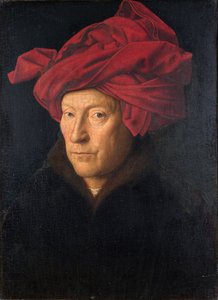
StatsKardinal Niccolò Albergati (?)

- 295.0 x 340.0 cm


 Read More
Get a print-ready file that goes far beyond the web preview. Every digital image we sell comes from a high-resolution master in our stock database — usually 5,000 to 15,000 pixels wide — so you can print large, crop tightly, or reproduce fine detail with confidence.
No file leaves our studio untouched. A digital expert checks the colors against the original painting and corrects them if needed, then improves clarity and detail with professional retouching tools — always staying faithful to the artist's brushwork and style. The result is an image that looks like the painting, not like a filtered scan.
You approve before you're done: our expert sends the image by e-mail within 72 hours for your review. Not satisfied? Ask for improvements or corrections, or request a refund if the quality falls short.
This is the quality relied on by publishers, design studios, galleries and print shops.
Digital Image
Download a high-resolution file for personal display, printing, and creative projects. ( Switch to Print Buy Hand Made Painting)
Included in Every Digital Image Order
Expert Digital Delivery, Guaranteed
When you choose OriginalUniqueArt.com, you're not just getting an image - you're receiving a professionally enhanced digital artwork, crafted with precision and backed by a satisfaction guarantee. Here's everything that comes with your order, automatically:

Fast Email Delivery
Your high-resolution digital image file will be emailed to you within 72 hours of ordering - ready for immediate use.

AI-Enhanced Digital File
Your artwork is professionally optimized using advanced AI tools and manual editing, ensuring maximum detail, clarity, and color accuracy.

Free Lifetime Re-Delivery
Accidentally deleted or lost your file? No worries - we'll resend it to you anytime, free of charge.

No Import Fees - Ever
Enjoy your artwork instantly with zero customs, duties, or delivery fees - digital downloads are always tax-free.

Color Accuracy Guarantee
We ensure your digital image reflects the original colors as closely as possible using professional tools and color management.

100-Day Satisfaction Guarantee
If you're not satisfied with your digital image, we'll revise it or refund 100% within 100 days - no questions asked.

100% Money-Back Guarantee
Not satisfied? Get a full refund within 100 days of receiving your digital file - no questions asked.

Bulk Order Discounts
Buy 3 images, save 10% - Buy 5, save 15% - Buy 10+, save 20%. Great for creative projects, galleries, and agencies.
Jan van Eyck: A Pioneer of Realism and Detail
Jan van Eyck stands as one of the titans of Early Netherlandish painting—a figure whose meticulous observation and groundbreaking technique irrevocably altered the course of artistic history. Born around 1390 in Maastricht, he emerged from obscurity to become a master craftsman and diplomat for the Burgundian court, leaving behind an indelible mark on European art.
- Early Life & Career: Little is known about Van Eyck’s formative years, but his brother Hubert’s artistic endeavors suggest a family steeped in visual tradition. He honed his skills in Bruges, establishing a workshop and attracting talented assistants—a testament to his reputation as an innovator.
- Service to the Burgundian Court: John III the Pitiless and Philip the Good recognized Van Eyck's brilliance, appointing him court painter and envoy, granting him access to influential circles and considerable resources. This patronage fueled ambitious artistic projects and solidified his position at the pinnacle of Flemish art.
- Revolutionary Technique: Unlike many of his contemporaries who adhered to Gothic conventions, Van Eyck embraced oil painting—a technique that allowed for unprecedented luminosity and detail. His method involved applying thin layers of pigment diluted with linseed oil, creating surfaces that shimmered with reflected light and capturing textures with astonishing accuracy.
The Portrait of Cardinal Niccolò Albergati: A Window into Renaissance Dignity
Painted in 1435 during the peace congress in Arras—a pivotal moment in European diplomacy—the *Portrait of Cardinal Niccolò Albergati* exemplifies Van Eyck’s mastery. Commissioned by Duke Philip the Good, it served as a visual representation of power and piety within the context of the Burgundian Renaissance.
- Historical Context: The congress aimed to resolve decades of conflict between France and Burgundy, highlighting the importance of political alliances and artistic patronage. Van Eyck’s portrait captured the solemnity of the occasion and conveyed a profound respect for its subject.
- Artistic Technique Revisited: Van Eyck's meticulous approach is evident in every brushstroke—from the subtle gradations of color to the painstakingly rendered folds of drapery. The use of oil paint achieved an unparalleled level of realism, capturing the Cardinal’s facial features with remarkable precision.
- Symbolism & Composition: The portrait depicts Cardinal Albergati against a muted blue background—a deliberate choice that emphasizes his dignity and spiritual stature. The subject wears red attire, symbolizing papal authority and piety, while the hooded head conveys humility and reverence.
A Masterpiece Preserved: The Kunsthistorisches Museum’s Treasure
Today, the *Portrait of Cardinal Niccolò Albergati* resides in the Kunsthistorisches Museum in Vienna—a testament to its enduring beauty and artistic significance. Its luminous surface and captivating detail continue to inspire admiration and scholarly debate.
- Provenance & Preservation: The painting underwent extensive conservation efforts ensuring it remains accessible for future generations of art enthusiasts.
- Influence & Legacy: Van Eyck’s portrait profoundly impacted subsequent artists—establishing a new standard for realism and influencing the development of portraiture throughout Europe.
At OriginalUniqueArt.com, we offer exceptional reproductions of this iconic artwork—allowing you to experience Van Eyck’s genius firsthand. Explore our collection and bring a piece of Renaissance history into your home.
Questions & Answers
Where is "Kardinal Niccolò Albergati (?)" by Jan van Eyck on display today?
The original "Kardinal Niccolò Albergati (?)" by Jan van Eyck is held at the Kunsthistorisches Museum, Vienna, Austria. A reproduction allows the work to be displayed at home.
Can the image of "Kardinal Niccolò Albergati (?)" by Jan van Eyck be freely reproduced?
"Kardinal Niccolò Albergati (?)" by Jan van Eyck is in the public domain - its copyright has expired. This status governs how the image of the work may be reproduced.
Who created "Kardinal Niccolò Albergati (?)" and in what year?
Jan van Eyck made "Kardinal Niccolò Albergati (?)" in 1437.
Artist Biography
The Alchemist of Light
To look at a Jan van Eyck painting is to witness the moment Western art stopped pretending and started observing. We often hear the myth that he invented oil paint, but the truth is more grounded and far more impressive: he mastered it. By applying thin, translucent glazes of pigment over one another, he achieved a depth of color and a precision of texture that tempera simply could not sustain. He did not just paint surfaces; he captured how light interacts with them. When you see the gleam of a single candle or the heavy weight of a velvet robe in his work, you are seeing the result of a technical revolution that changed the visual language of Europe.
His career was built on more than just brushwork. Van Eyck operated within the high-stakes environment of the Burgundian court, serving Philip the Good. This position required him to be much more than a craftsman; he functioned as a diplomat, traveling to places like Portugal and Spain on official missions. This access to power provided the financial stability necessary for his technical experiments. He was a man of intellect and discretion, qualities that allowed him to move between the worlds of high politics and fine art with ease.
The Precision of the Northern Eye
The work of Van Eyck is defined by an almost obsessive attention to the minute details of the physical world. In his portraits, he does not merely record a face; he records the texture of skin, the individual strands of hair, and the specific way light hits a turban. This level of realism was driven by a shift in focus toward the individual and the tangible. His ability to render atmospheric perspective—the way distant landscapes soften into a blue haze—showed a sophisticated understanding of how the human eye perceives depth.
His most significant technical achievements can be seen in several key works:
- The Ghent Altarpiece: A massive twelve-panel polyptych that demonstrates his ability to manage complex religious symbolism alongside realistic figures.
- The Arnolfini Portrait: A 1434 work where every object, from the dog representing fidelity to the discarded shoes on holy ground, carries specific weight. The mirror in the background reflects a whole other layer of reality.
- Portrait of a Man (Self Portrait?): A 1433 oil painting that features his personal motto, "Als ich kan" (As well as I can), etched directly onto the frame.
A Lasting Technical Standard
The influence of Jan van Eyck is not found in a vague sense of inspiration, but in the concrete standards he set for the medium. He moved the needle from the matte, flat surfaces of the medieval era toward a luminous, three-dimensional reality. His signature, "JOHANNES DE EYCK," and his frequent use of his motto served as a direct challenge to his contemporaries. He was not interested in the anonymity common to many medieval painters; he wanted his technical prowess to be recognized and attributed.
Even after his death in Bruges in 1441, the methods he perfected continued to dictate how artists approached light and texture for generations. His work remains a benchmark because it represents the successful marriage of scientific observation and artistic skill. He transformed pigments into something that feels alive, leaving behind a body of work that remains as sharp and clear today as it was in the fifteenth century.
Jan van Eyck
1390 - 1441 , Netherlands
Quick Facts
- Artistic Movement Or Style: Early Netherlandish painting
- Artists Or Movements Influenced By This Artist:
- Early Netherlandish painting
- Generations of painters
- Full Name: Jan van Eyck
- Nationality: Flemish
- Notable Artworks:
- Ghent Altarpiece
- Arnolfini Portrait
- Dresden Triptych
- Man in a Blue Turban
- Place Of Birth: Maastricht, Netherlands
- Date Of Birth: 1390
- Date Of Death: 1441