Preview
 Send
Send Share
Share
 Details
 Guide
Guide

 Download
 Similars
 X-Ray
X-Ray Diaporama
 Stats
StatsJudith


 Read More
Giclée / Art Print
Museum-quality giclée or canvas print with fast production and flexible finish options. ( Buy Hand Made Painting Switch to Digital Image)




P118B $10

P118H $10

P118W $10

P438Z $10

P508JH $12

P508YH $12

P805H $10

P805Z $10

P919BZ $10

P919G $10

P919XJ $10

P959ZH $10

P968JZ $12

W106C $8

W218G $10

W218JH $8

W218Y $10

W307PJ $10

W316G $10

W316PJ $8

W316Y $10

W398PJ $8

W4111J $10

W500HY $15

W500JH $15

W692G $12

W849H $8

W940BG $15

W953PJ $8




Pick from our preset sizes that match the artwork's original proportions.

Type the width and the height you need, to fit your frame or your wall. A print can only be cut, never made bigger than the picture, so a size with a different shape loses a part of the image. We send you a digital mockup to approve before we print anything. The picture shown on this page does not show the real cut — only the mockup does.
Worldwide Delivery () in 2 weeks instead of standard 4/5 weeks. (26 October)

Free Worldwide Express Shipping

High-Quality Linen Canvas

Full Shipping Insurance

Customs Tax Refund Guarantee

True Color Matching Guarantee

100-Day Return Policy (Defects Only)

100% Money-Back Guarantee

Bulk Discount Offer
 Glass option is only available in size under 110 CM

Judith
Giclée / Art Print
Reproduction Size
-


Total Price
$ 81
Jan Sanders van Hemessen’s “Judith” – A Masterpiece of Moral Drama
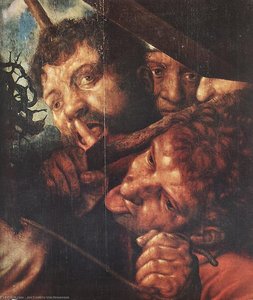
Jan Sanders van Hemessen's "Judith," painted around 1540, isn’t merely a depiction of a biblical tale; it’s a meticulously crafted moral drama rendered with the vibrant realism and psychological depth characteristic of the Northern Renaissance. This arresting image captures the pivotal moment when Judith, the courageous Jewish widow, delivers the fatal blow to Holofernes, the Assyrian general, thereby saving her besieged city. Van Hemessen, a key figure in the burgeoning Flemish genre painting movement, elevates this ancient story into a compelling meditation on female strength, strategic cunning, and divine justice – all presented with an astonishing level of detail and emotional resonance.
The composition immediately commands attention. Judith is not portrayed as a delicate heroine; instead, she’s depicted as a powerfully muscled figure, her body taut with effort and determination. Her profile, turned towards the viewer, conveys both resolve and a hint of grim satisfaction. The severed head of Holofernes, held aloft in her other hand, isn't presented in a gruesome manner but rather as a stark symbol of vanquished tyranny. Van Hemessen masterfully utilizes chiaroscuro – the dramatic interplay of light and shadow – to sculpt Judith’s form and emphasize the weight of her action. The dark background serves not as mere backdrop but as a stage upon which this decisive moment unfolds, drawing all focus onto the central figures.
A Renaissance Vision: Style and Technique
Van Hemessen's style is deeply rooted in the artistic traditions of Italy, particularly the work of Michelangelo and Raphael. He absorbed their emphasis on idealized human forms, dynamic poses, and a profound understanding of anatomy. However, he skillfully adapted these influences to create a distinctly Northern Renaissance aesthetic. The painting’s realism is remarkable; from the intricate folds of Judith's dress to the texture of Holofernes’s beard and the glistening blood staining his face, every detail is rendered with painstaking precision. Van Hemessen was renowned for his ability to capture the nuances of human expression, evident in Judith’s focused gaze and the subtle hint of triumph in her posture.
The painting's technique showcases van Hemessen’s mastery of oil paint. He employed a layering approach, building up color gradually to achieve rich, luminous effects. The use of impasto – applying thick layers of paint directly onto the canvas – adds texture and depth to the figures and background. This meticulous attention to detail is further enhanced by his skillful handling of light and shadow, creating a sense of three-dimensionality that brings the scene vividly to life.
Symbolism and Narrative Depth
Beyond its visual beauty, “Judith” is laden with symbolic meaning. The story itself carries significant weight within Jewish tradition, representing themes of courage, faith, and resistance against oppression. Judith’s actions are not simply a violent act but an embodiment of strategic intelligence and righteous defiance. The depiction of Judith as a physically strong woman challenging a powerful male figure speaks to the Renaissance fascination with female agency – a theme that was increasingly explored in art during this period.
Furthermore, the painting can be interpreted as a broader allegory for the triumph of good over evil. Holofernes represents the forces of tyranny and corruption, while Judith embodies virtue and justice. The act of decapitation symbolizes the ultimate defeat of these forces, suggesting that moral strength and strategic action can overcome even the most formidable adversaries. The inclusion of the severed head is not intended to glorify violence but rather to underscore the consequences of injustice and the necessity of resistance.
A Legacy of Moralizing Art
“Judith” stands as a prime example of the moralizing art that flourished in the Netherlands during the 16th century. Artists like van Hemessen sought to create works that not only depicted biblical stories but also conveyed important ethical and religious lessons. This painting, with its compelling narrative, masterful technique, and profound symbolism, continues to resonate with viewers today – a testament to the enduring power of art to illuminate human experience and inspire reflection.
Questions & Answers
What is "Judith" about?
The themes present in "Judith" by Jan Sanders van Hemessen include judith, holofernes, biblical, heroine, violence, assyria, woman, sword. Together they summarize the artwork's subject matter.
How well known is "Judith" by Jan Sanders van Hemessen?
"Judith" by Jan Sanders van Hemessen has a recognized popularity level. This classification reflects how widely the work is recognized.
Where can I find a guide to "Judith"?
A Guide page is available for "Judith" by Jan Sanders van Hemessen: a printable factsheet about the artwork, designed for students and classroom use.
Artist Biography
Jan Sanders van Hemessen: A Pioneer of Flemish Genre Painting
Jan Sanders van Hemessen (c. 1500 – c. 1566) stands as a pivotal figure in the history of Flemish Renaissance art, particularly recognized for his groundbreaking contributions to genre painting and his masterful depiction of moralizing scenes imbued with remarkable contemporary detail. Born around 1500 in Hemiksem, Belgium—then part of the Duchy of Brabant—van Hemessen’s artistic journey began under the tutelage of Hendrick van Cleve I in Antwerp, establishing him firmly within the vibrant artistic milieu of the burgeoning Renaissance Netherlands. His formative years were marked by a profound engagement with classical ideals and humanist scholarship, fueled by his exposure to models from antiquity like Laocoön and Michelangelo's sculptures—influences that would permeate his subsequent oeuvre.- Early Training & Travels: Van Hemessen’s apprenticeship instilled in him foundational artistic skills and broadened his horizons through expeditions to Italy during the early 1520s. This pivotal visit allowed him to immerse himself in the artistic fervor of Florence and Rome, absorbing the stylistic innovations championed by Leonardo da Vinci and Michelangelo—artists whose monumental achievements profoundly impacted the visual language of their time. Notably, he also ventured to Fontainebleau near Paris in mid-1536, where he witnessed firsthand the burgeoning “First School of Fontainebleau,” a collective of Italian artists tasked with adorning the palace of Fontainebleau under Francis I. This experience solidified his understanding of Mannerist aesthetics and foreshadowed the stylistic developments that would characterize the era.
- Romanist Influence & Artistic Style: Van Hemessen’s artistic sensibilities aligned seamlessly with the Romanist movement, a faction within Flemish painting deeply indebted to Italian Renaissance ideals. The Romanists sought to emulate the grandeur and sophistication of Florentine art, prioritizing idealized forms and harmonious compositions—a stylistic approach that distinguished itself from the prevailing Gothic traditions of Northern Europe. His paintings frequently incorporated elements of classical mythology and allegory, reflecting the humanist preoccupation with moral philosophy and intellectual discourse.
Genre Painting & Moralizing Visions
Van Hemessen’s artistic legacy rests principally upon his pioneering role in establishing genre painting as a distinct artistic category within Flemish art. Unlike religious iconography—which dominated much of Northern Renaissance painting—genre scenes captured everyday life, portraying individuals engaged in commonplace activities and interactions with unflinching realism. However, these depictions weren't merely observational; they served as vehicles for moral instruction, conveying ethical precepts through carefully crafted narratives and symbolic imagery. His celebrated masterpiece, “The Prodigal Son,” exemplifies this dual function brilliantly. Set against a richly detailed tavern backdrop—a testament to his meticulous attention to contemporary architectural styles and attire—the scene unfolds with dramatic tension, illustrating the parable’s central themes of repentance and forgiveness. This work foreshadowed the "Merry Company" tradition that would flourish in subsequent decades, demonstrating van Hemessen's ability to infuse secular subjects with profound spiritual resonance.- Notable Works: Among his numerous paintings are “The Calling of Saint Matthew,” depicting a biblical scene rendered with remarkable psychological depth and capturing the palpable atmosphere of a bustling marketplace; “Allegory of Nature as the Mother of Art,” showcasing an elaborate tableau celebrating artistic creativity—a testament to van Hemessen’s masterful command of composition and color; and portraits of prominent figures, including Catharina van Hemessen herself – demonstrating his exceptional skill in capturing likeness and conveying character.
Legacy & Historical Significance
Despite the devastation wrought by the “Beeldenstorm” (Iconoclasm) of 1566—which decimated Antwerp’s artistic treasures during a period of religious upheaval—Jan Sanders van Hemessen's influence endured, shaping the trajectory of Flemish art and establishing him as one of the foremost artists of his time. His innovative approach to genre painting challenged conventional artistic norms, elevating everyday life to the realm of aesthetic contemplation and imbuing it with moral significance. Furthermore, his engagement with Mannerist aesthetics—characterized by stylized forms and dramatic contrasts—anticipated stylistic developments that would propel Flemish art into a new era of expressive dynamism. Van Hemessen’s enduring reputation as a visionary artist testifies to his unwavering commitment to artistic excellence and his indelible contribution to the cultural heritage of Northern Europe.
Jan Sanders van Hemessen
1500 - 1566 , Belgium
Quick Facts
- Full Name: Jan Sanders van Hemessen
- Nationality: Flemish
- Date Of Birth: 1500
- Date Of Death: 1566
- Place Of Birth: Hemiksem, Belgium
- Notable Artworks:
- The Prodigal Son
- The Calling of Saint Matthew
- Allegory of Nature as the Mother of Art
- Artistic Movement Or Style: Romanist School
- Artists Who Influenced This Artist: ['Hendrick van Cleve I']
- Artists Or Movements Influenced By This Artist: ['Pieter Aertsen']
Related Articles

Rembrandt's Masterpieces: Explore 25 Iconic Paintings & Prints | OriginalUniqueArt
Journey through Rembrandt van Rijn's 25 most iconic paintings & etchings. Explore Dutch Golden Age masterpieces, dramatic chiaroscuro, and timeless portraits. Find museum-quality art reproductions to elevate your home decor on OriginalUniqueArt.com.

Jan van Eyck: Innovation, Symbolism & the Dawn of Early Netherlandish Painting
Explore the revolutionary art of Jan van Eyck! Discover his groundbreaking oil painting techniques, hidden symbolism, and lasting impact on the Early Netherlandish Renaissance. A deep dive for art enthusiasts.
Early Netherlandish Masters: 10 Paintings That Revolutionized Art & Decor
Journey into the Early Netherlandish Renaissance! Explore 10 iconic paintings by Jan van Eyck, Rogier van der Weyden & more. Discover stunning detail, symbolism, and oil painting techniques. Find museum-quality art reproductions for your home at OriginalUniqueArt.com.

Early Netherlandish Masters: 10 Paintings That Revolutionized Art & Decor
Journey into the world of Early Netherlandish painting! Explore 10 masterpieces by Jan van Eyck, Rogier van der Weyden & more. Discover stunning detail, symbolism & Renaissance art for your home decor. Find museum-quality reproductions on OriginalUniqueArt.com
Jan van Kessel the Elder: A Baroque Master of Floral Still Life & Miniature Portraiture
Discover the exquisite detail of Jan van Kessel the Elder's Baroque floral still lifes & captivating miniatures. Explore his artistic legacy, scientific precision, and lasting influence on 17th-century Flemish painting.