Preview
 Send
Send Share
Share
 Details
 Guide
Guide

 Download
 Similars
 X-Ray
X-Ray Diaporama
 Stats
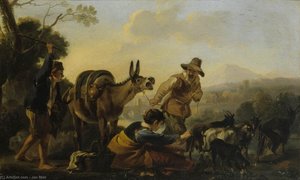
StatsCarnival Time in Rome


 Read More
Hand Made Oil Reproduction
Hand-painted oil on canvas in your size and frame, made to order by our artists. ( Switch to Print Switch to Digital Image)




P118B $10

P118H $10

P118W $10

P438Z $10

P508JH $12

P508YH $12

P805H $10

P805Z $10

P919BZ $10

P919G $10

P919XJ $10

P959ZH $10

P968JZ $12

W106C $8

W218G $10

W218JH $8

W218Y $10

W307PJ $10

W316G $10

W316PJ $8

W316Y $10

W398PJ $8

W4111J $10

W500HY $15

W500JH $15

W692G $12

W849H $8

W940BG $15

W953PJ $8




Pick from our preset sizes that match the artwork's original proportions.

Type the width and the height you need, to fit your frame or your wall. This is hand-painted, so for a size with a different shape the artist can paint a bit more around the picture, or cut a bit — you choose. We send you a digital mockup to approve before the painting starts. The picture shown on this page does not show the real result — only the mockup does.
After order, OriginalUniqueArt.com team will email client for instructions and provide a mockup preview
Worldwide Delivery () in 3/4 weeks instead of standard 5 weeks. (27 October). No compromise on quality.

Free Worldwide Express Shipping

High-Quality Linen Canvas

Full Shipping Insurance

Customs Tax Refund Guarantee

True Color Matching Guarantee

100-Day Return Policy (Defects Only)

100% Money-Back Guarantee

Bulk Discount Offer
 Glass option is only available in size under 110 CM

Carnival Time in Rome
Reproduction Medium
Reproduction Size
-


Total Price
$ 300
A Window into Baroque Rome: The Vibrant Energy of Jan Miel’s “Carnival Time in Rome”
Jan Miel's "Carnival Time in Rome," painted around 1653, isn’t merely a depiction of a festive street scene; it’s a vibrant portal to the heart of Baroque Rome. More than just a historical record, this painting pulsates with the energy and social dynamics of a city caught in the intoxicating swirl of Carnival – a period renowned for its elaborate costumes, masked revelry, and temporary suspension of everyday order. Miel masterfully captures this atmosphere, transforming a bustling Roman street into a stage for human interaction, theatrical performance, and sheer joyous abandon.
The painting immediately draws the eye with its rich, earthy palette dominated by ochres, siennas, and deep reds – colors that evoke the warm glow of candlelight and the vibrant hues of the carnival attire. These tones are skillfully layered to create a sense of depth, pulling the viewer into the scene. The background, anchored by ancient Roman ruins—columns, arches, and fragments of walls—provides a dramatic counterpoint to the lively foreground, grounding the fantastical elements in a tangible historical context. Notice how Miel uses light and shadow to sculpt the architecture, lending it an almost palpable weight and solidity.
The Bamboccianti Tradition: A Window into Roman Life
Miel’s work belongs to the ‘Bamboccianti’ genre – a distinctive style of painting that emerged in Rome during the 17th century. These artists, largely Dutch and Flemish exiles, gained renown for their intimate portrayals of everyday life within the city, particularly among the lower classes. Unlike the grand portraits favored by the aristocracy, the Bamboccianti focused on scenes of street vendors, musicians, beggars, and laborers – offering a surprisingly nuanced glimpse into the social fabric of Rome. Miel’s “Carnival Time in Rome” exemplifies this approach, presenting a diverse cast of characters engaged in various activities, from dancing and conversing to playing games and hawking their wares.
The figures themselves are rendered with remarkable detail and dynamism. Miel doesn't shy away from portraying the imperfections of life – wrinkles, weathered faces, and humble clothing—yet he imbues each character with a sense of personality and vitality. The composition is carefully balanced, guiding the eye through the crowded scene towards key focal points: a group of musicians playing lively tunes, a couple engaged in an animated conversation, and a street performer captivating his audience. The inclusion of animals – horses and dogs—further contributes to the painting’s sense of bustling activity and adds a touch of rustic charm.
Symbolism and the Spirit of Carnival
Beyond its visual appeal, “Carnival Time in Rome” is rich in symbolic meaning. The masks worn by many of the figures represent the anonymity and freedom associated with Carnival – a temporary escape from social constraints and expectations. The vibrant costumes, particularly the reds and oranges, symbolize celebration, excess, and the embrace of pleasure. The presence of the ancient ruins serves as a reminder of Rome’s glorious past, juxtaposed against the lively present. It suggests that the spirit of the city—its dynamism, its resilience, and its enduring appeal—has remained constant throughout the centuries.
Miel's masterful use of perspective creates an illusion of depth and movement, drawing the viewer into this immersive scene. The painting’s emotional impact is undeniable – it evokes a sense of joy, excitement, and communal spirit. “Carnival Time in Rome” isn’t just a beautiful artwork; it’s a captivating snapshot of a vibrant culture at its most exuberant.
Restoring the Vision: Reproductions and Beyond
Reproductions of "Carnival Time in Rome" offer an accessible way to experience the artistry and historical significance of this remarkable painting. When selecting a reproduction, consider the quality of materials and printing techniques – ensuring that the colors and details are faithfully reproduced. This artwork would be a stunning addition to any interior space, bringing a touch of Baroque elegance and Roman charm to your home or office.
Questions & Answers
From which country does the Baroque Painting work "Carnival Time in Rome" come?
"Carnival Time in Rome" was created by Jan Miel, born in Belgium, within the Baroque Painting movement. The artist's origin links the work to Baroque Painting as practiced by artists from Belgium.
Is there a guide for "Carnival Time in Rome" by Jan Miel?
The Guide page of "Carnival Time in Rome" by Jan Miel offers a printable two-sheet factsheet: the artwork with its identity table, a decade band placing it in the artist's lifetime, other works by the artist, the measured color palette, and ready-to-copy citations in four styles.
What was Jan Miel's age when "Carnival Time in Rome" was created?
Jan Miel was 54 years old when creating "Carnival Time in Rome" in 1653. The age is computed from the artist's birth year, 1599.
Artist Biography
Jan Miel: Bridging Dutch Realism and Baroque Grandeur
Jan Miel (1599–1663) stands as a pivotal figure in the artistic landscape of the seventeenth century, embodying the fascinating confluence of Flemish tradition and Italian innovation. Born in Beveren, Belgium—though Antwerp and ‘s-Hertogenbosch remain contenders for his birthplace—Miel’s early life remains shrouded in relative obscurity, leaving biographical details sparse. However, what emerges from scholarly research is a remarkable artistic journey marked by stylistic evolution and collaborative endeavors that cemented his place within the vibrant cultural milieu of Rome and Turin.
His formative years were spent honing his craft primarily in Antwerp, where he absorbed the influences of prominent Flemish masters like Anthony van Dyck. While the precise scope of his training remains elusive, it undoubtedly instilled within him an appreciation for meticulous observation and refined technique—qualities that would characterize much of his subsequent oeuvre. This foundational grounding in classical draughtsmanship and portraiture provided the essential toolkit for a career that would eventually transcend regional boundaries.
The Roman Transformation and the Bamboccianti Spirit
Miel’s arrival in Rome around 1636 signaled a transformative moment in his artistic trajectory. He swiftly joined the Bentvueghels, an influential association of Dutch and Flemish artists residing in the Eternal City. Within this brotherhood, he adopted the memorable moniker ‘bieco’, a nickname reflecting his distinctive squinting gaze—a characteristic that would become synonymous with his artistic persona. This affiliation fostered deep connections within a broader artistic community deeply impacted by Pieter van Laert’s Bamboccianti style.
This movement was dedicated to depicting scenes of everyday life amongst the lower classes in Rome and its environs, eschewing the idealized grandeur of High Renaissance art for something far more visceral and immediate. Miel embraced this trend wholeheartedly, producing captivating genre paintings that captured the spirit of urban existence with remarkable realism and sensitivity. His works often featured:
- Lively street scenes populated by travelers, merchants, and laborers.
- A masterful use of light to evoke the dusty, sun-drenched atmosphere of Roman alleys.
- The subtle interplay of human emotion within crowded, chaotic settings.
- A meticulous attention to the textures of fabric, stone, and earth.
Evolution Toward Classicism and Courtly Grandeur
As his career progressed, Miel’s artistic vision underwent a significant metamorphosis. While he remained a master of the genre scene, he began to move away from the gritty realism of the Bamboccianti toward more classicizing history paintings. This shift reflected a broader trend in European art, where the raw energy of the Baroque was increasingly tempered by a desire for order, nobility, and classical allegory.
This evolution eventually led him to prestigious appointments, most notably serving as a court artist to Charles Emanuel II, Duke of Savoy. In the service of the Turin court, Miel’s work took on a more formal and magnificent character. The intimacy of his earlier Roman scenes gave way to compositions of greater scale and complexity, designed to reflect the power and prestige of his royal patron. This period represents the pinnacle of his professional achievement, where his Flemish roots in detail met the grand, sweeping narratives required by the European aristocracy.
The historical significance of Jan Miel lies in his ability to navigate these disparate worlds. He was an artist who could find beauty in the humble struggles of a Roman street urchin and dignity in the epic tales of antiquity. By bridging the gap between the meticulous realism of the North and the dramatic classicism of the South, Miel left an indelible mark on the seventeenth-century canon, ensuring his legacy as a true cosmopolitan of the Baroque era.

Jan Miel
1599 - 1663 , Belgium
Quick Facts
- Full Name: Jan Miel
- Nationality: Flemish
- Date Of Birth: 1599
- Date Of Death: 1663
- Place Of Birth: Beveren, Belgium
- Notable Artworks:
- Landscape with a Battle between Two Rams
- Roman Lime Kiln with Peasants Gambling
- Artistic Movement Or Style: Bamboccianti, Classicising
- Artists Who Influenced This Artist: ['Anthony van Dyck']
- Artists Or Movements Influenced By This Artist: ['Pieter van Laer']
Related Articles

Decoding Baroque Grandeur: A Guide to the Drama and Emotion of 17th-Century Art
Explore the breathtaking drama of 17th-century Baroque art. Our expert guide decodes the use of chiaroscuro, emotional intensity, and historical grandeur to help you appreciate and curate timeless masterpieces for your collection.

Drama and Light: A Definitive Guide to the Italian Baroque Masterpieces and the Revolution of Chiaroscuro
Explore the dramatic world of Italian Baroque art. Discover how masters like Caravaggio used chiaroscuro and tenebrism to revolutionize painting through light, shadow, and profound realism. A definitive guide for history lovers and art collectors.

Italian Baroque Unlocked: High-Drama Art That Hits Hard
Dive into the high-drama world of Italian Baroque art. Discover how chiaroscuro, intense emotion, and theatrical lighting redefined aesthetics. Explore the visceral power of the Counter-Reformation through a modern lens with expert insights from OriginalUniqueArt.com.
Baroque Classicism: Reconciling Drama & Order in 17th-Century Art
Explore the captivating world of Baroque Classicism! Discover its history, key artists like Caravaggio & Rubens, and defining characteristics. Expert insights & high-quality reproductions at OriginalUniqueArt.

Baroque Classicism: The Grandeur of Order and Drama in 17th-Century Art History
Explore the profound elegance of Baroque Classicism. Discover how 17th-century masters synthesized dramatic emotion with classical order through the lens of the Counter-Reformation and the works of legends like Carlo Maratta and Andrea Sacchi.