

 Preview
 Send
Send Share
Share
 Details
 Guide
Guide

 Download
 Similars
 X-Ray
X-Ray Diaporama
 Stats
StatsSt.Hieronymos


 Read More
Giclée / Art Print
Museum-quality giclée or canvas print with fast production and flexible finish options. ( Buy Hand Made Painting Switch to Digital Image)




P118B $10

P118H $10

P118W $10

P438Z $10

P508JH $12

P508YH $12

P805H $10

P805Z $10

P919BZ $10

P919G $10

P919XJ $10

P959ZH $10

P968JZ $12

W106C $8

W218G $10

W218JH $8

W218Y $10

W307PJ $10

W316G $10

W316PJ $8

W316Y $10

W398PJ $8

W4111J $10

W500HY $15

W500JH $15

W692G $12

W849H $8

W940BG $15

W953PJ $8




Pick from our preset sizes that match the artwork's original proportions.

Type the width and the height you need, to fit your frame or your wall. A print can only be cut, never made bigger than the picture, so a size with a different shape loses a part of the image. We send you a digital mockup to approve before we print anything. The picture shown on this page does not show the real cut — only the mockup does.
Worldwide Delivery () in 2 weeks instead of standard 4/5 weeks. (24 October)

Free Worldwide Express Shipping

High-Quality Linen Canvas

Full Shipping Insurance

Customs Tax Refund Guarantee

True Color Matching Guarantee

100-Day Return Policy (Defects Only)

100% Money-Back Guarantee

Bulk Discount Offer
 Glass option is only available in size under 110 CM

St.Hieronymos
Giclée / Art Print
Reproduction Size
-


Total Price
$ 81
A Portrait of Scholarly Reflection: Jan Massys’s St. Hieronymos
Jan Massys's “St. Hieronymos” transcends mere depiction; it embodies the spirit of Northern Renaissance Mannerism, capturing a moment frozen in time—a scholar immersed in contemplation amidst an interior landscape imbued with subtle symbolism. Executed around 1530, this painting resides within the collection of Museo Nacional del Prado, offering viewers a glimpse into the artistic sensibilities of its era and highlighting Massys’s masterful manipulation of visual language. The artwork portrays Saint Jerome, depicted in a richly ornamented room bathed in diffused light—a deliberate stylistic choice that distinguishes it from earlier Renaissance ideals of idealized beauty. Massys skillfully compresses the space, drawing attention to the central figure while simultaneously introducing an expansive vista beyond the window, symbolizing both earthly limitations and intellectual aspiration. This technique reflects a broader trend within Mannerism, where artists prioritized expressive distortion over realistic representation. The artist’s decision to reduce dimensions is not merely compositional; it underscores the psychological depth he seeks to convey—the quiet solitude necessary for profound thought. Massys's meticulous attention to detail reveals his command of artistic technique. He employs a vibrant palette dominated by reds – particularly prominent in Jerome’s robe – which serves as a focal point, injecting energy into the subdued tonal range of the scene. Localized tones are strategically deployed, creating visual richness and enhancing the dramatic effect of chiaroscuro—the interplay between light and shadow—a hallmark of Mannerist painting. The hard forms of furniture and architectural elements stand apart from the pervasive illumination, emphasizing their solidity and permanence against the ephemeral nature suggested by scattered objects within the room. Amongst these objects are several evocative symbols that contribute to the artwork’s overall narrative. An extinguished candle represents mortality and the fleeting passage of time—a common motif in Vanitas paintings designed to provoke contemplation on life's brevity. Beside the window sits a withered blossom, symbolizing decay and reminding us of the ephemeral beauty of nature. Crucially, an hourglass reinforces this theme, visually encapsulating the relentless march toward death. Furthermore, books – meticulously rendered with quill and inkwell—represent Jerome’s dedication to scholarship and intellectual pursuits, mirroring Massys's stylistic emphasis on education as a cornerstone of humanist ideals. “St. Hieronymos” is more than just a portrait; it’s an invitation to consider the complexities of human experience. Massys’s masterful composition and skillful use of color and light combine to create an emotionally resonant image—one that speaks to themes of faith, contemplation, and the inescapable realities of existence. Its enduring appeal lies in its ability to capture not only a visual likeness but also the inner life of its subject, cementing Jan Massys's place as a significant voice within the artistic currents of his time.Questions & Answers
Where can I find artworks similar to "St.Hieronymos" by Jan Massys?
The Similars page of "St.Hieronymos" by Jan Massys presents related artworks.
Can I examine "St.Hieronymos" in more detail?
"St.Hieronymos" can be examined layer by layer on the artwork's X-Ray page, a viewer inspired by a conservator's light bench with eleven optical readings of the image.
What is the dominant color of "St.Hieronymos" by Jan Massys?
The dominant color of "St.Hieronymos" by Jan Massys is phthalo green (#1f170d).
Artist Biography
A Flemish Master Forging a New Path
Jan Massys, also known as Jan Massijs, stands as a pivotal figure in the flourishing artistic landscape of 16th-century Flanders. Born around 1466 in Leuven, Belgium, his life and work represent a fascinating intersection of tradition and innovation, religious devotion and shrewd social commentary. While legends initially painted a picture of an ironsmith turned artist—a narrative suggesting a humble origin story fueled by passion—historical accounts reveal a family with established means, indicating that Massys’s dedication to painting stemmed from artistic inclination rather than economic necessity. Karel van Mander suggests illness prompted his shift from the forge, leading him to decorate prints for carnival celebrations, an early outlet for his burgeoning creativity. He likely received foundational training in Leuven before relocating to Antwerp around 1491, where he swiftly ascended within the Guild of Saint Luke, establishing himself as a master painter and laying the groundwork for what would become known as the Antwerp School. It is believed that Joachim Patinir, renowned for his evocative landscapes, studied under Massys’s tutelage, contributing to the atmospheric backgrounds found in some of his works—a testament to the collaborative spirit within the artist's workshop.Echoes of Tradition and a Rising Voice
Massys’s artistic style is deeply rooted in the Flemish tradition, consciously reviving the meticulous detail and expressive power of masters like Jan van Eyck and Rogier van der Weyden. He masterfully combined firm outlines with nuanced modeling, achieving a remarkable clarity and depth within his compositions. His paintings are characterized by a glowing richness derived from transparent pigments, lending an ethereal quality to both religious scenes and secular portraits. However, Massys wasn’t merely replicating the past; he infused it with a distinctly personal vision. He possessed an exceptional ability to capture earnest emotion and minutely detailed renderings, paying particular attention to textures—the gleam of jewelry, the intricate edging of garments, the subtle ornamentation that elevated his work beyond mere representation. This meticulous approach extended to his exploration of light and shadow, creating subdued yet captivating effects that drew viewers into the heart of each scene. He wasn’t afraid to tackle complex themes, seamlessly blending religious narratives with insightful observations of human nature and societal dynamics.Satire, Spirituality, and Lasting Impressions
Massys's oeuvre is remarkably diverse, encompassing both deeply reverent religious altarpieces and boldly satirical portraits that challenged conventional norms. His most celebrated works include The Ugly Duchess (1513), a now-iconic image that sparked debate with its unflinching portrayal of aging and societal beauty standards; Portrait of an Elderly Man (1513) which continues this vein of social commentary, and The Money Changer and His Wife (1514), a compelling depiction of greed and avarice within the merchant class. These satirical pieces were groundbreaking for their time, offering a relatively uncommon form of critique through portraiture—a testament to Massys’s courage and artistic vision. Beyond these striking portraits, he created numerous religious altarpieces and triptych panels, including significant commissions for the Church of Saint Peter in Leuven, demonstrating his versatility and skill in large-scale devotional works. Even pieces like Venus of Cythera (1561) reveal a fascination with classical themes and potentially reflect an awareness of artistic developments unfolding in Italy.A Legacy Forged in Antwerp
Jan Massys’s influence extended far beyond his own lifetime, solidifying his position as a founder of the esteemed Antwerp School alongside his son Quinten Massys and brother Cornelis Massys. He skillfully synthesized influences from earlier Flemish masters—Dirk Bouts, Hans Memling, Rogier van der Weyden, and Jan van Eyck—while simultaneously incorporating elements from Italy and other regions of the Low Countries. This fusion created a unique artistic identity that defined the Antwerp School for generations to come. His emphasis on individual characterization and realistic depiction of human emotions resonated with subsequent artists, inspiring them to explore new avenues of expression. Later in life, Massys faced periods of adversity, including banishment from Antwerp due to religious beliefs, leading him to seek refuge in Italy and France before eventually returning home. Despite these challenges, he continued to receive commissions, demonstrating his enduring reputation and artistic prowess until his death in 1575. His legacy remains secure—a testament to a painter who not only mastered the techniques of his predecessors but also dared to challenge conventions and offer a uniquely insightful vision of the world around him.Exploring Jan Massys’s World Today
- Workshop of Jan Massys: Discover this captivating 16th-century painting, showcasing a social gathering with detailed figures and rich atmosphere.
- The Holy Family: Explore this stunning Early Renaissance oil painting, admiring its realistic figures, opulent detail, symbolism, and technique.
- Quinten Massys: Delve into the work of Jan’s father, a key figure in Flemish Renaissance art known for his religious paintings and satirical works.

Jan Massys
1466 - 1530 , Belgium
Quick Facts
- Full Name: Jan Massys
- Nationality: Flemish
- Date Of Birth: 1466
- Date Of Death: 1530
- Place Of Birth: Antwerp, Belgium
- Notable Artworks:
- The Ugly Duchess
- Money Changer & Wife
- Venus of Cythera
- Artistic Movement Or Style: Renaissance
- Artists Who Influenced This Artist:
- Dirk Bouts
- Jan van Eyck
- Rogier van der Weyden
- Artists Or Movements Influenced By This Artist: ['Antwerp School']
Related Articles

El Greco's Masterpieces: Explore 25 Iconic Paintings & Spiritual Visions | OriginalUniqueArt
Journey through El Greco's 25 most iconic paintings! Explore the spiritual depth & dramatic beauty of this Spanish Renaissance master. Discover art history, techniques & find museum-quality reproductions for your home at OriginalUniqueArt.com.

Northern Mannerism: The Dramatic Evolution of European Art through Elegant Distortion and Tension
Explore the dramatic evolution of Northern Mannerism. Discover how 16th-century artists moved from Renaissance harmony to elegant distortion, tension, and complex symbolism in European art history.
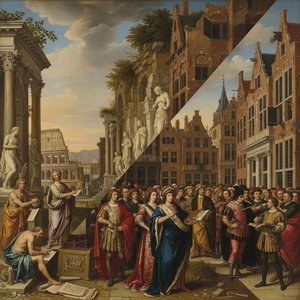
Jan Gossaert (Mabuse): Pioneering Renaissance Style & the Birth of Netherlandish Antiquity
Explore the groundbreaking art of Jan Gossaert (Mabuse), a pioneer of Renaissance painting in the Low Countries. Discover his Romanist style, stunning portraits, and influence on Northern European art history.
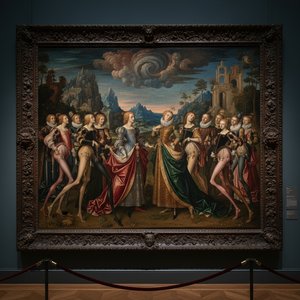
Northern Mannerism: The Dramatic Evolution of Renaissance Art and the Mastery of Elegant Distortion
Explore the dramatic evolution of Northern Mannerism. Discover how masters like Bosch and Grünewald transitioned from Renaissance harmony to profound, elegant distortion through an expert analysis of symbolism, emotional intensity, and artistic innovation.
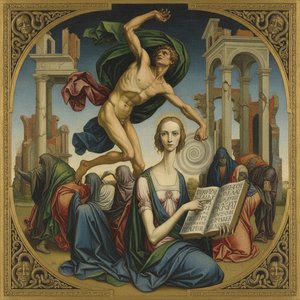
Beyond Perfection: The Dramatic Elegance and Intellectual Tension of Renaissance Mannerism
Explore the captivating world of Renaissance Mannerism. Discover how artists moved beyond High Renaissance harmony into a realm of elegant distortion, psychological tension, and dramatic beauty that bridged the gap to the Baroque era.


