
 Preview
 Send
Send Share
Share
 Details
 Guide
Guide

 Download
 Similars
 X-Ray
X-Ray Diaporama
 Q&A
Q&A Stats
StatsVenus

- 59.0 x 30.0 cm


 Read More
Giclée / Art Print
Museum-quality giclée or canvas print with fast production and flexible finish options. ( Buy Hand Made Painting Switch to Digital Image)




































Pick from our preset sizes that match the artwork's original proportions.

Type the width and the height you need, to fit your frame or your wall. A print can only be cut, never made bigger than the picture, so a size with a different shape loses a part of the image. We send you a digital mockup to approve before we print anything. The picture shown on this page does not show the real cut — only the mockup does.
Worldwide Delivery () in 2 weeks instead of standard 4/5 weeks. (6 November)

Free Worldwide Express Shipping

High-Quality Linen Canvas

Full Shipping Insurance

Customs Tax Refund Guarantee

True Color Matching Guarantee

100-Day Return Policy (Defects Only)

100% Money-Back Guarantee

Bulk Discount Offer
 Glass option is only available in size under 110 CM

Venus
Giclée / Art Print
Reproduction Size
-


Total Price
$ 81
Artistic Style and Influences
Jan Gossart's artistic style was influenced by his travels to Italy, where he was exposed to the works of Italian Renaissance artists. His use of oil on panel and his attention to detail are characteristic of the Northern Renaissance style. The painting Venus showcases Gossart's skill in depicting the human form and his ability to convey a sense of elegance and sophistication.Other Notable Works by Jan Gossart
Some of Jan Gossart's other notable works include Venus and Cupid, which is housed at the Musées Royaux Des Beaux-arts in Brussels, Belgium. You can find more information about Jan Gossart and his works on OriginalUniqueArt.com.- Jan Gossart's use of symbolism in his paintings adds an extra layer of meaning and depth to his works.
- The Pinacoteca Dell'accademia Dei Concordi is a museum located in Rovigo, Italy, and it houses an impressive collection of art from the Renaissance period.
- You can also find more information about Jan Gossart on Wikipedia.
The painting Venus by Jan Gossart is a beautiful example of the art of the Northern Renaissance. Its beauty and elegance make it a must-see for anyone interested in art history.
Questions & Answers
What color palette is used in "Venus" by Jan Gossart?
"Venus" by Jan Gossart uses an earthy color palette. The palette summarizes the work's overall color character.
What level of contrast does "Venus" by Jan Gossart show?
"Venus" by Jan Gossart shows a balanced contrast between its light and dark areas.
When was "Venus" created, and to which movement does it belong?
"Venus" was created in 1521 as a work of the Northern Renaissance movement. Date and movement anchor the artwork in art history.
Artist Biography
Jan Gossaert: Bridging Renaissance and Northern Vision
Jan Gossaert, a name often rendered as both Jan Gossart and Mabuse, stands as a pivotal figure in the transition between the late Gothic traditions of the Low Countries and the burgeoning Italian Renaissance. Born around 1478 in Maubeuge, France – though his origins remain somewhat shrouded in local legend – he ultimately established himself as one of the foremost artists working within the Antwerp school, profoundly shaping the visual landscape of Northern Europe during a period of intense artistic exchange. His career spanned nearly five decades, marked by an evolving style that initially reflected the meticulous detail and devotional fervor characteristic of his predecessors while gradually absorbing the revolutionary innovations emanating from Italy. Gossaert’s legacy lies not just in the beauty of his paintings but also in his role as a crucial conduit for introducing Renaissance ideals to a region deeply rooted in its own artistic heritage.Early Life and Artistic Training
The precise details of Gossaert's early life remain elusive, contributing to the enduring fascination surrounding this enigmatic artist. While traditionally associated with Maubeuge, some scholars suggest he was born within the small town of Duurstede Castle in the Netherlands, a location that aligns with his later guild registration in Antwerp. What is undeniably clear is that he received his initial artistic training at the Abbey of Maubeuge, where his father served as a bookbinder – a profession that likely instilled in him an appreciation for craftsmanship and meticulous detail. This early exposure to illuminated manuscripts undoubtedly influenced his later work, particularly its rich textures and intricate decorative elements. His registration within the St. Luke’s Guild in 1503 signifies his formal entry into the professional art world, marking the beginning of a prolific career that would see him employed by some of the most influential patrons of the era.The Italian Influence: Romanism and Artistic Transformation
Gossaert's artistic trajectory was irrevocably altered by his journey to Italy between 1508 and 1509, a period he spent in the service of Philip of Burgundy, an illegitimate son of Duke Philip the Good. This sojourn proved transformative, exposing him to the revolutionary developments taking place within the Italian Renaissance – particularly in Rome. He was deeply moved by the works of Michelangelo and Raphael, absorbing their emphasis on classical forms, anatomical accuracy, and a dramatic use of light and shadow. Upon his return to the Low Countries, Gossaert embarked on a project he termed “Romanism,” characterized by an attempt to integrate Italian Renaissance principles into his existing Northern European style. This wasn’t simply imitation; rather, it involved a deliberate fusion of elements – the idealized figures and architectural settings of Italy with the rich color palettes and devotional intensity of the Flemish tradition. The results were often striking, yet occasionally awkward as the two styles clashed, creating a distinctive visual language that was uniquely his own.Key Works and Artistic Development
Gossaert’s oeuvre is remarkably diverse, encompassing a wide range of subjects including religious scenes, portraits, and mythological narratives. His *Adoration of the Kings*, initially commissioned for the Grandmontines in France, stands as perhaps his most celebrated work – a monumental altarpiece that exemplifies the complexities of his Romanist style. The scene is populated by an astonishing array of figures, rendered with meticulous detail and vibrant colors, yet the composition feels somewhat strained, reflecting the challenges inherent in reconciling disparate artistic traditions. Other notable works include *Jesus, the Virgin, and the Baptist*, a painting demonstrating his early engagement with the stylistic innovations of Jan van Eyck and Albrecht Dürer; *The Agony in the Garden*, renowned for its evocative mood and psychological depth; and the dramatic *Neptune and Amphitrite*, showcasing his mastery of architectural settings and dynamic composition. As time progressed, Gossaert’s style evolved towards a more streamlined and direct approach, evident in works such as *Hercules and Deianira* and *Danae*, where he abandoned the elaborate designs of his earlier period in favor of simpler, more elegant compositions.Legacy and Historical Significance
Jan Gossaert’s impact on the development of Northern European painting is undeniable. He was one of the first artists to successfully introduce the principles of the Italian Renaissance into the Low Countries, paving the way for subsequent generations of Flemish masters. His work served as a crucial bridge between the Gothic and Renaissance traditions, demonstrating the potential for artistic innovation through synthesis rather than outright imitation. While he may not have achieved the same level of fame or critical acclaim as artists like Dürer or Van Eyck, Gossaert’s contributions to the evolution of Northern European art are profound. His legacy endures in his masterful paintings, which continue to captivate viewers with their beauty, complexity, and enduring sense of human drama. He remains a testament to the power of artistic exchange and the transformative potential of embracing new ideas while retaining one's own unique vision.
Jan Gossart
1478 - 1532
Quick Facts
- Full Name: Jan Gossaert (Jean Gossart)
- Nationality: French-speaking Netherlandish
- Date Of Birth: 1478
- Date Of Death: 1532
- Place Of Birth: Maubeuge, France
- Notable Artworks:
- Adoration of the Kings
- Jesus, Virgin & Baptist
- Agony in the Garden
- Neptune & Amphitrite
- Hercules & Deianira
- Artistic Movement Or Style: Romanism, Flemish Renaissance
- Artists Who Influenced This Artist:
- Jan van Eyck
- Albrecht Dürer
- Rogier van der Weyden
- Artists Or Movements Influenced By This Artist:
- Lucas van Leyden
- Renaissance Painting
Related Articles

Jan Gossart: Bridging Netherlandish Realism & Renaissance Humanism – A Comprehensive Exploration
Explore the captivating world of Jan Gossart, a pivotal figure bridging Netherlandish realism & Renaissance humanism. Discover his masterpieces, patronage, and lasting influence – an essential guide for discerning art collectors.
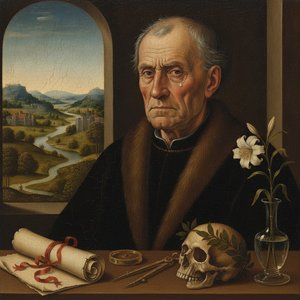
The Northern Renaissance: A Masterclass in Hyper-Realism, Oil Innovation, and Symbolic Depth
Explore the profound mastery of Northern Renaissance art. Discover the technical brilliance of Flemish oil painting, the intricate symbolism of Bosch and Bruegel, and the revolutionary realism that redefined European art history through an expert historical lens.

The Enduring Legacy of Oil on Canvas: Technique, History & Aesthetic Impact
Explore the rich history & techniques of oil painting – from Renaissance masters to Impressionism. Discover pigments, layering methods, and why this timeless medium endures. Expert insights for artists & art enthusiasts.

The Enduring Power of Painting: A Historical & Contemporary Exploration of Form and Emotion
Explore the rich history & enduring techniques of oil painting with OriginalUniqueArt. Discover masterpieces, learn about art collecting, and find authentic handmade reproductions crafted by skilled artists.

Oil on Canvas: A Historical & Technical Exploration of a Timeless Artistic Medium
Explore the rich history & enduring techniques of oil painting on canvas. Discover the science behind its longevity, conservation practices, and contemporary relevance. Expert insights for art enthusiasts.


