Preview
 Send
Send Share
Share
 Details

 Download
 Similars
 X-Ray
X-Ray Diaporama
Studies after the Model
 Acrylic On Canvas
- WallArt
- Baroque
 1660
1660 176.0 x 254.0 cm
 Kunstpalast
 Read More
Hand Made Oil Reproduction
Hand-painted oil on canvas in your size and frame, made to order by our artists. ( Buy Print Buy Image)




P118B $10

P118H $10

P118W $10

P438Z $10

P508JH $12

P508YH $12

P805H $10

P805Z $10

P919BZ $10

P919G $10

P919XJ $10

P959ZH $10

P968JZ $12

W106C $8

W218G $10

W218JH $8

W218Y $10

W307PJ $10

W316G $10

W316PJ $8

W316Y $10

W398PJ $8

W4111J $10

W500HY $15

W500JH $15

W692G $12

W849H $8

W940BG $15

W953PJ $8




Pick from our preset sizes that match the artwork's original proportions.

You may enter your own dimensions to fit a specific frame or space. If your selected size does not match the original image's proportions, we will either crop the artwork or extend the painting with additional hand-painted elements. A digital mockup will be sent for your approval before production begins.
Please note that the on-screen preview does not reflect the actual cropping or extension. Only the mockup will accurately show the final composition.
While custom sizes are available, we recommend selecting a dimension from the predefined list to preserve the original proportions.
After order, OriginalUniqueArt.com team will email client for instructions and provide a mockup preview
Worldwide Delivery () in 3/4 weeks instead of standard 5 weeks. (21 August). No compromise on quality.

Free Worldwide Express Shipping

High-Quality Linen Canvas

Full Shipping Insurance

Customs Tax Refund Guarantee

True Color Matching Guarantee

60-Day Return Policy (Defects Only)

100% Money-Back Guarantee

Bulk Discount Offer
 Glass option is only available in size under 110 CM

Studies after the Model
Reproduction Medium
Reproduction Size
-


Total Price
$ 375
Artwork Description
A Glimpse into a Master’s Studio: The Poignant Studies of Jan Andrea Lievens
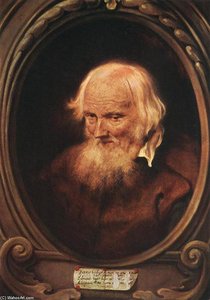
Jan Andrea Lievens' “Studies after the Model,” painted in 1660, isn’t merely a preparatory sketch; it’s a profound meditation on observation, character, and the very act of artistic creation. This remarkable pencil drawing, now housed within the Kunstpalast museum in Düsseldorf, offers an intimate window into the working methods of one of Rembrandt's closest collaborators – a man often overshadowed by his more famous partner but possessing a uniquely sensitive and compelling style. The piece immediately draws the viewer in with its quiet intensity; four heads and shoulders, rendered with remarkable detail and a palpable sense of humanity, are arranged within a deliberately understated composition on aged paper. It’s not a grand portrait intended for display, but rather a series of studies, explorations of form and expression that reveal Lievens' meticulous approach to capturing the essence of his subjects.
The figures themselves – three men and one woman – are presented in varying states of repose and contemplation. Their gazes are direct, almost challenging, inviting the viewer into a silent dialogue. Notice the subtle shifts in expression: the furrowed brow of the central male figure, hinting at inner turmoil; the thoughtful tilt of another’s head, suggesting deep reflection; and the enigmatic smile of the woman, a fleeting moment of grace amidst the seriousness of the group. Lievens masterfully utilizes hatching and cross-hatching to build volume and texture, creating a remarkably tactile surface despite the monochromatic palette. The dark browns and blacks aren't merely shades; they’re carefully modulated tones that convey both solidity and vulnerability.
The Caravaggisti Influence: Echoes of Utrecht
Lievens’s style is deeply rooted in the artistic currents of the early 17th century, particularly the influence of the “Utrecht Caravaggisti.” These artists, working primarily in the Low Countries, brought a dramatic intensity and heightened realism to portraiture, drawing inspiration from the theatrical lighting and dynamic compositions of Italian master Caravaggio. This influence is readily apparent in "Studies after the Model," most notably in the use of chiaroscuro – the stark contrast between light and shadow – which sculpts the figures’ forms and imbues them with a sense of drama. The composition itself, with its carefully arranged figures and emphasis on gesture, echoes the dramatic narratives favored by these Caravaggisti painters.
Furthermore, Lievens' meticulous attention to detail, evident in the rendering of individual strands of hair and wrinkles around the eyes, reflects a shared commitment to anatomical accuracy. However, unlike some of his contemporaries who slavishly imitated Caravaggio, Lievens infused this realism with a distinctly personal style – a sensitivity to character and emotion that elevates the studies beyond mere technical exercises. The drawing’s inherent melancholy, a subtle undercurrent beneath the surface, speaks to a deeper understanding of human psychology.
A Window into Rembrandt's Studio
The significance of “Studies after the Model” extends beyond its artistic merits; it offers a fascinating glimpse into the collaborative relationship between Lievens and Rembrandt. The two artists worked closely together for several years, sharing ideas and techniques, and influencing each other’s work. It is believed that Rembrandt himself may have used Lievens' studies as a basis for some of his own portraits, demonstrating a mutual respect and appreciation for one another’s talents. The drawing serves as a tangible reminder of this dynamic partnership – a testament to the shared artistic vision that flourished within Rembrandt’s studio during the Dutch Golden Age.
Today, “Studies after the Model” stands as a poignant example of Lievens' artistry and a valuable historical document. Its quiet intensity and profound insights continue to captivate viewers, inviting them to contemplate the complexities of human nature and the enduring power of artistic observation. Reproductions offer an accessible way to experience this remarkable work firsthand, bringing its evocative atmosphere into any space.
Artist Biography
a life of artistic brilliance
jan andrea lievens jan lievens, a dutch painter from the netherlands, lived from 1607 to 1674. his work is often associated with that of rembrandt, as both artists worked in similar styles during the dutch golden age.early life and training
born on october 24, 1607, jan was the son of lieven hendriksze, a tapestry worker. according to arnold houbraken, jan began his artistic training under joris verschoten. at around the age of 10, he was sent to pieter lastman in amsterdam for a two-year apprenticeship.rise to prominence
jan's prodigious talent led him to become an independent artist at the age of 12 in leiden. his copy of democriet & herakliet by cornelis van haarlem, and a portrait of his mother, machtelt jans van noortzant, garnered attention from maurice of nassau, prince of orange. this led to jan being invited to the british court at the age of 31.collaborations and influences
jan collaborated with rembrandt van rijn from 1626 to 1631, producing over two dozen paintings, drawings, and etchings. this competitive collaboration led to difficulties in attributing works from this period. jan's dramatic compositions show the influence of the caravaggisti, while his talent for painting in life-size scale is evident.notable works and legacy
some notable works by jan include:- head of an old man (new orleans museum of art, oil on canvas)
- bearded man with a beret (oil on panel, 54 x 46 cm)
- boy in a cape and turban (portrait of prince rupert of the palatinate) (the leiden collection, new york, oil on panel)
- jan's legacy is marked by his significant contributions to the dutch golden age, with his works showcased in various museums, including the mauritshuis and the kremer collection.
- jan andrea lievens jan lievens on OriginalUniqueArt
- the kremer collection (the hague, netherlands) - a comprehensive guide on OriginalUniqueArt
- jan lievens on wikipedia
- discover the artistic genius of jan andrea lievens jan lievens through his captivating works and collaborations with fellow dutch masters.
further reading
for more information on jan andrea lievens jan lievens and his works, visit:

jan andrea lievens jan lievens
1607 - 1674 , Netherlands
Quick Facts
- Artistic Movement Or Style: Dutch Golden Age
- Artists Or Movements Influenced By This Artist: ['Rembrandt']
- Artists Who Influenced This Artist:
- Pieter Lastman
- Peter Paul Rubens
- Date Of Birth: October 24, 1607
- Date Of Death: June 4, 1674
- Full Name: Jan Lievens
- Nationality: Dutch
- Notable Artworks:
- Head of an Old Man
- Portrait of Constantin Huygens
- Young Man Wearing a Beret
- Place Of Birth: Leiden, Netherlands
Related Articles
The Nuances of Graphite: Exploring Emotional Depth & Technical Mastery in Pencil Drawing
Explore the captivating world of graphite drawing! Discover its rich history, master essential techniques like chiaroscuro, and learn how artists evoke emotion through this timeless medium. Expert insights for art enthusiasts.
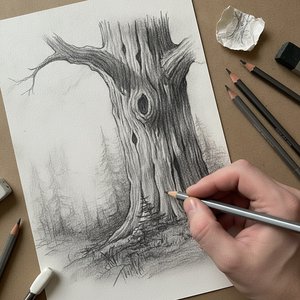
The Power of Graphite: Mastering Depth, Texture, and Detail in the Art of Pencil Drawing
Explore the profound artistry of graphite drawing. Discover professional techniques for mastering depth, texture, and detail through a lens of art history, from classical sketches to modern masterpieces. Elevate your understanding of the pencil medium with our expert guide.

Jan Lievens & Rembrandt: A Comparative Study of Baroque Innovation
Explore the fascinating artistic dialogue between Jan Lievens and Rembrandt van Rijn. Discover Lievens’s unique Baroque style, continental influences, and evolving legacy – a must-read for discerning art collectors.

Golden Light & Dutch Skies: The Timeless Magic of Dutch Golden Age Landscapes
Discover the breathtaking beauty of Dutch Golden Age landscapes. Explore the mastery of light, chiaroscuro, and 17th-century realism through an expert art history lens, celebrating the enduring legacy of the Dutch Masters for discerning collectors and art lovers.

Mastering the Line: A Comprehensive Expert Guide to Technical Precision and Expressive Depth in Drawing
Elevate your artistic practice with this expert guide to mastering the line. Discover advanced techniques in graphite, charcoal, and contour drawing designed for art students seeking technical precision and expressive depth in their fine art studies.