Preview
 Send
Send Share
Share
 Details

 Download
 Similars
 X-Ray
X-Ray Diaporama
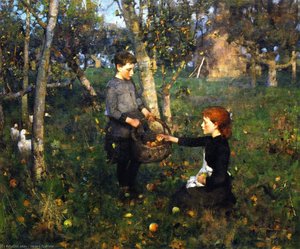
In the Orchard


 Read More
Hand Made Oil Reproduction
Hand-painted oil on canvas in your size and frame, made to order by our artists. ( Buy Print Buy Image)




P118B $10

P118H $10

P118W $10

P438Z $10

P508JH $12

P508YH $12

P805H $10

P805Z $10

P919BZ $10

P919G $10

P919XJ $10

P959ZH $10

P968JZ $12

W106C $8

W218G $10

W218JH $8

W218Y $10

W307PJ $10

W316G $10

W316PJ $8

W316Y $10

W398PJ $8

W4111J $10

W500HY $15

W500JH $15

W692G $12

W849H $8

W940BG $15

W953PJ $8




Pick from our preset sizes that match the artwork's original proportions.

You may enter your own dimensions to fit a specific frame or space. If your selected size does not match the original image's proportions, we will either crop the artwork or extend the painting with additional hand-painted elements. A digital mockup will be sent for your approval before production begins.
Please note that the on-screen preview does not reflect the actual cropping or extension. Only the mockup will accurately show the final composition.
While custom sizes are available, we recommend selecting a dimension from the predefined list to preserve the original proportions.
After order, OriginalUniqueArt.com team will email client for instructions and provide a mockup preview
Worldwide Delivery () in 3/4 weeks instead of standard 5 weeks. (21 August). No compromise on quality.

Free Worldwide Express Shipping

High-Quality Linen Canvas

Full Shipping Insurance

Customs Tax Refund Guarantee

True Color Matching Guarantee

60-Day Return Policy (Defects Only)

100% Money-Back Guarantee

Bulk Discount Offer
 Glass option is only available in size under 110 CM

In the Orchard
Reproduction Medium
Reproduction Size
-


Total Price
$ 300
Artwork Description
A Moment of Rural Serenity: James Guthrie's "In the Orchard"
James Guthrie’s “In the Orchard,” painted in 1885, is more than just a depiction of two figures enjoying a pleasant afternoon; it’s a carefully constructed evocation of Scottish rural life and a testament to the artist’s meticulous attention to detail. Housed within the Kelvingrove Art Gallery and Museum in Glasgow, this oil on canvas piece transports us to a world of dappled sunlight, ripe fruit, and a quiet sense of connection – a scene that resonates with a timeless appeal.
- Subject Matter: The painting centers around a man and woman engaged in the simple act of harvesting apples from an orchard. Their interaction, captured with remarkable realism, suggests a shared moment of leisure and companionship.
- Style & Technique: Guthrie’s style is firmly rooted in the tradition of Scottish landscape painting, yet imbued with a distinctly modern sensibility. He employs warm color palettes – predominantly yellows, greens, and browns – to create a cozy and inviting atmosphere. The soft brushstrokes contribute to a sense of depth and texture, drawing the viewer into the heart of the orchard.
- Historical Context: Created during a period of significant artistic change in Britain, “In the Orchard” reflects the growing interest in depicting everyday life and landscapes with an unprecedented level of accuracy. Guthrie’s work aligns with the broader trend of Realism, which sought to capture the world as it truly was, rather than idealizing it.
The Artist's Vision: James Guthrie and His Approach
James Guthrie (1859-1930), born in Greenock, Scotland, was a master of capturing the nuances of the Scottish countryside. His artistic journey began with formal training at the École des Beaux-Arts in Paris, where he studied under Henri Lehmann, a student of Ingres. This exposure to academic principles informed Guthrie’s meticulous technique and his commitment to realism. However, unlike purely imitative artists, Guthrie possessed a deep understanding of light and color, allowing him to translate his observations onto canvas with remarkable sensitivity. The painting's success lies not just in its subject matter but also in Guthrie's ability to evoke a specific mood – one of tranquility, contentment, and the beauty of nature.
Symbolism and Emotional Impact
Beyond the literal depiction of an orchard scene, “In the Orchard” carries subtle symbolic weight. The act of harvesting apples, traditionally associated with abundance and prosperity, suggests a connection to rural traditions and the rhythms of agricultural life. The presence of the bird perched on a branch adds a touch of whimsy and reinforces the painting’s natural ambiance. The overall effect is profoundly calming; it invites contemplation and offers a respite from the complexities of modern life. The soft light and harmonious composition create an emotional resonance that speaks to our innate desire for peace and connection with the natural world.
Bringing "In the Orchard" Home
OriginalUniqueArt.com offers meticulously crafted, hand-painted reproductions of James Guthrie’s “In the Orchard,” allowing you to experience this iconic artwork in a personalized way. Each reproduction is created using traditional oil painting techniques, ensuring exceptional detail and color accuracy. Whether you're an art collector, interior designer seeking a touch of timeless elegance, or simply someone who appreciates beautiful art, a hand-painted replica of “In the Orchard” will bring a piece of Scottish artistic heritage into your home.
Artist Biography
Georges Seurat: Bridging Science and Beauty
Georges Seurat, a name synonymous with the dawn of modern art, was more than just a painter; he was an explorer at the intersection of science, observation, and artistic expression. Born in Paris on December 2nd, 1859, into a family steeped in property speculation, his early life offered little indication of the revolutionary artist he would become. His father’s relocation to Le Raincy, a small town just outside Paris, meant a childhood largely spent under the watchful eye of his mother, Ernestine Faivre, a woman who instilled in him a love for drawing and a keen appreciation for art history. This foundation, coupled with rigorous study at the École des Beaux-Arts, where he honed his skills under the tutelage of Henri Lehmann—a disciple of the great Ingres—laid the groundwork for Seurat’s unique approach to painting. However, it was not merely imitation that drove him; a profound intellectual curiosity and a desire to understand the very nature of perception fueled his artistic journey.The Seeds of Pointillism: Science and Color
Seurat's artistic development wasn't a spontaneous eruption but rather a carefully considered evolution, deeply influenced by scientific theories of color. He devoured writings on optics and color theory – notably those of Chevreul, Charles Blanc, and O.N. Rood – recognizing that the human eye doesn’t perceive colors in isolation but rather through their interaction with surrounding hues. This understanding led him to develop his groundbreaking technique known as Pointillism, or Divisionism. Rather than blending colors directly on the canvas, Seurat meticulously applied tiny dots of pure color—each a distinct hue—to create an image. The theory was that when these dots were viewed from a distance, they would optically blend in the viewer’s eye, producing a vibrant and luminous effect far surpassing traditional mixing methods. This wasn't simply a stylistic choice; it was a deliberate attempt to capture the way light itself interacts with the world, mirroring the scientific principles of color perception.A Sunday on La Grande Jatte: A Revolutionary Composition
Seurat’s most celebrated work, *A Sunday Afternoon on the Island of La Grande Jatte* (1884-86), stands as a testament to his innovative technique and artistic vision. This monumental canvas depicts Parisians enjoying a leisurely afternoon in the park alongside the Seine River. Unlike the Impressionists who sought to capture fleeting moments of light and atmosphere, Seurat meticulously constructed a scene that felt both modern and timeless. The figures are rendered with an almost sculptural precision, their forms defined by carefully placed dots of color. More than just a depiction of a social gathering, *La Grande Jatte* became a symbol of the burgeoning modernity of Paris—a city grappling with rapid industrialization, urbanization, and shifting social dynamics. It’s considered to have fundamentally altered the course of modern art, paving the way for subsequent movements like Fauvism and Cubism by challenging traditional notions of representation and composition.Beyond Pointillism: Late Works and a Tragic End
While *A Sunday Afternoon on the Island of La Grande Jatte* cemented Seurat’s reputation, his artistic explorations didn't end there. In his later works, particularly those painted during his summers in Normandy, he began to experiment with bolder colors, more dynamic compositions, and a looser brushstroke—a departure from the rigid structure of Pointillism. Influences from Japanese prints and popular posters became evident, injecting a sense of energy and expressiveness into his paintings. However, Seurat’s career was tragically cut short. He succumbed to diphtheria on March 29th, 1891, at the young age of 31, leaving behind a legacy that continues to inspire artists and captivate audiences today.A Lasting Legacy: Influence and Recognition
Despite his brief career, Georges Seurat’s impact on the art world is undeniable. His pioneering use of Pointillism revolutionized painting techniques, demonstrating the potential for scientific principles to inform artistic expression. He influenced a generation of artists, including Vincent Van Gogh, who adopted aspects of his technique, and the Italian Futurists, who embraced its dynamism and fragmentation. Today, Seurat’s works are held in prestigious collections worldwide, and he is recognized as one of the most important figures in modern art—a brilliant mind who successfully bridged the gap between science and beauty, leaving behind a body of work that continues to shimmer with innovation and enduring appeal.
james guthrie
1859 - 1930 , United Kingdom
Quick Facts
- Artistic Movement Or Style: Neo-Impressionism, Pointillism
- Artists Or Movements Influenced By This Artist:
- Van Gogh
- Futurists
- Artists Who Influenced This Artist:
- Delacroix
- Holbein
- Date Of Birth: December 2, 1859
- Date Of Death: March 29, 1891
- Full Name: Georges Seurat
- Nationality: French
- Notable Artworks:
- A Sunday on La Grande Jatte
- Bathers at Asnières
- Place Of Birth: Paris, France
Related Articles

The Enduring Legacy of Oil on Canvas: Technique, History & Aesthetic Impact
Explore the rich history & techniques of oil painting – from Renaissance masters to Impressionism. Discover pigments, layering methods, and why this timeless medium endures. Expert insights for artists & art enthusiasts.

Oil on Canvas: A Historical & Technical Exploration of a Timeless Artistic Medium
Explore the rich history & enduring techniques of oil painting on canvas. Discover the science behind its longevity, conservation practices, and contemporary relevance. Expert insights for art enthusiasts.

The Enduring Power of Painting: A Historical & Contemporary Exploration of Form and Emotion
Explore the rich history & enduring techniques of oil painting with OriginalUniqueArt. Discover masterpieces, learn about art collecting, and find authentic handmade reproductions crafted by skilled artists.

The Enduring Legacy of Oil on Canvas: Technique, History & Contemporary Practice
Explore the rich history & enduring techniques of oil painting on canvas. Discover the science behind its longevity, conservation practices, and contemporary relevance. Expert insights for art enthusiasts.
The Soul of Impressionism: Why Oil on Canvas Captures Eternal Light and Timeless Emotion
Discover the enchanting alchemy of Impressionism. Explore how the mastery of oil on canvas, through glazing and impasto, captures eternal light and emotion. Perfect for lovers of Monet and Van Gogh seeking the profound depth of hand-painted fine art.