Preview
 Send
Send Share
Share
 Details
 Guide
Guide

 Download
 Similars
 X-Ray
X-Ray Diaporama
 Stats
StatsIn November
 Oil On Canvas
- WallArt
- Group of Seven
 1917
1917- 19th Century
 53.0 x 66.0 cm
 McMichael Canadian Art Collection
 Read More
Giclée / Art Print
Museum-quality giclée or canvas print with fast production and flexible finish options. ( Buy Hand Made Painting Switch to Digital Image)




P118B $10

P118H $10

P118W $10

P438Z $10

P508JH $12

P508YH $12

P805H $10

P805Z $10

P919BZ $10

P919G $10

P919XJ $10

P959ZH $10

P968JZ $12

W106C $8

W218G $10

W218JH $8

W218Y $10

W307PJ $10

W316G $10

W316PJ $8

W316Y $10

W398PJ $8

W4111J $10

W500HY $15

W500JH $15

W692G $12

W849H $8

W940BG $15

W953PJ $8




Pick from our preset sizes that match the artwork's original proportions.

Type the width and the height you need, to fit your frame or your wall. A print can only be cut, never made bigger than the picture, so a size with a different shape loses a part of the image. We send you a digital mockup to approve before we print anything. The picture shown on this page does not show the real cut — only the mockup does.
Worldwide Delivery () in 2 weeks instead of standard 4/5 weeks. (27 October)

Free Worldwide Express Shipping

High-Quality Linen Canvas

Full Shipping Insurance

Customs Tax Refund Guarantee

True Color Matching Guarantee

100-Day Return Policy (Defects Only)

100% Money-Back Guarantee

Bulk Discount Offer
 Glass option is only available in size under 110 CM

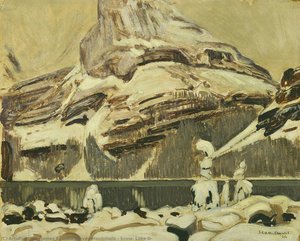
In November
Giclée / Art Print
Reproduction Size
-


Total Price
$ 81
A Moment Frozen in Twilight: James Edward Hervey MacDonald’s “In November”
James Edward Hervey MacDonald's "In November," painted in 1917, is more than just a depiction of a sunset; it’s a profound meditation on the sublime beauty of the Canadian wilderness and a cornerstone of modern Canadian art. Executed in oil on canvas with remarkable skill, this piece captures a fleeting moment – the dramatic transition from day to night over a landscape dominated by towering trees and a sky ablaze with color. MacDonald, a pivotal figure inextricably linked to the formation of the Group of Seven, masterfully translates his deep connection to nature onto the canvas, offering viewers an intimate glimpse into the heart of the Canadian spirit.
The Painter’s Vision: Style and Technique
- Impressionistic Influence: MacDonald's style is firmly rooted in Impressionism, evident in his loose brushwork and emphasis on capturing the effects of light and atmosphere. However, he transcends mere imitation, imbuing these techniques with a distinctly Canadian sensibility.
- Color as Emotion: The painting’s palette – dominated by vibrant yellows, oranges, and blues – isn't simply representational; it’s emotionally charged. MacDonald uses color to evoke the warmth of the setting sun, the coolness of the approaching night, and the overall sense of tranquility and awe inspired by the natural world.
- Texture and Depth: Noticeable in the depiction of the tree trunks and clouds, MacDonald employs a layering technique that creates a palpable sense of texture and depth. This adds to the realism while maintaining an artistic interpretation.
Historical Context and the Group of Seven
"In November" was created during a crucial period in Canadian art history – the early 20th century, when artists were beginning to seek a uniquely Canadian identity, moving away from European traditions. MacDonald’s work directly contributed to the formation of the Group of Seven, a collective that challenged artistic conventions and championed the depiction of Canada's rugged landscapes. This painting exemplifies their core principles: prioritizing direct observation of nature over academic ideals and focusing on capturing the essence of the Canadian wilderness with bold colors and expressive brushstrokes. The year 1917 is particularly significant as it aligns with the Group of Seven’s formative years, solidifying MacDonald’s role within this influential movement.
Symbolism and Emotional Impact
The scene depicted – a cloudy evening sky reflected in the trees – carries a powerful symbolic weight. It represents not just a visual spectacle but also a sense of contemplation and connection to something larger than oneself. The vastness of the sky, coupled with the solidity of the trees, evokes feelings of both awe and humility. MacDonald’s ability to capture this emotional resonance is what elevates “In November” beyond a simple landscape painting; it's a timeless representation of the human experience in relation to the natural world. This artwork would be an exceptional addition to any collection seeking a piece that embodies the spirit of Canadian wilderness art.
Questions & Answers
What emotion does "In November" by James Edward Hervey MacDonald convey?
"In November" by James Edward Hervey MacDonald conveys a tranquil emotional tone.
What does "In November" share with the rest of James Edward Hervey MacDonald's output?
"In November" shares with James Edward Hervey MacDonald's other works its Group of Seven style and the recorded themes: group of seven influence, canadian wilderness depiction, northern landscape focus, landscapes, nature themes, macdonald’s key artwork.
Is "In November" by James Edward Hervey MacDonald a bright or a dark artwork?
In terms of perceived brightness, "In November" by James Edward Hervey MacDonald is deep_shadow.
Artist Biography
James Edward Hervey MacDonald: A Pioneer of Canadian Landscape
James Edward Hervey MacDonald (1873-1932) stands as a pivotal figure in the development of modern Canadian art, inextricably linked to the formation and ethos of the Group of Seven. More than just a painter, he was a visionary who profoundly shaped the visual identity of Canada through his vibrant depictions of the nation’s wilderness – its forests, shimmering lakes, and the dramatic northern landscapes. Born in Durham, England, MacDonald's journey to becoming one of Canada’s most celebrated artists is a testament to his artistic ambition, his deep connection to nature, and his crucial role in establishing a distinctly Canadian artistic voice. His legacy continues to resonate through his paintings, which are now recognized as cornerstones of the country’s cultural heritage.Early Life and Artistic Training
MacDonald's early life was marked by a move to Canada at the age of fourteen with his family, settling in Hamilton, Ontario. This relocation proved transformative, setting him on a path toward embracing the rugged beauty of his new homeland. Initially, he received formal training at the Hamilton Art School, absorbing influences from artists like John Ireland and Arthur Heming. However, it was his subsequent move to Toronto that truly ignited his artistic spirit. He immersed himself in the burgeoning commercial art scene, honing his skills at Grip Ltd., a leading printing firm, where he developed a keen eye for design and typography. This experience proved invaluable later in his career, informing his approach to composition and visual storytelling. Crucially, it also exposed him to a network of fellow artists, including Tom Thomson, who would eventually become central figures in the Group of Seven. His time at the Central Ontario School of Art and Design further solidified his artistic foundation, under the tutelage of George Agnew Reid and William Cruikshank.The Formation of the Group of Seven and Artistic Style
MacDonald’s most significant contribution to Canadian art lies in his role as a founding member of the Group of Seven – a collective of artists who sought to break away from European artistic traditions and forge a uniquely Canadian style. The group, initially comprised of A.Y. Jackson, Franklin Hugh Hodgson, Lawren Harris, Arthur Mason Hayworth, Charles Hiam Littleboy, and later Ernest Loyd and J.M.W. Sutherland, was profoundly influenced by MacDonald’s vision. He recognized the need for a distinct artistic identity that reflected Canada's vast landscapes and its people. MacDonald’s style is characterized by bold color palettes, dynamic brushwork, and an intense emotional response to the natural world. Unlike the muted tones often associated with academic art, MacDonald embraced vibrant hues – deep blues of northern lakes, fiery reds and oranges of autumn foliage, and rich greens of dense forests. His paintings are not merely representations of landscapes; they are imbued with a sense of energy, drama, and a profound connection to the spirit of the wilderness.Key Works and Notable Paintings
MacDonald’s artistic output is remarkably prolific, encompassing a wide range of subjects within the Canadian landscape. His paintings of Algoma (Georgian Bay) are particularly renowned for their evocative power and technical mastery. Works such as “A Sandy Beach, Lake Ontario” capture the shimmering light on water and the rugged beauty of the shoreline with remarkable detail and sensitivity. "Early Evening, Winter" exemplifies his ability to convey the stark beauty of a Canadian winter landscape, utilizing contrasting colors and dramatic lighting to create a sense of both serenity and intensity. His series of paintings depicting the northern wilderness – forests, lakes, and mountains – are considered seminal works in establishing a distinctly Canadian artistic aesthetic. His work often reflects a deep appreciation for the natural world, combined with a keen awareness of its fragility.Legacy and Historical Significance
James Edward Hervey MacDonald’s impact on Canadian art is immeasurable. As a founding member of the Group of Seven, he played a crucial role in establishing a national artistic identity that continues to resonate today. His bold use of color, dynamic brushwork, and profound connection to the Canadian landscape profoundly influenced generations of artists. Beyond his artistic achievements, MacDonald was also a dedicated educator and mentor, nurturing the talents of many young painters. He championed a spirit of innovation and experimentation, encouraging artists to break free from traditional conventions and explore new ways of representing their world. His legacy extends beyond the canvas; he helped shape Canada’s cultural landscape, solidifying its place on the international art stage. His paintings are now celebrated in museums and private collections across Canada and around the world, a testament to his enduring artistic vision.
James Edward Hervey MacDonald
1873 - 1932 , United Kingdom
Quick Facts
- Full Name: James Edward Hervey MacDonald
- Nationality: British-Canadian
- Date Of Birth: 1873
- Date Of Death: 1932
- Place Of Birth: Durham, United Kingdom
- Notable Artworks:
- A Sandy Beach, Lake Ontario
- Early Evening, Winter
- Artistic Movement Or Style: Group of Seven
- Artists Who Influenced This Artist:
- Ralph Waldo Emerson
- Henry David Thoreau
- Artists Or Movements Influenced By This Artist:
- Tom Thomson
- Group of Seven
Related Articles

Arthur Lismer: A Pioneer of Canadian Modernism & the Group of Seven's Visionary Spirit
Explore the life & art of Arthur Lismer, a pivotal figure in Canadian Modernism and founding member of the Group of Seven. Discover his landscapes, teaching legacy & lasting influence on Canadian art history.

Echoes of Time: Exploring the Enduring Appeal & Historical Context of Vintage Art Prints
Explore the captivating world of vintage art prints! Discover their history, collecting tips & enduring appeal. Expert insights on chromolithography and building a legacy collection with OriginalUniqueArt.

Giclée Prints: Archival Quality & Aesthetic Nuances for the Discerning Collector
Explore the world of giclée prints with OriginalUniqueArt. Learn about archival quality, aesthetic nuances & investment potential. Expert guidance for discerning art collectors seeking museum-quality reproductions and lasting value.

The Enduring Legacy of Fine Art Prints: Technique, History & Aesthetic Impact
Explore the rich history & techniques of fine art prints. Discover investment potential, assess authenticity, and learn how to preserve your collection with expert guidance. Trusted insights for discerning collectors.
Thomas Thomson: Pioneering Canadian Landscape & the Pursuit of National Identity
Explore the evocative landscapes of Tom Thomson, a pivotal figure in Canadian art & precursor to the Group of Seven. Discover his bold style, lasting legacy, and profound impact on shaping a national artistic identity.