

 Preview
 Send
Send Share
Share
 Details
 Guide
Guide

 Download
 Similars
 X-Ray
X-Ray Diaporama
 Stats
StatsL Hôte
 Acrylic On Canvas
- WallArt
- Cubism
 1892
1892 220.0 x 290.0 cm
 Musée Des Beaux
 Read More
Purchase a high-resolution, enhanced digital image, far superior to the online preview.
Each file is meticulously prepared by our in-house specialists using advanced tools and expert manual retouching. We ensure every image has exceptional clarity, precise color accuracy, and fine detail.
The final file is delivered via email within 72 hours, optimized for immediate use in professional, editorial, and print environments. This is the same quality trusted by top-tier design studios, publishers, and galleries.
Digital Image
Download a high-resolution file for personal display, printing, and creative projects. ( Switch to Print Buy Hand Made Painting)
Included in Every Digital Image Order
Expert Digital Delivery, Guaranteed
When you choose OriginalUniqueArt.com, you're not just getting an image - you're receiving a professionally enhanced digital artwork, crafted with precision and backed by a satisfaction guarantee. Here's everything that comes with your order, automatically:

Fast Email Delivery
Your high-resolution digital image file will be emailed to you within 72 hours of ordering - ready for immediate use.

AI-Enhanced Digital File
Your artwork is professionally optimized using advanced AI tools and manual editing, ensuring maximum detail, clarity, and color accuracy.

Free Lifetime Re-Delivery
Accidentally deleted or lost your file? No worries - we'll resend it to you anytime, free of charge.

No Import Fees - Ever
Enjoy your artwork instantly with zero customs, duties, or delivery fees - digital downloads are always tax-free.

Color Accuracy Guarantee
We ensure your digital image reflects the original colors as closely as possible using professional tools and color management.

100-Day Satisfaction Guarantee
If you're not satisfied with your digital image, we'll revise it or refund 100% within 100 days - no questions asked.

100% Money-Back Guarantee
Not satisfied? Get a full refund within 100 days of receiving your digital file - no questions asked.

Bulk Order Discounts
Buy 3 images, save 10% - Buy 5, save 15% - Buy 10+, save 20%. Great for creative projects, galleries, and agencies.
L'Hôte by Jacques Emile Blanche – A Portrait of Parisian Elegance
Jacques-Émile Blanche’s “L’Hôte” (The Host) stands as a quintessential emblem of Belle Époque Paris, capturing not merely a likeness but an atmosphere—a palpable sense of refined social interaction and intellectual curiosity. Painted in 1892, this monumental oil on canvas measuring 220 x 290 cm resides at the Musée Des Beaux Arts in Rouen, France, offering viewers a glimpse into a bygone era defined by artistic innovation and aristocratic refinement. Blanche’s distinctive style—characterized by loose brushwork and a muted palette—immediately distinguishes itself from the more polished conventions of his contemporaries. He eschewed meticulous detail in favor of conveying emotion and capturing the subtle nuances of human expression, techniques honed during his formative years alongside luminaries like Édouard Manet and Whistler.A Masterful Blend of Realism and Symbolism
Blanche’s artistic approach transcends mere representation; it delves into symbolism to illuminate deeper themes concerning identity and social dynamics. The composition itself is carefully orchestrated—the central figures seated around a dining table dominate the canvas, their gaze directed outwards, suggesting contemplation and engagement with the world beyond the immediate setting. Notably absent are chairs positioned strategically behind the guests, an element that has been interpreted as representing those excluded from this privileged circle – perhaps individuals deemed unworthy of inclusion or simply those whose presence wasn’t considered essential to the narrative. This deliberate omission underscores Blanche's astute observation of societal hierarchies and his ability to communicate complex ideas through visual cues.Technique and Color Palette: Echoes of Impressionism
The painting’s execution showcases Blanche’s mastery of Impressionist techniques. Thick, visible brushstrokes imbue the canvas with texture and movement, mirroring the fleeting impressions of light and atmosphere that were central to the artistic movement. Blanche employed a restrained color scheme—primarily dominated by warm browns and ochres—creating a cozy and inviting ambiance reminiscent of candlelight illumination. These muted hues contribute to the painting’s emotional resonance, fostering a sense of intimacy and conveying the quiet dignity of the subjects depicted. The artist skillfully blended pigments to achieve subtle gradations of tone, enhancing the illusion of depth and capturing the nuances of light reflecting off surfaces.Historical Context: Parisian Society at Its Zenith
“L’Hôte” was created during Paris's golden age—the Belle Époque (roughly 1871-1914)—a period marked by unprecedented artistic creativity, economic prosperity, and cultural dynamism. Blanche himself was deeply embedded in the intellectual milieu of his time, surrounded by writers, artists, and thinkers who championed progressive ideas and challenged traditional conventions. The painting reflects this spirit of experimentation and celebrates the pursuit of beauty and knowledge—values that were paramount to Parisian society during Belle Époque. It serves as a testament to Blanche’s ability to capture not only the visual appearance of his subjects but also the intellectual and social currents shaping their lives.Emotional Impact: Capturing Inner Life
Ultimately, “L’Hôte” succeeds in conveying profound emotional depth. Blanche's portraits are renowned for capturing the inner life of his subjects—their personalities, aspirations, and vulnerabilities—with remarkable sensitivity. The gaze of the figures is imbued with quiet contemplation, hinting at unspoken thoughts and emotions. This masterful portrayal speaks to the enduring power of art to illuminate human experience and transcends time, inviting viewers to contemplate themes of identity, social status, and the complexities of human relationships. Blanche’s legacy continues to inspire artists today who strive to achieve similar levels of psychological insight and artistic virtuosity.Questions & Answers
What are the reproduction rights of "L Hôte" at the Musée Des Beaux?
The copyright status of "L Hôte" by Jacques-Émile Blanche is clear: the work is in the public domain - its copyright has expired. Its presence at the Musée Des Beaux does not change that status.
What mood would "L Hôte" bring to a space?
"L Hôte" by Jacques-Émile Blanche has an elegant atmosphere and is recommended for a living room. The mood is what the work brings to the space around it.
What saturation and intensity does "L Hôte" by Jacques-Émile Blanche show?
The color of "L Hôte" is muted in saturation and monochromatic in intensity.
Artist Biography
early life and training
jacques-émile blanche was born on january 1, 1861, in paris, france. he came from a family of successful physicians and grew up in the neighborhood of passy, where he was surrounded by affluent families and renowned artists. blanche's father, émile blanche, was a noted pathologist who encouraged his son's artistic interests. as a young boy, jacques-émile met many famous writers and painters, including edouard manet, who would later become a significant influence on his work.artistic career
blanche was largely self-taught, but he did receive some instruction from henri gervex and ferdinand humbert. in 1881, one of his paintings was accepted at the salon des artistes français, marking the beginning of his successful artistic career. throughout his life, blanche submitted many paintings to the salon and exhibited with various reputable societies. his work was characterized by loose brushwork and a restricted color scheme, which gave his portraits and landscapes a unique, impressionist feel.influences and style
blanche's style was influenced by edouard manet and james mcneill whistler, two artists he greatly admired. like them, blanche sought to capture the truth of his models, often using bold, expressive brushstrokes to convey their personalities. his portraits of elegant women and men, such as "portrait of marcel proust", are renowned for their sensitivity and insight. the musée des beaux-arts in rouen has an impressive collection of blanche's work, showcasing his ability to balance tradition and modernity.notable works and exhibitions
some of blanche's notable works include:- "the kreutzer sonata", a painting that showcases his ability to capture the essence of music and emotion.
- "portrait of henry james", a portrait that highlights blanche's skill in capturing the subtleties of human character.
- "london views", a series of paintings that demonstrate his love for the city and its people.
legacy
jacques-émile blanche died on september 30, 1942, leaving behind a legacy of elegant, impressionist paintings. his work continues to be celebrated for its sensitivity, expressiveness, and attention to detail. as a painter, writer, and critic, blanche made significant contributions to the art world, inspiring future generations with his unique style and approach. for more information on jacques-émile blanche, visit wikipedia or explore his artwork on OriginalUniqueArt.com.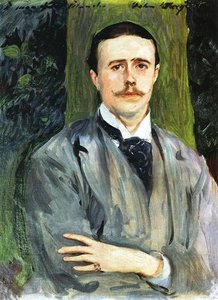
Jacques-Émile Blanche
1861 - 1942 , France
Quick Facts
- Artistic Movement Or Style: Impressionism
- Artists Who Influenced This Artist:
- Edouard Manet
- James McNeill Whistler
- Full Name: Jacques-Émile Blanche
- Nationality: French
- Notable Artworks:
- The Kreutzer Sonata
- Portrait of Henry James
- London Views
- Mrs. Sickert
- Mabel Beardsley
- Place Of Birth: Paris, France
- Date Of Birth: 1861
- Date Of Death: 1942