Send
Send Share
Share
 Details
 Guide
Guide

 Download
 Similars
 Diaporama
 Q&A
Q&A Stats
StatsBacchus


 Read More
Giclée / Art Print
Museum-quality giclée or canvas print with fast production and flexible finish options. ( Buy Hand Made Painting Switch to Digital Image)




































Pick from our preset sizes that match the artwork's original proportions.

Type the width and the height you need, to fit your frame or your wall. A print can only be cut, never made bigger than the picture, so a size with a different shape loses a part of the image. We send you a digital mockup to approve before we print anything. The picture shown on this page does not show the real cut — only the mockup does.
Worldwide Delivery () in 2 weeks instead of standard 4/5 weeks. (8 November)

Free Worldwide Express Shipping

High-Quality Linen Canvas

Full Shipping Insurance

Customs Tax Refund Guarantee

True Color Matching Guarantee

100-Day Return Policy (Defects Only)

100% Money-Back Guarantee

Bulk Discount Offer
 Glass option is only available in size under 110 CM

Bacchus
Giclée / Art Print
Reproduction Size
-


Total Price
$ 81
A Renaissance Reverie: Exploring Jacopo Sansovino’s Bacchus
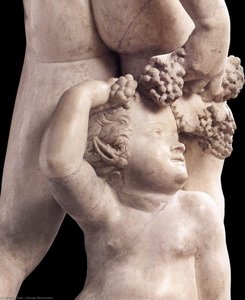
The sculpture of *Bacchus*, attributed to Florentine artist Jacopo Sansovino, stands as a testament to the humanist ideals and artistic innovations that defined the High Renaissance. Completed around 1515, this marble masterpiece resides within the Bargello museum in Florence—a location steeped in artistic heritage—and continues to captivate viewers with its masterful depiction of Dionysus, the Greek god of wine and revelry. More than just a beautiful object, *Bacchus* embodies a profound engagement with classical antiquity and represents Sansovino’s unwavering commitment to reviving the sculptural traditions of Greece and Rome.The Artist's Vision: Sansovino and Classical Influence
Jacopo Sansovino (1486-1570) emerged from Florence’s vibrant artistic crucible as a protégé of Andrea Sansovino, inheriting his mentor’s dedication to anatomical precision and stylistic elegance. Early training instilled in him an acute awareness of the sculptural achievements of antiquity—particularly the Belvedere Apollo—which profoundly shaped his aesthetic sensibilities. Unlike many artists of his time who embraced Mannerism's stylized distortions, Sansovino steadfastly pursued a path rooted in classical ideals, prioritizing naturalistic proportions and harmonious composition. This commitment is vividly evident in *Bacchus*, where Sansovino skillfully blends elements from various sculptural precedents to create an image that transcends mere imitation; it’s a deliberate reimagining of the past informed by contemporary artistic concerns.A Dynamic Pose: Anatomy and Movement
The sculpture's striking dynamism immediately draws the eye. Sansovino meticulously rendered the musculature of Bacchus’s body, demonstrating unparalleled anatomical accuracy—a hallmark of Florentine Renaissance art. The figure stands with one leg forward, creating a subtle counterbalance that conveys movement and energy. His left arm extends upward, holding a bunch of grapes or possibly a cup – symbols of Dionysian abundance and celebration – while his right hand rests on the thigh, adding to the sculpture’s sense of fluidity. This posture echoes depictions of Apollo Belvedere and other Classical sculptures, underscoring Sansovino's conscious engagement with sculptural traditions. The sculptor’s masterful manipulation of form contributes significantly to conveying the god’s joyous spirit.Symbolism and Context: Renaissance Florence
*Bacchus* operates within a broader artistic context—the flourishing intellectual and cultural landscape of Renaissance Florence under Cosimo I de Medici. The Medicis championed humanist scholarship and artistic patronage, fostering an environment where artists like Sansovino could explore classical ideals while simultaneously innovating stylistic conventions. The sculpture’s placement in Giovanni Bartolini's garden at Gualfonda reflects the Renaissance fascination with reviving the beauty and grandeur of antiquity—a desire to recapture the spirit of Classical Greece and Rome. Furthermore, Sansovino’s work aligns with the broader artistic trends of the period, exemplified by Raphael’s frescoes in the Stanza della Segnatura, where artists sought to elevate art as a vehicle for philosophical contemplation.A Legacy Enduring Beauty
Despite suffering significant damage during the 1762 fire that ravaged Florence's Palazzo Pitti—a tragedy that claimed many irreplaceable artworks—*Bacchus* remains an enduring symbol of Renaissance artistic excellence. Its captivating form, combined with Sansovino’s unwavering devotion to classical principles and humanist ideals, continues to inspire admiration and awe. The sculpture serves as a poignant reminder of the transformative power of art—its ability to transcend time and convey profound emotions while simultaneously engaging in dialogue with the artistic heritage of antiquity. It stands as an exemplar of Florentine Renaissance sculpture, cementing Sansovino’s place among the greatest artists of his era.Questions & Answers
Is Jacopo Sansovino, creator of "Bacchus", known under other names?
Jacopo Sansovino is also known as Jacopo Tatti.
Which period of Jacopo Sansovino's career does "Bacchus" belong to?
"Bacchus" belongs to the Mature Period of Jacopo Sansovino's career. This classification relates the work to the artist's development.
What is the recommended use of a print of "Bacchus"?
A reproduction of "Bacchus" by Jacopo Sansovino is recommended for focal. This suggestion follows from the work's subject, mood and colors.
Artist Biography
A Florentine Foundation and Early Promise
Jacopo Sansovino, born Jacopo Tatti in Florence around 1486, emerged into a world brimming with artistic ferment. His initial training remains somewhat shrouded in mystery—apprenticed to an unknown sculptor, he quickly demonstrated a talent that propelled him toward ambitious endeavors. The vibrant atmosphere of Renaissance Florence, already witnessing the towering achievements of masters like Michelangelo and Leonardo da Vinci, undoubtedly shaped his early aesthetic sensibilities. By 1511, commissions began to flow: marble sculptures for the Duomo, including a depiction of St. James, and a compelling *Bacchus* statue now residing in the Bargello museum—works that already hinted at the classical inclinations that would define his mature style. A revealing episode occurred in 1518 when designs he submitted for Santa Maria Gloriosa dei Frari were rejected by Michelangelo himself, a testament to the fiercely competitive artistic climate of Florence and a moment that likely spurred Sansovino to seek new horizons. His formative years also included a collaborative period with painter Andrea del Sarto from 1511-1515, an association that broadened his understanding of Renaissance art beyond the realm of sculpture. These early works reveal a fascinating blend—the High Renaissance ideals of balance and harmony interwoven with emerging Mannerist tendencies toward elegance and refined detail.Rome, Rupture, and a Venetian Rebirth
The year 1519 marked a turning point as Sansovino journeyed to Rome. This period coincided with the tumultuous Sack of Rome in 1527, an event that irrevocably altered the course of Italian history and profoundly impacted the artist’s trajectory. While in Rome, he created works like St. Onofrio and Thomas Rangone, demonstrating a growing architectural awareness alongside his sculptural prowess. The upheaval caused by the sack prompted a decisive move—a relocation to Venice, a city poised to become the canvas for his most enduring legacy. This wasn't merely a change of location; it was an immersion into a distinctly different cultural milieu. Venice, with its unique blend of Byzantine heritage and maritime power, offered Sansovino both refuge and opportunity. Appointed architect to the Venetian Republic, he embarked on a series of ambitious projects that would fundamentally transform the city’s architectural landscape.Shaping a City: The Venetian Masterpieces
Sansovino's arrival in Venice heralded his most prolific period. He wasn’t simply building structures; he was reimagining the very fabric of the city, infusing it with a new sense of classical grandeur and Venetian elegance. His masterpiece, undoubtedly, is the Biblioteca Marciana, begun around 1537 and painstakingly completed over half a century. This richly decorated Renaissance structure, strategically positioned across from the Doge’s Palace in the Piazzetta, stands as a testament to his ability to synthesize classical architectural principles with the unique decorative sensibilities of Venice. The library's façade, adorned with sculptures and intricate carvings, exemplifies this harmonious fusion. Beyond the Biblioteca Marciana, Sansovino left an indelible mark on Venice through numerous other significant works: the Ca’ de Dio hospital, a complex designed to provide shelter and care; the Palazzo Corner, showcasing his mastery of palatial architecture; the Palazzo Loredan, with its elegant proportions and refined details; and ambitious designs for the Piazza San Marco itself, aiming to create a grand civic space befitting Venice's status as a major European power. He successfully adapted classical architectural language to Venetian tastes, paving the way for the graceful architecture of Andrea Palladio who would follow in his footsteps.Legacy and Historical Significance
Jacopo Sansovino’s historical significance lies not only in the beauty and innovation of his individual works but also in his pivotal role as a bridge between the High Renaissance and Mannerism. He possessed an exceptional ability to synthesize classical ideals—proportion, harmony, and order—with the decorative richness and unique spatial considerations of Venice. This synthesis created a distinctive architectural style that resonated throughout the city and influenced generations of artists and architects. He was more than just an architect or sculptor; he was a cultural translator, adapting ancient forms to a modern context while remaining deeply sensitive to local traditions. Sansovino also served as a mentor, nurturing the talents of sculptors like Alessandro Vittoria and Danese Cataneo, ensuring that his artistic vision would continue to flourish after his death in 1570. His work demonstrates a remarkable mastery of both sculpture and architecture—a rare combination that solidified his place as one of the most important Renaissance artists. His legacy continues to inspire appreciation for Venetian art and architecture, reminding us of the power of artistic vision to shape not just buildings, but entire cities and cultural identities.
Jacopo Sansovino
1486 - 1570 , Italy
Quick Facts
- Artistic Movement Or Style: Renaissance, Mannerism
- Artists Or Movements Influenced By This Artist:
- Alessandro Vittoria
- Danese Cataneo
- Andrea Palladio
- Artists Who Influenced This Artist:
- Andrea Sansovino
- Andrea del Sarto
- Date Of Birth: 1486
- Date Of Death: 1570
- Full Name: Jacopo Sansovino
- Nationality: Italian
- Notable Artworks:
- Biblioteca Marciana
- St. Onofrio
- Ca' de Dio hospital
- Palazzo Corner
- Madonna with the Child
- Place Of Birth: Florence, Italy
Related Articles

Timeless Elegance: A Complete Guide to the Sublime Beauty and Artistry of Marble Sculpture
Discover the sublime beauty of marble art through an expert exploration of Renaissance and Neoclassical masterpieces. From the delicate textures of Carpeaux to the grandeur of Sansovino, immerse yourself in a guide to timeless elegance and sculptural perfection.

The Enduring Form: Exploring Themes & Techniques in Sculpture Across Historical Periods
Explore the rich history of sculpture from ancient masterpieces to contemporary innovations. Discover key techniques, influential artists & investment potential for discerning art collectors.

The Enduring Allure of Marble in Art History: From Classical Sculpture to Modern Abstraction
Explore the captivating history of marble sculpture from ancient Greece to modern art. Discover renowned artists like Canova & Michelangelo, carving techniques, and investment insights at OriginalUniqueArt.

Master of Drama: The 25 Greatest Artworks by Jacopo Tintoretto
Explore 25 dramatic Tintoretto masterpieces of the Venetian Renaissance. Discover museum-quality art on OriginalUniqueArt.com.

Bronze Sculptures That Defined Art History | OriginalUniqueArt
Journey through art history with our Top 10 bronze sculptures! Explore masterpieces by Rodin, Michelangelo & more. Discover stories behind iconic statues and find museum-quality reproductions for your home decor at OriginalUniqueArt.com.