Text size

() ·

A painting made for you, by hand

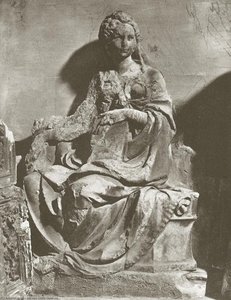
Baptismal font

Hand Made Oil Reproduction

Hand-painted oil on canvas in your size and frame, made to order by our artists. ( Switch to Print Switch to Digital Image)

Collectible Description

Artist Biography

Jacopo della Quercia (1374-1438) was a pivotal Italian Renaissance sculptor bridging Gothic & classical styles. Known for emotive works like the Tomb of Ilaria del Carretto and Fonte Gaia, he foreshadowed Michelangelo's artistry. Explore his sculptur

from ·

Chapter 1

How large should it be?

Slide to change the size; the picture on the left shows the frame at its real width. The proportions of the original are kept.

Standard
custom
CM
INCH

Pick from our preset sizes that match the artwork's original proportions.

width
height

Type the width and the height you need, to fit your frame or your wall. This is hand-painted, so for a size with a different shape the artist can paint a bit more around the picture, or cut a bit — you choose. We send you a digital mockup to approve before the painting starts. The picture shown on this page does not show the real result — only the mockup does.

Chapter 2

How should it arrive?

Choose the edges of the stretched canvas

Choose your frame

Corner sample of the WhiteWrap canvas edge finish, stretched on solid wood bars
White $1
Corner sample of the BlurSideWrap canvas edge finish, stretched on solid wood bars
Blurside $1
Corner sample of the ExtendedWrap canvas edge finish, stretched on solid wood bars
Extended $1
Corner sample of the P118B picture frame: moulded polystyrene, 5 cm wide and 3 cm thick
P118B $10
Corner sample of the P118H picture frame: moulded polystyrene, 5 cm wide and 3 cm thick
P118H $10
Corner sample of the P118W picture frame: moulded polystyrene, 5 cm wide and 3 cm thick
P118W $10
Corner sample of the P438Z picture frame: moulded polystyrene, 5.5 cm wide and 3.5 cm thick
P438Z $10
Corner sample of the P508JH picture frame: moulded polystyrene, 7 cm wide and 3.5 cm thick
P508JH $12
Corner sample of the P508YH picture frame: moulded polystyrene, 7 cm wide and 3.5 cm thick
P508YH $12
Corner sample of the P805H picture frame: moulded polystyrene, 5 cm wide and 3.5 cm thick
P805H $10
Corner sample of the P805Z picture frame: moulded polystyrene, 5 cm wide and 3.5 cm thick
P805Z $10
Corner sample of the P919BZ picture frame: moulded polystyrene, 7 cm wide and 3.5 cm thick
P919BZ $10
Corner sample of the P919G picture frame: moulded polystyrene, 7 cm wide and 3.5 cm thick
P919G $10
Corner sample of the P919XJ picture frame: moulded polystyrene, 7 cm wide and 3.5 cm thick
P919XJ $10
Corner sample of the P959ZH picture frame: moulded polystyrene, 5 cm wide and 3 cm thick
P959ZH $10
Corner sample of the P968JZ picture frame: moulded polystyrene, 6 cm wide and 4 cm thick
P968JZ $12
Corner sample of the W106C picture frame: solid wood, 5 cm wide and 3 cm thick
W106C $8
Corner sample of the W218G picture frame: solid wood, 5 cm wide and 3 cm thick
W218G $10
Corner sample of the W218JH picture frame: solid wood, 5 cm wide and 3 cm thick
W218JH $8
Corner sample of the W218Y picture frame: solid wood, 5 cm wide and 3 cm thick
W218Y $10
Corner sample of the W307PJ picture frame: solid wood, 6 cm wide and 3 cm thick
W307PJ $10
Corner sample of the W316G picture frame: solid wood, 6 cm wide and 3 cm thick
W316G $10
Corner sample of the W316PJ picture frame: solid wood, 6 cm wide and 3 cm thick
W316PJ $8
Corner sample of the W316Y picture frame: solid wood, 6 cm wide and 3 cm thick
W316Y $10
Corner sample of the W398PJ picture frame: solid wood, 5 cm wide and 3 cm thick
W398PJ $8
Corner sample of the W4111J picture frame: solid wood, 6.5 cm wide and 3.5 cm thick
W4111J $10
Corner sample of the W500HY picture frame: solid wood, 7 cm wide and 5 cm thick
W500HY $15
Corner sample of the W500JH picture frame: solid wood, 7 cm wide and 5 cm thick
W500JH $15
Corner sample of the W692G picture frame: solid wood, 8 cm wide and 4 cm thick
W692G $12
Corner sample of the W849H picture frame: solid wood, 5 cm wide and 3 cm thick
W849H $8
Corner sample of the W940BG picture frame: solid wood, 7.5 cm wide and 4.5 cm thick
W940BG $15
Corner sample of the W953PJ picture frame: solid wood, 6 cm wide and 3.5 cm thick
W953PJ $8
Corner sample of the H24-GOLD picture frame: carved wood with gesso, 10 cm wide and 6 cm thick
H24-GOLD $30
Corner sample of the H24-SILVER picture frame: carved wood with gesso, 10 cm wide and 6 cm thick
H24-SILVER $30
Corner sample of the H36-GOLD picture frame: carved wood with gesso, 15 cm wide and 6.5 cm thick
H36-GOLD $45
Corner sample of the H36-SILVER picture frame: carved wood with gesso, 15 cm wide and 6.5 cm thick
H36-SILVER $45
Frame preview
Framed

Moulding: . Overall size with the frame: .

Chapter 3

Who paints it, and should anything change?

Examples of what can be changed: Replace face with customer photo; Add pet (e.g., replace cat with dog); Include hidden message in background; Change background landscape or elements.
After order, OriginalUniqueArt.com team will email client for instructions and provide a mockup preview

Worldwide Delivery () in 3/4 weeks instead of standard 5 weeks. (1 November). No compromise on quality.

Chapter 4

The finishing touches

A nameplate, as in a museum?

Engraved Bronze Plaque Details

This elegant plaque features the artist's name and the title of the artwork, finely engraved for a timeless presentation.

It is made from bronze with a refined, elegant finish. The text is precisely laser-engraved for a sharp and permanent result. Measuring 9x2 cm, the plaque is compact yet easy to read. It's built to be durable and scratch-resistant, offering a professional, museum-quality look. Mounting is simple thanks to the included adhesive backing.

Transparent Acrylic Plaque Details

The plaque includes essential engraved details such as the artist's name, the title of the artwork, the date it was created, the type of media used-like oil on canvas or watercolor-a brief description of the piece, and a QR code that links to the complete artwork information.

It is crafted from clear acrylic, offering a sleek, modern appearance. The text is UV-engraved in black to ensure strong visual contrast. With a size of 10x15 cm, it ensures optimal readability. It comes equipped with two metal hooks for secure wall mounting. The plaque is designed to be weather-resistant, making it suitable for various environments, and it includes interactive features that work seamlessly with smartphone scanning.

Black Acrylic Plaque Details

This elegant plaque includes engraved information such as the artist's name, the title of the artwork, the date it was created, the type of media used (like oil on canvas or watercolor), a short description of the artwork, and a QR code for quick access to more information.

The plaque itself is made from refined black acrylic with a premium finish. The text is laser-engraved in white for high contrast and readability. Its size is 10x15 cm, designed to be easy to read. It comes with two metal hooks for professional mounting. The design is sleek and fits any interior style. It is also weather-resistant and durable, with built-in digital integration for mobile compatibility.

A protective varnish?

When do you need it?

Chapter 5

Your painting, as you ordered it

Baptismal font

Reproduction Medium

Reproduction Size

-

Elite Senior Artist

More detail, finesse, and extra production time

-

Reproduction Frame

-

-

For artworks or reproductions larger than 105 cm (approximately 41 inches) on any side, the frame will be shipped as a kit, disassembled. This method ensures safe delivery and prevents damage during transport.

Professional assembly required - this is not a DIY product.
The kit must be assembled and the canvas stretched by an experienced professional framer, using wood glue (not supplied), a canvas stretching plier and clamps to hold the bars square while the glue dries. Incorrect assembly or uneven canvas tension can permanently damage the artwork and is not covered by our warranty.

  • All solid wood bars are included, precisely cut to size.

  • Assembled with the screws provided, plus wood glue for the corner joints, which is not supplied and must be sourced by your framer.

  • Professional tools are required and not included: a canvas stretching plier (tensioner) and clamps to hold the bars square while the glue dries.

Important:
The corner joints require wood glue, the bars must be held with clamps until the glue is fully dry, and tightening the canvas on the assembled frame requires a canvas stretching plier. None of these are included in the kit. Please arrange an experienced professional framer before ordering this size.

Nameplate

-

-

Protective Varnish

Glossy Varnish (enhances colors, protects against light/moisture)

-

Customize My Artwork

Examples of what can be changed: Replace face with customer photo; Add pet (e.g., replace cat with dog); Include hidden message in background; Change background landscape or elements.

-

Urgent

Worldwide Delivery () in 3/4 weeks instead of standard 5 weeks. (1 November). No compromise on quality.

-

Express Shipping

Worldwide Delivery () in 5 weeks. (8 November).

Included

Total Price

$ 300

Total Price $ 300

Glass option is only available in size under 110 CM

Included with every order

  • Free Worldwide Express Shipping
  • High-Quality Linen Canvas
  • Full Shipping Insurance
  • Customs Tax Refund Guarantee
  • True Color Matching Guarantee
  • 100-Day Return Policy (Defects Only)
  • 100% Money-Back Guarantee
  • Bulk Discount Offer

Bridging Gothic Grandeur with Renaissance Vision: Jacopo della Quercia’s Baptismal Font

Jacopo della Quercia stands as a singular figure in the artistic landscape of 15th-century Italy—a conduit between the solemn majesty of Gothic architecture and sculpture and the burgeoning optimism of the Italian Renaissance. Born around 1374 in Monteroni di Lecce, his tragically premature death in Bologna in 1438 cemented his legacy as a sculptor who profoundly shaped stylistic evolution, anticipating the monumental achievements of Michelangelo and embodying the spirit of an era undergoing transformative change. He wasn’t merely crafting stone; he was orchestrating visual narratives that reflected the intellectual currents of his time. His formative years under the tutelage of his father, Piero d'Angelo—a master woodcarver and goldsmith— instilled in him a meticulous understanding of craftmanship alongside an innate appreciation for classical ideals. This grounding ensured he wouldn’t simply replicate Gothic forms but would skillfully adapt them to express new concepts of beauty and spirituality. His output demonstrates this remarkable ability – from the Tomb of Ilaria del Carretto, showcasing emotive sculptural expression, to the Baptistery Font in Siena, a masterpiece that foreshadows Michelangelo's stylistic innovations.

A Synthesis of Tradition and Innovation

The Baptismal font commissioned for Siena’s Baptistery exemplifies della Quercia’s genius as a stylist. Constructed around 1417, it represents a deliberate fusion of Gothic and Renaissance influences—a testament to the artistic ferment characterizing Florence during this period. The font's polygonal basin retains the characteristic solidity and verticality of Gothic design, grounding its spiritual significance in established architectural principles. However, above this foundational element rises a soaring archway adorned with frescoes depicting biblical scenes – a stylistic hallmark of medieval art that nevertheless incorporates humanist ideals reflecting the Renaissance’s renewed interest in classical antiquity.

Technical Mastery and Sculptural Detail

Della Quercia's technical prowess is undeniable. Crafted primarily from marble, gilded bronze, and enamel, the font showcases an astonishing level of sculptural intricacy. The central sculpture—a depiction of St John—is executed with exceptional realism, capturing the saint’s serene expression and drapery folds with meticulous attention to detail. Furthermore, flanking St John are sculptures by Donatello and Ghiberti, each contributing to a harmonious ensemble that embodies the stylistic convergence of two artistic movements. These figures demonstrate della Quercia's command of anatomical accuracy and expressive gesture—skills honed through rigorous observation and experimentation.

Symbolism and Spiritual Resonance

Beyond its formal beauty, the Baptistery Font carries profound symbolic weight. The font itself represents purification and rebirth – central themes in Christian theology – mirroring the transformative process occurring within the Church during the Renaissance. The frescoes depict biblical narratives intended to inspire contemplation and reaffirm faith, reinforcing the font’s role as a focal point for liturgical ritual. Della Quercia's work speaks to the enduring human desire for spiritual enlightenment—a sentiment that resonated powerfully throughout both Gothic and Renaissance cultures.

A Legacy of Artistic Transformation

Jacopo della Quercia’s Baptismal Font stands not merely as a beautiful object but as a pivotal moment in art history. It represents a decisive step away from the stylized conventions of the Gothic era toward the humanist ideals championed by Michelangelo and Leonardo da Vinci—a testament to della Quercia's visionary talent and his enduring contribution to the artistic heritage of Italy. Its meticulous craftsmanship, combined with its evocative symbolism, continues to captivate audiences today, securing its place as a cornerstone of Renaissance art and a symbol of spiritual aspiration.

Questions & Answers

How does the style of "Baptismal font" relate to its creator's era?

"Baptismal font" belongs to the Italian Renaissance movement, and its creator worked in the Renaissance era.

Which period of Jacopo della Quercia's career does "Baptismal font" belong to?

"Baptismal font" belongs to the Early Renaissance of Jacopo della Quercia's career. This classification relates the work to the artist's development.

Why is the copyright status of "Baptismal font" what it is?

"Baptismal font" by Jacopo della Quercia is in the public domain - its copyright has expired. Copyright duration runs from the artist's death, which occurred in 1438.

More about this painting

Preview AR preview Switch to Print Switch to Digital Image Send
Details Guide Add to favorites Download Similars X-Ray Diaporama Q&A Stats

In numbers

  • 1417the year it was painted
  • 29frames to choose from
  • standard sizes, in its own proportions
  • 5weeks to paint and deliver it
Jacopo della Quercia

Jacopo della Quercia

1374 - 1438, Italy

Quick facts about Jacopo della Quercia

  • Full Name: Jacopo della Quercia
  • Nationality: Italian
  • Date Of Birth: 1374
  • Date Of Death: 1438
  • Place Of Birth: Monteroni di Lecce, Italy
  • Notable Artworks:
    • Tomb of Ilaria del Carretto
    • Fonte Gaia (Siena)
    • Zacharias in the Temple
  • Artistic Movement Or Style: Early Renaissance
  • Artists Who Influenced This Artist:
    • Nicola Pisano
    • Arnolfo di Cambio
  • Artists Or Movements Influenced By This Artist:
    • Michelangelo
    • Donatello

Artist Biography

Jacopo della Quercia: Bridging the Gothic and Embracing Renaissance Vision

Jacopo della Quercia, a name synonymous with artistic transition in 15th-century Italy, stands as a pivotal figure bridging the lingering shadows of the Gothic era with the burgeoning brilliance of the Italian Renaissance. Born in Monteroni di Lecce around 1374 and tragically dying in Bologna in 1438, his life was a tapestry woven with commissions, rivalries, and a profound engagement with both classical antiquity and the evolving sensibilities of his time. He wasn’t merely a sculptor; he was an architect of style, a translator between traditions, and ultimately, a harbinger of the revolutionary artistic shifts that would define the Renaissance.

His early training, meticulously honed under his father, Piero d'Angelo – a skilled woodcarver and goldsmith – laid the foundation for his burgeoning talent. This formative period instilled in him not just technical proficiency but also an appreciation for craftsmanship and the enduring power of traditional techniques. Crucially, however, young Jacopo’s artistic journey was profoundly shaped by his exposure to the monumental works of Nicola Pisano and Arnolfo di Cambio adorning the pulpit of Siena Cathedral. These encounters ignited a fascination with narrative sculpture, dynamic composition, and the expressive potential of human form – elements that would become hallmarks of his distinctive style.

The Early Years: Lucca and the Seeds of Innovation

Jacopo’s career truly blossomed in Lucca, a city strategically positioned at the crossroads of artistic influence. His relocation to Lucca with his father in 1386, driven by political instability, proved to be a catalyst for significant artistic development. It was here that he began to establish himself as a sculptor of considerable promise, undertaking projects such as the poignant “Man of Sorrows” for the altar of the Sacrament and a relief depicting St. Aniello on a tomb. These early works already demonstrated a nascent ability to imbue stone with emotional depth – a characteristic that would become increasingly pronounced in his later career.

A pivotal moment arrived in 1401 when Jacopo entered the prestigious competition to design the bronze doors for Florence’s Baptistery, a contest ultimately won by Ghiberti. Though he didn't secure the commission itself, this experience exposed him to the highest standards of Florentine artistry and fueled his ambition. The whereabouts of the designs themselves remain a tantalizing mystery, adding an element of intrigue to his already fascinating story.

Ferrara and the Influence of Roman Antiquity

Jacopo’s journey continued eastward to Ferrara in 1403, where he was commissioned to sculpt the marble Virgin and Child for the city's cathedral. This work marked a significant shift towards greater naturalism and classical influence – a reflection of his growing engagement with the artistic legacy of ancient Rome. He also undertook the creation of a statuette of St. Maurice during this period, now housed in the Museo del Duomo, showcasing his ability to seamlessly blend Gothic sensibilities with emerging Renaissance ideals.

The city of Ferrara provided him with access to an extraordinary collection of Roman sculptures and sarcophagi, sparking a deep appreciation for the elegance, proportion, and narrative power of classical antiquity. These encounters profoundly shaped his artistic vision, leading him to incorporate elements of classical drapery, anatomy, and composition into his own work – subtly yet decisively transforming the Gothic style he had inherited.

Fonte Gaia: A Masterpiece of Civic Pride and Artistic Innovation

Perhaps Jacopo della Quercia’s most enduring legacy is undoubtedly Fonte Gaia, a monumental fountain commissioned in 1406 by Paolo Guinigi, the ruler of Lucca. This ambitious project represented not only a significant civic investment but also a bold artistic statement – a deliberate rejection of the pagan Venus statue that had previously adorned the square and been blamed for outbreaks of plague. The fountain itself is a marvel of engineering and artistry, constructed from gleaming white marble and adorned with numerous statues and spouts, creating a vibrant spectacle of water and light.

Fonte Gaia stands as a testament to Jacopo’s ability to synthesize diverse influences – Gothic elegance, classical proportion, and the burgeoning spirit of the Renaissance. The inclusion of nude putti flanking the fountain's base—a daring departure from traditional sculptural conventions—clearly signaled his embrace of classical ideals while retaining a distinctly humanistic sensibility. The project, however, was a protracted undertaking, spanning over a decade and reflecting the challenges inherent in managing multiple commissions simultaneously.

Later Works and a Legacy of Transition

Throughout the remainder of his career, Jacopo della Quercia continued to work on a diverse range of projects, including the Trenta Chapel in San Frediano, Lucca, and tomb slabs for Lorenzo Trenta and his wife. His involvement in the design of a hexagonal basin with bronze panels for Siena’s Baptistery, alongside his rival Ghiberti, resulted in the completion of only one relief – “The Annunciation to Zacharias” – due to his simultaneous commitments to other projects. This episode highlights his cautious approach to working with bronze and his preference for the more manageable medium of marble.

Jacopo della Quercia’s life was tragically cut short in 1438, but his artistic legacy endures as a bridge between the Gothic and Renaissance worlds. He wasn't simply a skilled craftsman; he was an innovator, a visionary, and a key figure in shaping the trajectory of Italian art. His work foreshadowed the revolutionary developments championed by Michelangelo, solidifying his place as one of the most important sculptors of the Early Renaissance.

Quick Facts

  • Movement: Early Renaissance
  • Medium: Marble, gilded bronze, enamel
  • Artistic style: Gothic & Renaissance fusion
  • Title: Baptismal font
  • Year: 1417

Art Quiz

There is only one correct answer for each question.

Question 1:
What architectural style is predominantly represented in the depiction of the Baptistery?
Question 2:
Who collaborated on the sculptural decorations of the baptismal font?
Question 3:
What is a characteristic feature of the ceiling design within the Baptistery?
Question 4:
The image description mentions natural light entering from windows outside the frame. Why is this significant in understanding the artwork?
Question 5:
Jacopo della Quercia is considered a transitional artist between which two major art movements?