

 Preview
 Send
Send Share
Share
 Details
 Guide
Guide

 Download
 Similars
 X-Ray
X-Ray Diaporama
 Stats
StatsSt John the Evangelist
 Oil On Panel
- Early Renaissance
 1430
1430- Renaissance
 85.0 x 24.0 cm
 Staatliche Museen
 Read More
Purchase a high-resolution, enhanced digital image, far superior to the online preview.
Each file is meticulously prepared by our in-house specialists using advanced tools and expert manual retouching. We ensure every image has exceptional clarity, precise color accuracy, and fine detail.
The final file is delivered via email within 72 hours, optimized for immediate use in professional, editorial, and print environments. This is the same quality trusted by top-tier design studios, publishers, and galleries.
Digital Image
Download a high-resolution file for personal display, printing, and creative projects. ( Switch to Print Buy Hand Made Painting)
Included in Every Digital Image Order
Expert Digital Delivery, Guaranteed
When you choose OriginalUniqueArt.com, you're not just getting an image - you're receiving a professionally enhanced digital artwork, crafted with precision and backed by a satisfaction guarantee. Here's everything that comes with your order, automatically:

Fast Email Delivery
Your high-resolution digital image file will be emailed to you within 72 hours of ordering - ready for immediate use.

AI-Enhanced Digital File
Your artwork is professionally optimized using advanced AI tools and manual editing, ensuring maximum detail, clarity, and color accuracy.

Free Lifetime Re-Delivery
Accidentally deleted or lost your file? No worries - we'll resend it to you anytime, free of charge.

No Import Fees - Ever
Enjoy your artwork instantly with zero customs, duties, or delivery fees - digital downloads are always tax-free.

Color Accuracy Guarantee
We ensure your digital image reflects the original colors as closely as possible using professional tools and color management.

100-Day Satisfaction Guarantee
If you're not satisfied with your digital image, we'll revise it or refund 100% within 100 days - no questions asked.

100% Money-Back Guarantee
Not satisfied? Get a full refund within 100 days of receiving your digital file - no questions asked.

Bulk Order Discounts
Buy 3 images, save 10% - Buy 5, save 15% - Buy 10+, save 20%. Great for creative projects, galleries, and agencies.
A Meditation in Blue and Crimson: The Contemplation of St John the Evangelist
To stand before this depiction of Saint John the Evangelist is to step into a hushed moment of profound intellectual reckoning. The air seems thick with the scent of aged vellum and deep thought. This painting captures not merely a portrait, but an entire state of being—the quiet intensity of divine revelation meeting human contemplation. The figure dominates the vertical space, his posture one of serene yet palpable engagement with the sacred text held before him. It is a vision steeped in the solemn dignity characteristic of the early Renaissance masters, inviting the viewer to slow their own hurried pace and join the saint in his deep study.
Mastery of Form: Technique and Early Renaissance Grace
The technical brilliance evident here speaks volumes about the skill of its creator, Jacopo Bellini. While the subject matter is devotional, the execution showcases a remarkable understanding of emerging naturalism. Observe how the drapery falls; the folds are rendered with geometric precision yet possess a convincing weight, suggesting the subtle resistance of heavy fabric against the body beneath. The artist employs an oil technique that allows for breathtaking subtlety in shading and blending. Light seems to emanate from an unseen source above, gently sculpting the planes of the face and casting soft shadows that grant the figure an almost sculptural three-dimensionality. This careful handling of light and shadow is what elevates the piece beyond mere illustration into a profound study of form.
Symbolism Woven in Hue: Color and Intellect
The palette itself contributes immensely to the emotional resonance. The interplay between cool, contemplative blues and rich, passionate reds, grounded by earthy browns, creates a visual harmony that speaks to both spiritual depth and human experience. Saint John, traditionally associated with divine love and revelation, is presented here alongside his scholarly pursuits, symbolized by the open book. This juxtaposition suggests that true piety is inseparable from rigorous study—that wisdom is earned through contemplation of sacred texts. The overall effect is one of quiet authority; a visual sermon rendered in pigment.
A Timeless Presence for Modern Spaces
For the collector or designer seeking an anchor of culture and history, this reproduction offers more than just decoration; it offers narrative depth. Its dimensions, 85 x 24 cm, allow it to function beautifully as a focal point above a console table, nestled within a library setting, or placed where quiet reflection is desired. Owning a piece echoing the spirit of Jacopo Bellini connects one’s modern sanctuary with the intellectual fervor of the Quattrocento. It whispers tales of Venetian innovation and the enduring human quest for understanding.
The Emotional Echo
Ultimately, this artwork resonates on an emotional level that transcends its historical context. It evokes a feeling of profound peace mixed with intellectual yearning. It is a visual invitation to pause, to consider one's own guiding texts, and to embrace the quiet power found within deep thought. It remains a masterpiece of devotion rendered with the sharp, innovative eye of a Renaissance pioneer.
Artist Biography
The Venetian Pioneer of Renaissance Perspective
Jacopo Bellini stands as a pivotal figure in the burgeoning Renaissance style of painting that flourished in Venice and northern Italy. He was far more than a mere painter; he was one of the foundational innovators of his era, shaping artistic sensibilities through a meticulous observation of nature and a masterful incorporation of linear perspective—a technique that was previously largely absent from the Venetian tradition. While few of Bellini's original canvases survive today to be viewed in their full glory, his profound legacy resides primarily within his exquisite sketchbooks, such as those housed in the British Museum and the Louvre. These drawings reveal a deep fascination with sweeping landscape vistas and elaborate architectural designs, offering invaluable insight into an artistic process that foreshadowed the stylistic revolutions of the centuries to follow.
Born in Venice around 1396, Jacopo’s formative years were steeped in the rich, decorative traditions of the late Gothic period. His early training suggests he was a pupil of the celebrated Gentile da Fabriano, an artist whose workshop produced some of the most ambitious and ornate frescoes of the era. This prestigious association undoubtedly instilled in Bellini a lifelong appreciation for intricate detail, color harmony, and a certain decorative complexity. His early career saw him active in Foligno between 1411 and 1412, where he collaborated on the monumental frescoes of the Palazzo Trinci, working alongside the very masters who defined the international Gothic style.
A Journey Through the Heart of the Renaissance
A significant turning point arrived when Bellini traveled to Florence around 1423. This journey placed him at the epicenter of an intense period of artistic experimentation led by luminaries such as Brunelleschi, Donatello, and Masaccio. In Florence, he encountered the burgeoning science of linear perspective, a discovery that would fundamentally alter his approach to space and depth. By blending the lyrical, decorative elegance of his Venetian roots with the structural rigor and spatial clarity of the Florentine innovators, Bellini began to forge a unique visual language. This synthesis allowed him to move beyond the flat, symbolic planes of the Middle Ages toward a more immersive, window-like depiction of the world.
As his career progressed, Bellini became a central figure in establishing a family dynasty that would dominate Venetian art for generations. His influence was not merely personal but pedagogical, as he passed his innovations down to his sons, Gentile and Giovanni. Through them, the seeds of his experimentation with light, landscape, and perspective blossomed into the high Renaissance splendor associated with the Bellini name. His work served as a bridge between the ornamental traditions of the past and the humanistic realism of the future, making him an indispensable link in the evolution of Italian art.
Legacy and Historical Significance
The historical significance of Jacopo Bellini lies in his role as a catalyst for change. Though much of his output remains captured in the intimate medium of ink and pen, those sketches serve as a blueprint for the Venetian Renaissance. His ability to envision complex, multi-layered landscapes and mathematically coherent architectures provided the groundwork for his successors to explore the atmospheric beauty of the Venetian lagoon. To study Bellini is to witness the very moment when the eye of the artist began to truly master the illusion of depth, forever changing how humanity perceives the painted world.
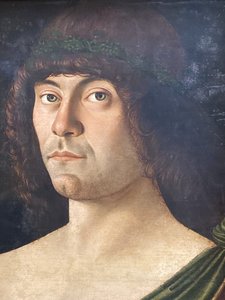
Jacopo Bellini
1396 - 1470 , Italy
Quick Facts
- Artistic Movement Or Style: Renaissance
- Artists Or Movements Influenced By This Artist: ['Masaccio']
- Artists Who Influenced This Artist: ['Gentile da Fabriano']
- Date Of Birth: Venice, Italy (1396)
- Date Of Death: c. 1470
- Full Name: Jacopo Bellini
- Nationality: Italian
- Notable Artworks:
- The Crucifixion in Verona Cathedral
- Madonna and Child
- Place Of Birth: Venice