Preview
 Send
Send Share
Share
 Details
 Guide
Guide

 Download
 Similars
 X-Ray
X-Ray Diaporama
 Stats
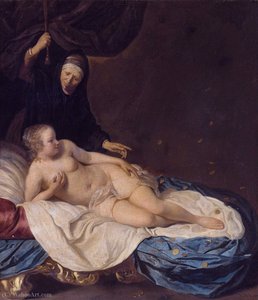
StatsDiana and Her Nymphs
 Oil On Canvas
- WallArt
- Baroque
 1654
1654- Early Modern
 100.0 x 136.0 cm
 Statens Museum For Kunst
 Read More
Giclée / Art Print
Museum-quality giclée or canvas print with fast production and flexible finish options. ( Buy Hand Made Painting Switch to Digital Image)




P118B $10

P118H $10

P118W $10

P438Z $10

P508JH $12

P508YH $12

P805H $10

P805Z $10

P919BZ $10

P919G $10

P919XJ $10

P959ZH $10

P968JZ $12

W106C $8

W218G $10

W218JH $8

W218Y $10

W307PJ $10

W316G $10

W316PJ $8

W316Y $10

W398PJ $8

W4111J $10

W500HY $15

W500JH $15

W692G $12

W849H $8

W940BG $15

W953PJ $8




Pick from our preset sizes that match the artwork's original proportions.

You may enter your own dimensions to fit a specific frame or space. If your selected size does not match the original image's proportions, we will either crop the artwork or extend the image with a mirrored or solid-fill edge. A digital mockup will be sent for your approval before production begins.
Please note that the on-screen preview does not reflect the actual cropping or extension. Only the mockup will accurately show the final composition.
While custom sizes are available, we recommend selecting a dimension from the predefined list to preserve the original proportions.
Worldwide Delivery () in 2 weeks instead of standard 4/5 weeks. (26 September)

Free Worldwide Express Shipping

High-Quality Linen Canvas

Full Shipping Insurance

Customs Tax Refund Guarantee

True Color Matching Guarantee

100-Day Return Policy (Defects Only)

100% Money-Back Guarantee

Bulk Discount Offer
 Glass option is only available in size under 110 CM

Diana and Her Nymphs
Giclée / Art Print
Reproduction Size
-


Total Price
$ 81
Diana and Her Nymphs by Jacob van Loo
Jacob van Loo’s “Diana and Her Nymphs,” completed in 1654, stands as a cornerstone of Baroque art—a testament to the era's masterful manipulation of light and shadow, its dramatic storytelling, and its profound engagement with classical ideals. Housed within the Statens Museum for Kunst in Copenhagen, Denmark, this monumental oil on canvas (100 x 136 cm) transcends mere depiction; it embodies a carefully crafted narrative designed to captivate the viewer’s imagination and convey an atmosphere of serene grandeur.Composition and Technique: A Baroque Masterpiece
The painting's genius lies in its meticulously constructed composition, reflecting the principles of Baroque visual rhetoric. At its core is Diana, goddess of the hunt and protector of chastity, positioned centrally amidst a lush woodland landscape bathed in diffused light—a technique known as chiaroscuro that Van Loo perfected. This dramatic interplay between illumination and darkness isn’t merely aesthetic; it serves to sculpt the figures themselves, emphasizing their musculature and conveying an emotional intensity rarely achieved by earlier artists. The artist skillfully employs impasto – thick brushstrokes of paint – particularly around Diana's torso and limbs—a hallmark of Baroque painting—to create a palpable sense of texture and volume. Furthermore, Van Loo’s meticulous attention to detail extends beyond the figures themselves; he painstakingly renders every leaf on the trees and every ripple in the water, immersing the viewer in an exquisitely realized environment.Historical Context: Mythological Inspiration and Venetian Influence
“Diana and Her Nymphs” draws heavily from classical mythology—specifically Virgil’s Aeneid—where Diana oversees a hunt led by Actaeon, who unwittingly discovers her bathing alongside nymphs. This narrative embodies the Baroque fascination with reviving pagan myths as vehicles for moral instruction and exploring themes of beauty, virtue, and divine grace. While Van Loo's style is undeniably rooted in Venetian artistic traditions—particularly the work of artists like Titian and Claude Lorrain—he distinguishes himself through his distinctive approach to portraying human figures. Unlike Venetian painters who often idealized their subjects, Van Loo presents Diana and her companions with a palpable physicality that reflects the humanist spirit of the period. The painting’s commission by Cardinal Pietro Aldobrandini underscores its significance within the cultural landscape of Rome during Caravaggio's ascendancy—a moment when artists sought to elevate religious narratives through dramatic visual representations.Symbolism: Light, Darkness and Divine Femininity
The pervasive use of chiaroscuro is laden with symbolic meaning. The darkness enveloping the forest floor represents obscurity and temptation, while the radiant light emanating from Diana’s figure symbolizes divine illumination and purity—a deliberate contrast designed to underscore the goddess's moral authority. Similarly, the nymphs themselves embody feminine beauty and grace, reflecting the Baroque ideal of female virtue. Diana’s bow and arrow serve as emblems of her role as protector of chastity and hunter of beasts—symbols that resonate with broader anxieties about maintaining social order and upholding religious piety. The inclusion of a hare – Diana's trophy – reinforces this theme, representing fertility and renewal amidst the solemn grandeur of the woodland setting.Emotional Impact: A Moment Frozen in Time
“Diana and Her Nymphs” succeeds in transporting the viewer to another realm—a tranquil yet charged landscape populated by figures imbued with palpable emotion. The serene composure of Diana contrasts sharply with the subtle expressions of contemplation on the faces of her attendants, creating a dynamic tension that captures the essence of Baroque art’s ability to evoke profound psychological states. Van Loo's masterful technique ensures that every detail contributes to this immersive experience—from the delicate rendering of skin tones to the luminous quality of the light—resulting in an artwork that continues to inspire awe and admiration centuries after its creation. The painting exemplifies the Baroque preoccupation with capturing fleeting moments of beauty and conveying spiritual contemplation, cementing Van Loo’s legacy as one of the era's most influential painters.- Artist: Jacob van Loo
- Born Year: 1614
- Death Year: 1670
- Birth City: Sluis
- Birth Country: Netherlands
Additional Research Links:
- Diana and Her Nymphs
- Jacob van Loo
- Charles-André van Loo: A Study in Rococo Portraiture & the French Court's Artistic Dynamics
- Diana and Her Nymphs by LOO, Jacob van
- Diana and Her Nymphs by Jacob van Loo - Art Renewal Center
Size:
100 x 136 cm
Date:
1654
Artist Biography
Jacob van Loo: The Master of Conversational Groupings
Born in Sluis, a bustling port town in the Dutch Republic in 1614, Jacob van Loo’s life was one inextricably linked to the vibrant artistic currents of his time. His early years were shaped by his father, Jan van Loo, a painter who instilled in him a foundational understanding of technique and artistry. While details surrounding his formative years remain somewhat obscured due to wartime destruction of city archives, it's clear that Van Loo’s artistic journey began within the rich tapestry of the Dutch Golden Age – an era renowned for its innovative painting styles and prolific artists. His family history is significant; his father was a painter, and this lineage would ultimately establish a dynasty of painters, forever impacting European art.
Amsterdam quickly became Van Loo’s adopted home in 1635, immersing him within a dynamic artistic circle that included luminaries like Rembrandt, Frans Hals, and Bartholomeus van der Helst. This environment fostered intense competition and collaboration, pushing the boundaries of artistic expression. The city's bustling atmosphere undoubtedly fueled his creativity, providing a constant stream of inspiration and challenging him to refine his skills. He married Anna Lengele in 1642, a union that brought stability and contributed to the family’s growing influence within the art world. Their household flourished with six children, including talented painters Jean-Baptiste van Loo and Louis-Abraham van Loo – establishing a legacy that would extend far beyond his own lifetime.
A Revolutionary Approach to Composition
Van Loo distinguished himself through his masterful command of ‘conversational groupings,’ a technique that revolutionized the history painting genre. Unlike earlier depictions, which often presented mythological or biblical scenes as static and formal events, Van Loo populated his canvases with lively, engaging figures caught in moments of interaction – dialogues, gestures, and expressions that breathed life into the narrative. This approach wasn’t merely decorative; it imbued the paintings with a sense of immediacy and realism, drawing viewers directly into the scene.
His skill extended particularly to his depictions of nudes, a subject often considered daring for its time. While Rembrandt's female figures were celebrated for their psychological depth and emotional resonance, Van Loo’s nudes gained considerable popularity among audiences. Some contemporary critics even suggested that his female forms were more favored than those of his Amsterdam rival. This preference speaks to the public’s appreciation for his technical virtuosity and the idealized beauty he captured on canvas. Notably, during his lifetime, his female figures were considered superior and more popular than those of Rembrandt.
Influences and Artistic Development
Van Loo's artistic development was undoubtedly shaped by several key influences. Early connections with Thomas de Keyser and Jacob Adriaensz Backer provided him with a solid foundation in classical techniques and composition. These encounters exposed him to the principles of Renaissance art, which he skillfully integrated into his own style. The Baroque movement, originating in Rome, also exerted a significant impact, contributing to the dramatic lighting, rich colors, and dynamic poses characteristic of his work.
His time in Paris proved pivotal, marking a shift towards greater elegance and refinement. He was accepted into the Académie royale de peinture et de sculpture in 1663, solidifying his position within the French artistic establishment. This move signaled not only a professional advancement but also a deepening of his engagement with the evolving tastes and conventions of the Parisian art world.
Legacy and Dynasty
Jacob van Loo’s influence extended far beyond his own lifetime. His success established the ‘Van Loo family of painters,’ a dynasty that profoundly impacted European painting for centuries. His son, Jean-Baptiste van Loo, continued the family tradition, producing works of exceptional quality and establishing a distinct artistic style. His grandson, Charles-André van Loo, further expanded the family’s legacy, becoming one of the most celebrated French painters of the 18th century.
The Van Loo dynasty's influence can be seen in the works of subsequent generations, demonstrating a continuous evolution and adaptation of their father’s innovative techniques. Jacob van Loo’s pioneering approach to composition, his masterful handling of nudes, and his establishment of a lasting artistic lineage cemented his place as a pivotal figure in Dutch and French art history. His paintings continue to be studied and admired for their beauty, dynamism, and enduring appeal.
Notable Works
- Diana and Her Nymphs (1648): A prime example of Van Loo’s conversational groupings, showcasing his ability to capture a lively scene with engaging figures. View Artwork
- Self Portrait, circa 1660: A striking depiction of the artist himself, revealing his refined style and confident demeanor. View Artwork
- Group Portrait of the Meebeeck Cruywagen Family at the Gate of their Country Home on the Uitweg near Amsterdam (attributed to): Demonstrates his ability to capture a social scene with detail and realism. View Artwork
Further information about Jacob van Loo can be found on the Artists Database and a detailed Wikipedia entry: Wikipedia.

Jacob van Loo
1614 - 1670 , Netherlands
Quick Facts
- Artistic Movement Or Style: Baroque
- Artists Or Movements Influenced By This Artist:
- Johannes Vermeer
- Van Loo dynasty
- Artists Who Influenced This Artist:
- Thomas de Keyser
- Jacob Adriaensz Backer
- Date Of Birth: 1614
- Date Of Death: 1670
- Full Name: Jacob van Loo
- Nationality: Dutch
- Notable Artworks:
- Diana and Her Nymphs
- Self Portrait, circa 1660
- Place Of Birth: Sluis, Netherlands
Related Articles

The Enduring Legacy of Oil on Canvas: Technique, History & Aesthetic Impact
Explore the rich history & techniques of oil painting – from Renaissance masters to Impressionism. Discover pigments, layering methods, and why this timeless medium endures. Expert insights for artists & art enthusiasts.

Oil on Canvas: A Historical & Technical Exploration of a Timeless Artistic Medium
Explore the rich history & enduring techniques of oil painting on canvas. Discover the science behind its longevity, conservation practices, and contemporary relevance. Expert insights for art enthusiasts.

Early Netherlandish Masters: 10 Paintings That Revolutionized Art & Decor
Journey into the world of Early Netherlandish painting! Explore 10 masterpieces by Jan van Eyck, Rogier van der Weyden & more. Discover stunning detail, symbolism & Renaissance art for your home decor. Find museum-quality reproductions on OriginalUniqueArt.com
Sir Anthony van Dyck: Courtly Portraiture & the Shaping of Baroque Identity
Explore the life & legacy of Sir Anthony van Dyck, the leading court painter of his era. Discover his innovative portraiture, Baroque masterpieces, and investment potential for discerning collectors. Learn more at OriginalUniqueArt.

Rembrandt's Masterpieces: Explore 25 Iconic Paintings & Prints | OriginalUniqueArt
Journey through Rembrandt van Rijn's 25 most iconic paintings & etchings. Explore Dutch Golden Age masterpieces, dramatic chiaroscuro, and timeless portraits. Find museum-quality art reproductions to elevate your home decor on OriginalUniqueArt.com.