

 Preview
 Send
Send Share
Share
 Details
 Guide
Guide

 Download
 Similars
 X-Ray
X-Ray Diaporama
 Q&A
Q&A Stats
StatsSatyr playing flute
 Oil
Oil- WallArt
- Baroque
 1640
1640- Early Modern
 135.0 x 176.0 cm
 Read More
Get a print-ready file that goes far beyond the web preview. Every digital image we sell comes from a high-resolution master in our stock database — usually 5,000 to 15,000 pixels wide — so you can print large, crop tightly, or reproduce fine detail with confidence.
No file leaves our studio untouched. A digital expert checks the colors against the original painting and corrects them if needed, then improves clarity and detail with professional retouching tools — always staying faithful to the artist's brushwork and style. The result is an image that looks like the painting, not like a filtered scan.
You approve before you're done: our expert sends the image by e-mail within 72 hours for your review. Not satisfied? Ask for improvements or corrections, or request a refund if the quality falls short.
This is the quality relied on by publishers, design studios, galleries and print shops.
Digital Image
Download a high-resolution file for personal display, printing, and creative projects. ( Switch to Print Buy Hand Made Painting)
Included in Every Digital Image Order
Expert Digital Delivery, Guaranteed
When you choose OriginalUniqueArt.com, you're not just getting an image - you're receiving a professionally enhanced digital artwork, crafted with precision and backed by a satisfaction guarantee. Here's everything that comes with your order, automatically:

Fast Email Delivery
Your high-resolution digital image file will be emailed to you within 72 hours of ordering - ready for immediate use.

AI-Enhanced Digital File
Your artwork is professionally optimized using advanced AI tools and manual editing, ensuring maximum detail, clarity, and color accuracy.

Free Lifetime Re-Delivery
Accidentally deleted or lost your file? No worries - we'll resend it to you anytime, free of charge.

No Import Fees - Ever
Enjoy your artwork instantly with zero customs, duties, or delivery fees - digital downloads are always tax-free.

Color Accuracy Guarantee
We ensure your digital image reflects the original colors as closely as possible using professional tools and color management.

100-Day Satisfaction Guarantee
If you're not satisfied with your digital image, we'll revise it or refund 100% within 100 days - no questions asked.

100% Money-Back Guarantee
Not satisfied? Get a full refund within 100 days of receiving your digital file - no questions asked.

Bulk Order Discounts
Buy 3 images, save 10% - Buy 5, save 15% - Buy 10+, save 20%. Great for creative projects, galleries, and agencies.
A Symphony of Earthly Delights
In the masterful hands of Jacob Jordaens, the canvas breathes with a rustic, unbridled vitality that defines the very essence of the Flemish Baroque. Satyr playing flute is not merely a depiction of a mythological figure; it is an immersive sensory experience that transports the viewer to a sun-dappled woodland clearing in 1640. The scene centers on a satyr, a creature of myth and instinct, lost in the melodic breath of his flute. Beside him, a goat stands as a silent, watchful companion, its gaze drifting toward an unseen point beyond the frame, adding a layer of quiet mystery to the composition. This is Jordaens at his most evocative, capturing a moment where the boundaries between the divine, the mythological, and the mundane dissolve into a single, harmonious melody.
The technique employed in this piece showcases the robust, painterly style that made Jordaens a titan of Antwerp. Unlike the polished, ethereal finishes of some of his contemporaries, Jordaens embraces a certain earthy texture and a rich, warm palette that feels tactile to the touch. One can almost feel the coarse hair of the goat, the weathered skin of the satyr, and the crispness of the leaves on the backdrop tree. The artist utilizes light not just to illuminate, but to sculpt; the way the sunlight filters through the foliage to catch the curve of the flute or the musculature of the satyr’s arm creates a profound sense of three-dimensionality. This mastery of chiaroscuro lends a dramatic weight to the scene, turning a pastoral moment into a theatrical event.
Symbolism and the Spirit of the Baroque
Beyond its visual splendor, the painting serves as a profound exploration of themes prevalent in 17th-century Flemish art: the celebration of nature, the primal joys of life, and the interplay between civilization and wildness. The satyr, a symbol of untamed passion and instinct, playing his instrument suggests that music is a universal language capable of bridging the gap between the human spirit and the natural world. The presence of other figures in the distant background adds a sense of community and shared existence, suggesting that this musical interlude is part of a larger, ongoing cycle of life and revelry. For the collector or interior designer, this piece offers more than just decoration; it provides a window into a philosophy of abundance and the appreciation of life's simple, profound rhythms.
Integrating a high-quality reproduction of such a masterpiece into a contemporary space allows for a sophisticated dialogue between history and modernity. The deep tones and dynamic composition of Satyr playing flute command attention, making it an ideal focal point for a grand salon, a library, or a curated gallery wall. It brings an air of classical elegance and intellectual depth to any room, evoking the warmth of a bygone era while maintaining a timeless aesthetic appeal. To possess such a work is to invite the spirited energy of Jordaens into one's home, ensuring that every glance at the canvas is a reminder of the enduring power of art to capture the soul of the natural world.
Questions & Answers
How does the style of "Satyr playing flute" relate to its creator's era?
"Satyr playing flute" by Jacob Jordaens is placed in the Baroque movement, within the Early-Modern era of its creator.
Who created "Satyr playing flute" and what style is it in?
Jacob Jordaens created "Satyr playing flute" within the Baroque movement.
Where does "Satyr playing flute" fall in Jacob Jordaens's career?
"Satyr playing flute" represents the Mature Period of Jacob Jordaens.
Artist Biography
A Flemish Master of Life’s Abundance: Jacob Jordaens
Born into a prosperous Antwerp family in 1593, Jacob Jordaens emerged as one of the most significant and vibrant voices within the Flemish Baroque. Unlike many of his contemporaries who sought training in Italy, Jordaens remained rooted in his native Flanders, developing a uniquely robust and earthy style that celebrated the pleasures and realities of everyday life. His father, a successful linen merchant, provided him with a comfortable upbringing, allowing for an education befitting his social standing before he began his artistic journey under Adam van Noort – also the master of Peter Paul Rubens. This formative training instilled in Jordaens a foundation in meticulous technique and a keen understanding of composition, yet he quickly diverged to forge his own distinct path. In 1616, solidifying his connection to the established Antwerp art world, he married Van Noort’s daughter, Katharina.The Painter of Peasant Revelry and Baroque Grandeur
Jordaens' artistic output was remarkably diverse, encompassing religious narratives, mythological scenes, allegorical compositions, genre paintings brimming with life, and even portraits. However, he is perhaps best remembered for his boisterous depictions of peasant festivals and tavern scenes – works that radiate a palpable energy and an uninhibited joy in earthly pleasures. Paintings like *The King Drinks* (also known as the Feast of the Bean King) exemplify this characteristic style: crowded compositions filled with robust figures engaged in lively revelry, rendered in warm, glowing colors and dramatic chiaroscuro. These scenes weren’t merely celebrations of merriment; they were often imbued with subtle moralizing undertones, reflecting the complex relationship between indulgence and restraint prevalent in 17th-century society. Yet, Jordaens was equally adept at handling grander, more formal commissions. His involvement in decorating the Huis ten Bosch palace near The Hague – alongside collaborations with Rubens – showcased his ability to create monumental allegorical works that seamlessly integrated painting and architecture.Influences and a Distinct Artistic Voice
While Jordaens never traveled to Italy, he was deeply influenced by Italian masters like Jacopo Bassano, Paolo Veronese, and Caravaggio—artists whose work reached Flanders through engravings and paintings brought back by other artists. The influence of Caravaggio is particularly evident in his dramatic use of light and shadow, a technique known as tenebrism, which heightens the emotional intensity of his scenes. However, Jordaens didn’t simply imitate these influences; he synthesized them with his own Flemish sensibilities, creating a style that was uniquely his own. He differed from Rubens and Van Dyck in his preference for realism over idealism, embracing a more direct and unrefined approach to depicting the human form. His figures are often substantial, even corpulent, their faces flushed with health and vitality. This commitment to naturalism, combined with his masterful command of color and composition, set him apart from his contemporaries and established him as a leading figure in Flemish Baroque painting.Legacy and Enduring Impact
Throughout his long and prolific career, Jordaens trained numerous pupils – fifteen were officially recorded by the Guild of St. Luke between 1621 and 1667— ensuring the continuation of his artistic legacy. His influence can be seen in the work of later artists like Jan Steen, who shared his penchant for depicting lively genre scenes. Beyond his direct impact on other painters, Jordaens’ classically inspired peasant themes had a lasting effect on the art world, challenging traditional hierarchies and celebrating the dignity of everyday life. Even today, his paintings continue to captivate audiences with their energy, vitality, and honest portrayal of human experience. His ability to blend realism with allegory, sensuality with morality, and grandeur with intimacy makes him one of the most compelling and enduring figures of the Baroque period. Discover more of Jordaens’ masterpieces and explore the rich artistic landscape of the Baroque era through resources available online, including detailed databases of his works and insightful analyses of his life and art.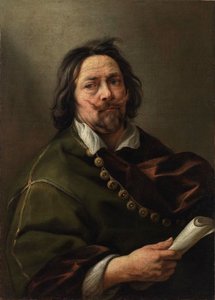
Jacob Jordaens
1593 - 1678 , Belgium
Quick Facts
- Full Name: Jacob Jordaens
- Nationality: Flemish
- Date Of Birth: 1593
- Date Of Death: 1678
- Place Of Birth: Antwerp, Belgium
- Notable Artworks:
- The Adoration of the Shepherds
- Argus and Mercury
- Artistic Movement Or Style: Baroque
- Artists Who Influenced This Artist:
- Jacopo Bassano
- Paolo Veronese
- Caravaggio
- Artists Or Movements Influenced By This Artist: ['Jan Steen']