
 Preview
 Send
Send Share
Share
 Details
 Guide
Guide

 Download
 Similars
 X-Ray
X-Ray Diaporama
 Q&A
Q&A Stats
StatsWoman and Satyr

 Read More
Giclée / Art Print
Museum-quality giclée or canvas print with fast production and flexible finish options. ( Buy Hand Made Painting Switch to Digital Image)




P118B $10

P118H $10

P118W $10

P438Z $10

P508JH $12

P508YH $12

P805H $10

P805Z $10

P919BZ $10

P919G $10

P919XJ $10

P959ZH $10

P968JZ $12

W106C $8

W218G $10

W218JH $8

W218Y $10

W307PJ $10

W316G $10

W316PJ $8

W316Y $10

W398PJ $8

W4111J $10

W500HY $15

W500JH $15

W692G $12

W849H $8

W940BG $15

W953PJ $8




Pick from our preset sizes that match the artwork's original proportions.

Type the width and the height you need, to fit your frame or your wall. A print can only be cut, never made bigger than the picture, so a size with a different shape loses a part of the image. We send you a digital mockup to approve before we print anything. The picture shown on this page does not show the real cut — only the mockup does.
Worldwide Delivery () in 2 weeks instead of standard 4/5 weeks. (7 November)

Free Worldwide Express Shipping

High-Quality Linen Canvas

Full Shipping Insurance

Customs Tax Refund Guarantee

True Color Matching Guarantee

100-Day Return Policy (Defects Only)

100% Money-Back Guarantee

Bulk Discount Offer
 Glass option is only available in size under 110 CM

Woman and Satyr
Giclée / Art Print
Reproduction Size
-


Total Price
$ 81
A Fragment of Mythic Longing: Examining Jacek Malczewski’s “Woman and Satyr”
The artwork "Woman and Satyr," by Polish Symbolist painter Jacek Malczewski, transcends mere visual representation; it embodies a profound yearning for national identity and speaks to the complexities of human emotion. Executed around 1890-1897, this sketch—likely created in charcoal or pastel on paper—offers a glimpse into Malczewski’s artistic vision and his deep engagement with Polish folklore and mythology. Its unassuming appearance belies its significance as a cornerstone of Polish Symbolism and a testament to the artist's ability to distill powerful ideas into evocative imagery.Historical Context: Poland Under Russian Rule
Malczewski’s formative years were shaped by the turbulent political landscape of Congress Poland—a region under Russian dominion following the partitions of Poland in 1815. This experience instilled within him a palpable sense of loss and a fervent desire for liberation, sentiments that permeate his entire oeuvre. The artist's father, Julian Malczewski, was a staunch patriot who instilled in Jacek an unwavering appreciation for Polish heritage—a legacy that profoundly influenced his artistic sensibilities. He sought to capture the spirit of Poland’s past glories and its ongoing struggle for independence, translating these emotions into visual form.Style & Technique: Embracing Symbolism's Essence
“Woman and Satyr” exemplifies the tenets of Symbolism, rejecting realism in favor of subjective experience and emotional resonance. Unlike Impressionists who aimed to depict fleeting moments of sensory perception, Malczewski sought to convey deeper truths about human psychology and spirituality. The artist’s technique is characterized by loose brushstrokes—a deliberate departure from academic conventions—creating a textured surface that captures the immediacy of his creative impulse. Charcoal or pastel was skillfully employed to achieve tonal range and expressiveness, prioritizing feeling over precise detail. The sketch-like quality underscores Malczewski's intention to explore ideas rather than simply documenting them visually.Composition & Imagery: Mythological Encounter
The artwork’s composition centers around a tightly framed depiction of a woman and a satyr—a creature from Greek mythology associated with nature, sensuality, and primal instincts. The figures are positioned close together, their bodies angled towards each other, fostering an atmosphere of intimacy and vulnerability. The absence of background simplifies the scene, directing attention to the central interaction between human and mythological realms. Lines are fluid and expressive, guiding the viewer’s eye across the canvas without resorting to rigid geometric structures.Symbolic Resonance & Emotional Impact
Beyond its formal qualities, “Woman and Satyr” resonates with symbolic significance. The pairing of woman and satyr represents a confrontation between civilized rationality and untamed instinct—a motif prevalent in Symbolist art. The unfinished state of the piece suggests an ongoing exploration of themes such as desire, temptation, and the relationship between humanity and the natural world. Malczewski’s masterful use of earthy tones—particularly reds and browns—creates a mood of melancholy beauty, reflecting the artist's own preoccupation with Polish identity and his longing for a bygone era. It invites contemplation on the enduring power of myth and its ability to illuminate the human condition.Questions & Answers
Are there works similar to "Woman and Satyr"?
The Similars page of "Woman and Satyr" by Jacek Malczewski presents related artworks.
How can I get a digital file of "Woman and Satyr" by Jacek Malczewski?
"Woman and Satyr" is available as a high-resolution digital image download, purchased directly on its Digital Image page.
Is "Woman and Satyr" by Jacek Malczewski a light or a dark artwork?
The recorded values for "Woman and Satyr" by Jacek Malczewski are: balanced brightness, soft shadow luminance.
Artist Biography
A Life Imbued with Polish Longing
Jacek Malczewski, born in 1854 in Radom, a city then nestled within the Russian-controlled Congress Poland, was more than simply a painter; he was a visual embodiment of Polish national identity and a profound voice for a nation yearning for self-determination. His life’s trajectory and artistic vision were inextricably linked to the romantic ideals of independence, deeply instilled by his father, Julian Malczewski—a dedicated patriot who cultivated in young Jacek an unwavering love for Polish culture, literature, and history. This early influence became the bedrock of his creative expression, shaping him into the leading figure of Polish Symbolism and earning him the esteemed title of “father of Polish Symbolism.” His formative years were steeped in tales of heroism, sacrifice, and a poignant awareness of Poland’s troubled past—themes that would resonate throughout his entire *oeuvre*. The family's relocation to Wielgiem, and the guidance he received from Adolf Dygasiński, further cemented this connection to Poland’s rich folklore and evocative landscapes, providing an inexhaustible wellspring of inspiration for his future artistic endeavors.From Academic Training to Symbolic Revelation
Malczewski's artistic journey began in Kraków in 1872, where he studied under Leon Piccard at the Academy of Fine Arts, benefiting from the mentorship of Władysław Łuszczkiewicz and Feliks Szynalewski. A pivotal moment arrived with his time at the École des Beaux-Arts in Paris, exposing him to a diverse range of European artistic currents while simultaneously solidifying his commitment to a distinctly Polish aesthetic sensibility. While absorbing international influences, Malczewski never strayed far from the patriotic fervor that defined his upbringing. This unique synthesis is readily apparent in his early works, which gradually evolved from historical narratives influenced by Jan Matejko—whose dramatic style and exploration of Polish history left an indelible mark—to more complex symbolic compositions. He completed master classes with Matejko in 1879, a period where he honed his technical skills while absorbing the neo-romantic metaphors that would later characterize his own work. The influence of Artur Grottger’s dramatic art also played a crucial role in shaping Malczewski's artistic vision, particularly its emotional intensity and focus on themes of suffering and resilience.The Language of Symbolism: A Nation’s Soul Unveiled
Malczewski’s mature style is characterized by an evocative blend of historical motifs, Christian iconography, mythological allusions, and the haunting beauty of the Polish landscape. He wasn't merely depicting scenes; he was crafting visual allegories that spoke directly to the soul of a nation—a nation burdened by oppression yet sustained by enduring hope. Works like Melancholia (1890-1894), widely considered a masterpiece of Polish Symbolism, capture the profound sense of national sorrow and introspection prevalent during a time of political subjugation. Błędne koło (The Mad Circle, 1895–97) stands as a poignant reflection on the human condition, its cyclical imagery mirroring the seemingly endless struggles for freedom and self-determination. Natchnienie malarza (Painter's Muse, 1897) showcases his unique style and explores the role of the artist in society, often portraying himself within his paintings as a symbolic figure grappling with artistic inspiration and national identity. The *Thanatos* Series delves into profound themes of mortality and the afterlife, reflecting a philosophical depth that permeated his work. His collection of Bajki (Fables) draws upon folklore and mythology, imbuing these traditional narratives with layers of symbolic meaning and offering subtle critiques of contemporary society.Legacy and Enduring Influence on Polish Art
Beyond his remarkable artistic achievements, Malczewski dedicated himself to education, serving as a professor and later rector of the Academy of Fine Arts in Kraków. He nurtured generations of artists, imparting not only technical skills but also a deep sense of national pride and unwavering artistic integrity. His works were exhibited internationally, gaining recognition for their unique blend of Polish identity and European artistic trends. The preservation of his legacy was largely due to the tireless efforts of his son, Rafał Malczewski, who ensured that many of his father’s paintings found their way into the National Museum in Warsaw. Jacek Malczewski's influence on Polish art is undeniable; he remains a pivotal figure in the nation’s cultural heritage, forever celebrated as the “father of Polish Symbolism.” His ability to weave together personal emotion, national longing, and universal themes continues to resonate with audiences today, solidifying his place among the great masters of European painting. He left behind not just paintings, but a visual language that spoke volumes about the Polish spirit—a spirit of resilience, faith, and an enduring hope for a brighter future.Key Characteristics of His Work
- Symbolism: Malczewski’s work is deeply rooted in symbolism, using allegorical figures and motifs to convey complex ideas about Polish identity, history, and spirituality.
- Patriotism: A strong sense of patriotism permeates his art, reflecting Poland's struggles for independence and the longing for national revival.
- Mythology & Folklore: He frequently drew inspiration from Polish folklore, mythology, and religious themes, blending them with historical narratives.
- Psychological Depth: His paintings often explore psychological states of melancholy, introspection, and existential questioning.
- Unique Style: Malczewski developed a distinctive style characterized by muted colors, ethereal atmospheres, and dreamlike imagery.
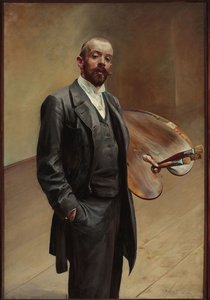
Jacek Malczewski
1854 - 1897 , United States of America
Quick Facts
- Full Name: Jacek Malczewski
- Nationality: Polish
- Date Of Birth: 1854
- Date Of Death: 1897
- Place Of Birth: Radom, United States of America
- Notable Artworks:
- Melancholia
- The Dust Storm
- Death
- Painter's Muse
- Artistic Movement Or Style: Symbolism
- Artists Who Influenced This Artist:
- Jan Matejko
- Artur Grottger
- Artists Or Movements Influenced By This Artist: ['Young Poland']
Related Articles

Mastering Charcoal: The History, Technique, and Chiaroscuro Power of Black and White Art
Explore the profound history and technical mastery of charcoal art. From prehistoric origins to Renaissance chiaroscuro, learn the essential additive and subtractive techniques used by masters to capture light, shadow, and raw emotional depth in monochrome fine art.

Mastering Charcoal: The Definitive Expert Guide to Capturing Profound Depth, Texture, and Shadow
Elevate your artistry with this definitive expert guide to mastering charcoal. Designed for art students, learn professional techniques for capturing profound depth, intricate textures, and dramatic shadows through advanced blending and chiaroscuro methods.

Mastering the Line: A Comprehensive Expert Guide to Technical Precision and Expressive Depth in Drawing
Elevate your artistic practice with this expert guide to mastering the line. Discover advanced techniques in graphite, charcoal, and contour drawing designed for art students seeking technical precision and expressive depth in their fine art studies.

The Subtleties of Pastel: A Comprehensive Exploration of Technique, History & Emotional Resonance
Explore the captivating world of pastel art! Discover its rich history, Impressionistic masters like Degas, emotional power & unique techniques. Find museum-quality reproductions at OriginalUniqueArt.

The Soft Power of Pastel: A Connoisseur's Guide to History, Technique, and the Art of Texture
Explore the ethereal beauty of pastel art. From Renaissance origins to Impressionist mastery, discover the history, technique, and velvety textures that define this luminous medium in our expert guide for art connoisseurs.


