Send
Send Share
Share
 Details
 Guide
Guide

 Download
 Similars
 Diaporama
 Stats
StatsPortraits


 Read More
The artwork displayed on this page is protected by copyright law, which means we cannot legally create or sell an identical reproduction. This protection is enforced under international agreements such as the Berne Convention and by national laws, including those outlined by the U.S. Copyright Law - Title 17.
This method fully complies with copyright regulations because it does not involve copying or duplicating the protected artwork. Instead, it is a creative reinterpretation - a new painting that is influenced by the original but not identical to it.
Giclée / Art Print
Museum-quality giclée or canvas print with fast production and flexible finish options. ( Buy Hand Made Painting Switch to Digital Image)




































Pick from our preset sizes that match the artwork's original proportions.

Type the width and the height you need, to fit your frame or your wall. A print can only be cut, never made bigger than the picture, so a size with a different shape loses a part of the image. We send you a digital mockup to approve before we print anything. The picture shown on this page does not show the real cut — only the mockup does.
Worldwide Delivery () in 2 weeks instead of standard 4/5 weeks. (24 October)

Free Worldwide Express Shipping

High-Quality Linen Canvas

Full Shipping Insurance

Customs Tax Refund Guarantee

True Color Matching Guarantee

100-Day Return Policy (Defects Only)

100% Money-Back Guarantee

Bulk Discount Offer
 Glass option is only available in size under 110 CM

Portraits
Giclée / Art Print
Reproduction Size
-


Total Price
$ 81
A Celestial Dance of Gold and Azure
In the mesmerizing realm of contemporary abstraction, Imran Qureshi presents a vision that transcends the boundaries of traditional miniature painting to touch upon the cosmic and the profound. His work, Portraits, is not a depiction of faces in the conventional sense, but rather a portrait of movement, light, and structural harmony. Created in 2006, this piece serves as a breathtaking dialogue between the warmth of ancient traditions and the cool, rhythmic precision of modern geometry. The viewer is immediately drawn into a luminous landscape where gold leaf meets deep, resonant blues, creating an atmosphere that feels both regal and intimately meditative.
The composition is anchored by a striking central blue orb, a focal point that suggests the presence of a vessel—perhaps a sacred bowl or a celestial vase—holding the weight of the universe within its circular bounds. This central motif is surrounded by an intricate constellation of smaller shapes and interconnected circles that dance across the canvas. The use of line work to connect these azure elements adds a layer of structural complexity, guiding the eye through a rhythmic journey that mimics the organic patterns found in nature, from the microscopic cellular level to the vast orbits of planetary bodies.
The Alchemy of Technique and Symbolism
What distinguishes this artwork is Qureshi’s masterful command over texture and material. The application of gold leaf provides a radiant, shimmering background that does more than merely decorate; it acts as a source of internal light, casting a warm, gilded glow that contrasts sharply with the cool, tranquil blue accents. This interplay of temperature—the heat of the gold against the chill of the azure—creates a visual tension that keeps the eye perpetually engaged. The technique reflects a sophisticated evolution of the Mughal miniature tradition, where precision and detail are used not just for ornamentation, but to build a complex symbolic language.
Symbolically, the piece explores themes of containment and expansion. The circular forms represent wholeness and the cyclical nature of existence, while the interconnected lines suggest the invisible threads that bind disparate parts of our world together. For the collector or the interior designer, this painting offers a profound emotional resonance; it is a piece that commands attention through its quiet strength. It brings a sense of sophisticated tranquility to any space, acting as a window into a realm where geometry becomes poetry and light becomes a tangible presence.
An Essential Addition to the Curated Space
For those seeking to elevate an interior with art that speaks of both heritage and modernity, Portraits stands as an incomparable choice. Its versatile palette of gold and blue allows it to integrate seamlessly into diverse design aesthetics, from the opulent grandeur of a classical study to the minimalist elegance of a contemporary gallery setting. As a high-quality reproduction, this work preserves the delicate luminosity of Qureshi’s original vision, offering an opportunity to possess a fragment of a master's soul.
To own such a piece is to invite a sense of cosmic order and luminous beauty into one's daily life. It is more than mere decoration; it is an invitation to pause, to reflect, and to find wonder in the intricate patterns that define our shared reality.
Questions & Answers
How does "Portraits" fit into Imran Qureshi's themes and style?
"Portraits" shares with Imran Qureshi's other works its Contemporary Art style and the recorded themes: miniature painting traditions, contemporary social realities, abstracted geometric forms, symbolic visual language, modernizing classical techniques.
Can I see "Portraits" by Imran Qureshi under different lights?
The X-Ray view of "Portraits" by Imran Qureshi is on the artwork's X-Ray page: an interactive examination of the image through eleven optical layers.
How can "Portraits" by Imran Qureshi be used in home decor?
"Portraits" by Imran Qureshi is recommended for focal, ideally in a living room. Use and space together guide where a reproduction fits.
Artist Biography
Imran Qureshi: Weaver of Trauma and Transcendence
Imran Qureshi’s work is a visceral, deeply affecting exploration of the human condition—a collision of ancient traditions and contemporary anxieties. Born in Hyderabad, Pakistan, in 1972, into a family steeped in culinary heritage (his grandfather was a renowned chef), Qureshi initially pursued a path in law before finding his true calling within the rich tapestry of miniature painting, a tradition he meticulously studied at the National College of Arts in Lahore. However, it wasn’t simply a revival of this classical art form that defined him; rather, he harnessed its intricate techniques and symbolic language to address profound social and political realities, forging a distinctly modern voice within a venerable artistic lineage.
Qureshi's early career was marked by a gradual shift away from purely representational miniature painting. He began experimenting with abstraction, initially incorporating elements of the “Contemporary Miniature” style—a technique he pioneered that blends traditional motifs with bold, expressive brushstrokes and unconventional materials. This experimentation culminated in his groundbreaking use of blood-red paint, a deliberate provocation introduced after witnessing the devastating bombings in Lahore in 2011. This wasn’t merely an aesthetic choice; it was a direct engagement with the violence and suffering that permeated Pakistani society, transforming the canvas into a visual record of trauma and loss. The crimson hues, applied with a frenetic energy reminiscent of both Mughal miniatures and abstract expressionism, became a signature element, representing not just bloodshed but also life force—the very essence of being.
Central to Qureshi’s artistic vision is the interplay between destruction and regeneration, death and rebirth. His paintings are often described as “exploded” landscapes, chaotic yet meticulously constructed. He employs a technique he calls “flower painting,” where layers of paint – predominantly red, but also incorporating blues, greens, and ochres – are applied in a manner that suggests both violent rupture and delicate growth. These ‘flowers’ aren't simply decorative; they represent the potential for renewal emerging from devastation, mirroring the cyclical nature of life and death within Islamic cosmology. The intricate details within these blooms—often reminiscent of traditional floral motifs—offer a subtle counterpoint to the overall chaos, hinting at an underlying order and spiritual significance.
Qureshi’s work extends beyond the canvas, embracing large-scale installations that further amplify his thematic concerns. His 2011 installation for the Sharjah Biennial, *Blessings Upon the Land of My Love*, was a particularly powerful example, utilizing the architectural space to create a layered narrative of conflict and resilience. Similarly, his 2012 work for the Biennale of Sydney, *They Shimmer Still*, explored themes of memory and displacement through a complex interplay of color, texture, and spatial arrangement. These installations demonstrate Qureshi’s ability to translate his artistic language into immersive experiences that resonate deeply with viewers.
Throughout his career, Imran Qureshi has garnered international recognition for his unique approach to art-making. He was named Deutsche Bank Artist of the Year in 2013, a testament to his growing influence within the contemporary art world. His work has been exhibited at prestigious institutions worldwide, including the Metropolitan Museum of Art in New York and the Barbican Centre in London. His commitment to exploring complex social issues through a deeply personal and visually arresting style solidifies his position as one of Pakistan’s most important and innovative artists, bridging ancient traditions with urgent contemporary concerns.
The Influence of Mughal Miniature Painting
Qureshi's artistic journey is inextricably linked to the rich tradition of Mughal miniature painting. He initially trained in this intricate art form, mastering its meticulous techniques of layering pigments, creating delicate details, and employing a vibrant color palette. However, rather than simply replicating these classical styles, Qureshi subverted them, injecting them with new meaning and purpose. The precision and detail inherent in Mughal miniatures—the painstaking rendering of objects, figures, and landscapes—provide a powerful foundation for his own work, offering a visual vocabulary that speaks to both the past and the present.
The influence of Mughal miniature painting is evident in Qureshi’s use of floral motifs, which are central to his “flower painting” technique. These blooms, rendered with remarkable detail and precision, evoke the intricate patterns found in traditional Mughal paintings—a deliberate nod to the artistic heritage that informs his work. Furthermore, the layering of paint—a hallmark of miniature painting—creates a sense of depth and complexity within Qureshi’s canvases, mirroring the multi-layered narratives often depicted in Mughal miniatures.
However, Qureshi doesn't merely imitate Mughal techniques; he transforms them, using them as a springboard for his own artistic explorations. He introduces elements of abstraction, employs unconventional materials (such as blood-red paint), and disrupts the traditional hierarchical structure of miniature painting—a deliberate act of subversion that reflects his engagement with contemporary social and political issues. In essence, Qureshi takes the core principles of Mughal miniature painting and reinterprets them through a distinctly modern lens.
Symbolism and Recurring Motifs
Qureshi’s paintings are replete with symbolism, drawing upon Islamic cosmology, Sufi mysticism, and Pakistani cultural traditions. The recurring motif of the flower—often rendered in vibrant shades of red—is perhaps the most prominent symbol in his work, representing not just beauty but also life, regeneration, and the potential for growth amidst destruction. The flowers emerge from a chaotic field of paint, suggesting that even in the face of adversity, hope and renewal can flourish.
Blood-red pigment is another key symbolic element, directly referencing the violence and suffering experienced by Pakistanis. However, it’s not simply a representation of death; it also symbolizes life force—the vital energy that sustains existence. Qureshi has stated that he uses red paint to confront the realities of his country's history, acknowledging the pain while simultaneously celebrating its resilience.
Beyond these central motifs, Qureshi incorporates other symbolic elements drawn from Islamic art and culture, including geometric patterns, calligraphy, and references to traditional Islamic gardens. These symbols are often interwoven with abstract forms, creating a complex visual language that invites multiple interpretations. The layering of meaning within Qureshi’s paintings reflects the richness and complexity of Pakistani cultural heritage—a testament to his deep understanding of both tradition and contemporary concerns.
Major Achievements and Recognition
Imran Qureshi's artistic career has been marked by a series of significant achievements and widespread recognition. He was named Deutsche Bank Artist of the Year in 2013, an award that brought international attention to his work and solidified his position as one of Pakistan’s leading contemporary artists.
His site-specific installations have been exhibited at prestigious venues around the world, including The Metropolitan Museum of Art in New York City (2014), the Sharjah Biennial (2011), and the Biennale of Sydney (2012). These projects demonstrate Qureshi’s ability to engage with architectural space and create immersive experiences that resonate deeply with viewers.
Qureshi has received numerous commissions from major institutions, including the Barbican Centre in London (2016) and the Aga Khan Museum in Toronto. His work is held in prominent collections worldwide, further cementing his legacy as a significant figure in contemporary art. His 2016 Padma Shri award by the Government of India recognized his contribution to the arts.
Beyond these individual achievements, Qureshi has played a crucial role in promoting Pakistani art on an international stage, fostering dialogue between cultures and challenging conventional notions of artistic expression. His work continues to evolve and inspire, solidifying his place as one of the most important artists of our time.

Imran Qureshi
1972 - , Pakistan
Quick Facts
- Full Name: Muhammad Imran Qureshi
- Nationality: Pakistani
- Date Of Birth: 1972
- Place Of Birth: Hyderabad, Pakistan
- Notable Artworks:
- Midnight Garden
- Portraits
- All are the Colour of My Heart
- Artistic Movement Or Style: Contemporary Miniature
- Artists Who Influenced This Artist: ['Mughal tradition']
- Artists Or Movements Influenced By This Artist: ['Contemporary Art']
Related Articles

25 Klimt Masterpieces: A Journey Through Iconic Art & Decor
Delve into the world of Gustav Klimt with our top 25 masterpieces! Explore his iconic paintings – 'The Kiss,' 'Portrait of Adele,' and more. Discover museum-quality reproductions & curated decor ideas. Explore the full collection online at OriginalUniqueArt.com.

Slate Blue Masterpieces: 10 Iconic Paintings & Timeless Home Decor Ideas
Immerse yourself in the captivating world of slate blue! Explore 10 iconic paintings by Monet, Van Gogh & Renoir. Discover their stories, techniques & find museum-quality art reproductions for your home at .
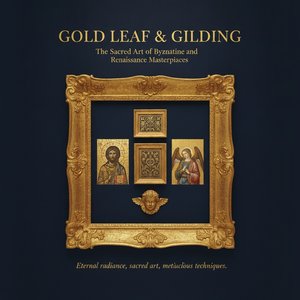
The Sacred Glow: Mastering Gold Leaf and Gilding in Byzantine Art
Explore the divine mastery of Byzantine gold leaf and gilding. Discover how ancient artisans used gold ground and mosaics to create celestial light, a timeless legacy of spiritual splendor and technical excellence in sacred art history.

Golden Splendor: An Editorial Journey Through Art's Most Radiant Masterpieces
Embark on a visual journey through the world's most radiant masterpieces. Discover how gold leaf, impasto textures, and gilded tones define luxury in fine art, from Byzantine icons to modern abstracts. Explore the eternal allure of gold in curated, museum-quality art collections.

Golden Glow: How to Use Metallic Gold Artworks to Elevate Your Home Decor with Timeless Luxury
Discover how to elevate your home with the timeless elegance of metallic gold artworks. From sculptural metal pieces to gilded oil paintings, learn expert interior design tips for integrating luxurious gold accents into your space with sophistication and grace.