Text size

() ·

A painting made for you, by hand

The Ponte Solario

Hand Made Oil Reproduction

Hand-painted oil on canvas in your size and frame, made to order by our artists. ( Switch to Print Switch to Digital Image)

Collectible Description

Experience Romantic decay with Hubert Robert's 1775 vision of The Ponte Solario, capturing sublime ruins bathed in atmospheric light; discover this masterpiece today.

Artist Biography

Hubert Robert (1733-1808): French painter of evocative landscapes & 'capriccio' ruins, blending history, decay & imagination. Discover his art!

from ·

Chapter 1

How large should it be?

Slide to change the size; the picture on the left shows the frame at its real width. The proportions of the original are kept.

Standard
custom
CM
INCH

Pick from our preset sizes that match the artwork's original proportions.

width
height

Type the width and the height you need, to fit your frame or your wall. This is hand-painted, so for a size with a different shape the artist can paint a bit more around the picture, or cut a bit — you choose. We send you a digital mockup to approve before the painting starts. The picture shown on this page does not show the real result — only the mockup does.

Chapter 2

How should it arrive?

Choose the edges of the stretched canvas

Choose your frame

Corner sample of the WhiteWrap canvas edge finish, stretched on solid wood bars
White $1
Corner sample of the BlurSideWrap canvas edge finish, stretched on solid wood bars
Blurside $1
Corner sample of the ExtendedWrap canvas edge finish, stretched on solid wood bars
Extended $1
Corner sample of the P118B picture frame: moulded polystyrene, 5 cm wide and 3 cm thick
P118B $10
Corner sample of the P118H picture frame: moulded polystyrene, 5 cm wide and 3 cm thick
P118H $10
Corner sample of the P118W picture frame: moulded polystyrene, 5 cm wide and 3 cm thick
P118W $10
Corner sample of the P438Z picture frame: moulded polystyrene, 5.5 cm wide and 3.5 cm thick
P438Z $10
Corner sample of the P508JH picture frame: moulded polystyrene, 7 cm wide and 3.5 cm thick
P508JH $12
Corner sample of the P508YH picture frame: moulded polystyrene, 7 cm wide and 3.5 cm thick
P508YH $12
Corner sample of the P805H picture frame: moulded polystyrene, 5 cm wide and 3.5 cm thick
P805H $10
Corner sample of the P805Z picture frame: moulded polystyrene, 5 cm wide and 3.5 cm thick
P805Z $10
Corner sample of the P919BZ picture frame: moulded polystyrene, 7 cm wide and 3.5 cm thick
P919BZ $10
Corner sample of the P919G picture frame: moulded polystyrene, 7 cm wide and 3.5 cm thick
P919G $10
Corner sample of the P919XJ picture frame: moulded polystyrene, 7 cm wide and 3.5 cm thick
P919XJ $10
Corner sample of the P959ZH picture frame: moulded polystyrene, 5 cm wide and 3 cm thick
P959ZH $10
Corner sample of the P968JZ picture frame: moulded polystyrene, 6 cm wide and 4 cm thick
P968JZ $12
Corner sample of the W106C picture frame: solid wood, 5 cm wide and 3 cm thick
W106C $8
Corner sample of the W218G picture frame: solid wood, 5 cm wide and 3 cm thick
W218G $10
Corner sample of the W218JH picture frame: solid wood, 5 cm wide and 3 cm thick
W218JH $8
Corner sample of the W218Y picture frame: solid wood, 5 cm wide and 3 cm thick
W218Y $10
Corner sample of the W307PJ picture frame: solid wood, 6 cm wide and 3 cm thick
W307PJ $10
Corner sample of the W316G picture frame: solid wood, 6 cm wide and 3 cm thick
W316G $10
Corner sample of the W316PJ picture frame: solid wood, 6 cm wide and 3 cm thick
W316PJ $8
Corner sample of the W316Y picture frame: solid wood, 6 cm wide and 3 cm thick
W316Y $10
Corner sample of the W398PJ picture frame: solid wood, 5 cm wide and 3 cm thick
W398PJ $8
Corner sample of the W4111J picture frame: solid wood, 6.5 cm wide and 3.5 cm thick
W4111J $10
Corner sample of the W500HY picture frame: solid wood, 7 cm wide and 5 cm thick
W500HY $15
Corner sample of the W500JH picture frame: solid wood, 7 cm wide and 5 cm thick
W500JH $15
Corner sample of the W692G picture frame: solid wood, 8 cm wide and 4 cm thick
W692G $12
Corner sample of the W849H picture frame: solid wood, 5 cm wide and 3 cm thick
W849H $8
Corner sample of the W940BG picture frame: solid wood, 7.5 cm wide and 4.5 cm thick
W940BG $15
Corner sample of the W953PJ picture frame: solid wood, 6 cm wide and 3.5 cm thick
W953PJ $8
Corner sample of the H24-GOLD picture frame: carved wood with gesso, 10 cm wide and 6 cm thick
H24-GOLD $30
Corner sample of the H24-SILVER picture frame: carved wood with gesso, 10 cm wide and 6 cm thick
H24-SILVER $30
Corner sample of the H36-GOLD picture frame: carved wood with gesso, 15 cm wide and 6.5 cm thick
H36-GOLD $45
Corner sample of the H36-SILVER picture frame: carved wood with gesso, 15 cm wide and 6.5 cm thick
H36-SILVER $45
Frame preview
Framed

Moulding: . Overall size with the frame: .

Chapter 3

Who paints it, and should anything change?

Examples of what can be changed: Replace face with customer photo; Add pet (e.g., replace cat with dog); Include hidden message in background; Change background landscape or elements.
After order, OriginalUniqueArt.com team will email client for instructions and provide a mockup preview

Worldwide Delivery () in 3/4 weeks instead of standard 5 weeks. (31 October). No compromise on quality.

Chapter 4

The finishing touches

A nameplate, as in a museum?

Engraved Bronze Plaque Details

This elegant plaque features the artist's name and the title of the artwork, finely engraved for a timeless presentation.

It is made from bronze with a refined, elegant finish. The text is precisely laser-engraved for a sharp and permanent result. Measuring 9x2 cm, the plaque is compact yet easy to read. It's built to be durable and scratch-resistant, offering a professional, museum-quality look. Mounting is simple thanks to the included adhesive backing.

Transparent Acrylic Plaque Details

The plaque includes essential engraved details such as the artist's name, the title of the artwork, the date it was created, the type of media used-like oil on canvas or watercolor-a brief description of the piece, and a QR code that links to the complete artwork information.

It is crafted from clear acrylic, offering a sleek, modern appearance. The text is UV-engraved in black to ensure strong visual contrast. With a size of 10x15 cm, it ensures optimal readability. It comes equipped with two metal hooks for secure wall mounting. The plaque is designed to be weather-resistant, making it suitable for various environments, and it includes interactive features that work seamlessly with smartphone scanning.

Black Acrylic Plaque Details

This elegant plaque includes engraved information such as the artist's name, the title of the artwork, the date it was created, the type of media used (like oil on canvas or watercolor), a short description of the artwork, and a QR code for quick access to more information.

The plaque itself is made from refined black acrylic with a premium finish. The text is laser-engraved in white for high contrast and readability. Its size is 10x15 cm, designed to be easy to read. It comes with two metal hooks for professional mounting. The design is sleek and fits any interior style. It is also weather-resistant and durable, with built-in digital integration for mobile compatibility.

A protective varnish?

When do you need it?

Chapter 5

Your painting, as you ordered it

The Ponte Solario

Reproduction Medium

Reproduction Size

-

Elite Senior Artist

More detail, finesse, and extra production time

-

Reproduction Frame

-

-

For artworks or reproductions larger than 105 cm (approximately 41 inches) on any side, the frame will be shipped as a kit, disassembled. This method ensures safe delivery and prevents damage during transport.

Professional assembly required - this is not a DIY product.
The kit must be assembled and the canvas stretched by an experienced professional framer, using wood glue (not supplied), a canvas stretching plier and clamps to hold the bars square while the glue dries. Incorrect assembly or uneven canvas tension can permanently damage the artwork and is not covered by our warranty.

  • All solid wood bars are included, precisely cut to size.

  • Assembled with the screws provided, plus wood glue for the corner joints, which is not supplied and must be sourced by your framer.

  • Professional tools are required and not included: a canvas stretching plier (tensioner) and clamps to hold the bars square while the glue dries.

Important:
The corner joints require wood glue, the bars must be held with clamps until the glue is fully dry, and tightening the canvas on the assembled frame requires a canvas stretching plier. None of these are included in the kit. Please arrange an experienced professional framer before ordering this size.

Nameplate

-

-

Protective Varnish

Glossy Varnish (enhances colors, protects against light/moisture)

-

Customize My Artwork

Examples of what can be changed: Replace face with customer photo; Add pet (e.g., replace cat with dog); Include hidden message in background; Change background landscape or elements.

-

Urgent

Worldwide Delivery () in 3/4 weeks instead of standard 5 weeks. (31 October). No compromise on quality.

-

Express Shipping

Worldwide Delivery () in 5 weeks. (7 November).

Included

Total Price

$ 300

Total Price $ 300

Glass option is only available in size under 110 CM

Included with every order

  • Free Worldwide Express Shipping
  • High-Quality Linen Canvas
  • Full Shipping Insurance
  • Customs Tax Refund Guarantee
  • True Color Matching Guarantee
  • 100-Day Return Policy (Defects Only)
  • 100% Money-Back Guarantee
  • Bulk Discount Offer

The Ponte Solario: A Vision of Decay Embraced by Romantic Light

Hubert Robert’s “The Ponte Solario,” completed in 1775, stands as a cornerstone of Romantic landscape painting—a genre that prioritized emotion and imagination over strict adherence to classical ideals. More than just a depiction of crumbling stone and weathered timbers, the canvas embodies Robert's fascination with ruins as symbols of time’s relentless passage and the sublime beauty inherent in decay.

Subject Matter and Composition

The painting portrays a magnificent castle perched atop a rocky promontory overlooking a tranquil lake. A graceful bridge spans across the water, connecting the castle to the shore—a deliberate compositional element that reinforces the sense of grandeur juxtaposed with vulnerability. Scattered boats dot the surface of the lake, adding dynamism and hinting at human presence within this desolate landscape.

Style and Technique: Romantic Impressionism

Robert’s approach aligns closely with the burgeoning Romantic movement, anticipating elements of Impressionism decades before its formal emergence. He eschewed meticulous detail in favor of capturing fleeting atmospheric effects—the diffused light filtering through mist, the subtle gradations of color reflecting off the stone surfaces. Robert skillfully employed a technique known as “plein air” painting, venturing outdoors to directly observe and render the natural world, prioritizing immediacy and sensory experience.

Historical Context: The Enlightenment’s Shadow

Robert's work emerged during the waning years of the Enlightenment, a period characterized by rational thought and scientific inquiry. However, Robert actively resisted these dominant intellectual currents, embracing instead the emotional power of imagination and memory—themes central to Romantic aesthetics. He drew inspiration from the ruins of Roman temples and villas, reflecting a broader cultural preoccupation with antiquity and its perceived moral lessons. The painting speaks to a yearning for beauty amidst ruin, mirroring anxieties about mortality and the inevitable decline of civilization.

Symbolism: Decay as Beauty

Robert’s masterful use of light and shadow elevates decay beyond mere physical deterioration; it becomes an emblem of spiritual transformation. The crumbling castle represents not just structural weakness but also the fading glory of aristocratic power—a poignant commentary on societal change. Yet, the pervasive luminescence imbues the scene with a sense of serenity and wonder, suggesting that even in ruin, beauty persists—a profound meditation on the cyclical nature of existence.

Emotional Impact

"The Ponte Solario" evokes a powerful emotional response in viewers. Its melancholic atmosphere invites contemplation on themes of loss, remembrance, and acceptance. The painting’s luminous palette captures the sublime grandeur of nature while simultaneously conveying a sense of poignant solitude—a testament to Robert's ability to translate complex psychological ideas into visually arresting imagery.

Questions & Answers

How does "The Ponte Solario" by Hubert Robert connect Romantic Landscape to the artist's home country?

"The Ponte Solario" connects the Romantic Landscape movement with France through its creator's birthplace.

What emotion does the Romantic Landscape work "The Ponte Solario" convey?

"The Ponte Solario" carries a nostalgic emotional tone within the Romantic Landscape movement.

How do medium and movement combine in "The Ponte Solario"?

In "The Ponte Solario", the oil on canvas technique meets the Romantic Landscape movement.

More about this painting

Preview AR preview Switch to Print Switch to Digital Image Send
Details Guide Add to favorites Download Similars X-Ray Diaporama Q&A Stats

In numbers

  • 1775the year it was painted
  • 29frames to choose from
  • standard sizes, in its own proportions
  • 5weeks to paint and deliver it
Hubert Robert

Hubert Robert

1733 - 1808, France

Quick facts about Hubert Robert

  • Full Name: Hubert Robert
  • Nationality: French
  • Date Of Birth: 1733
  • Date Of Death: 1808
  • Place Of Birth: Paris, France
  • Notable Artworks:
    • The Port of Rome
    • Flight of Galatea
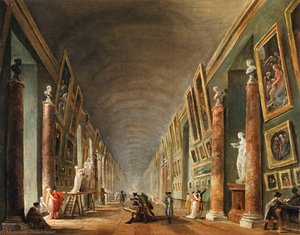
    • La Galerie du Louvre
  • Artistic Movement Or Style: Romanticism, Neoclassicism
  • Artists Who Influenced This Artist:
    • Giovanni Panini
    • Piranesi
  • Artists Or Movements Influenced By This Artist: ['Romanticism']

Artist Biography

A Painter of Ruins and Visions: The World of Hubert Robert

Hubert Robert, a name synonymous with evocative landscapes and the romantic allure of ruins, occupies a unique position in 18th-century French art. Born in Paris in 1733, his life unfolded against a backdrop of shifting artistic styles and monumental historical upheaval—from the Rococo’s playful elegance to the dawn of Neoclassicism, and ultimately, through the tumultuous years of the French Revolution. He wasn't merely documenting decay; he was crafting visions, blending observation with imagination to create scenes that resonated with both a nostalgic longing for the past and an anticipation of the future. His journey began within the structured world of artistic training, initially under the sculptor Michel-Ange Slodtz, who recognized Robert’s talent but wisely steered him towards painting, sensing his true calling lay in capturing light, atmosphere, and the subtle poetry of form.

Roman Reveries: Shaping an Artistic Identity

The pivotal moment in Robert's artistic development arrived with his extended sojourn to Rome in 1754. Accompanying Étienne-François de Choiseul, he immersed himself in a world steeped in history and architectural grandeur. For eleven years, the ancient city became his open-air studio, its crumbling temples, majestic arches, and overgrown gardens fueling his imagination. This wasn’t simply about replicating what he saw; it was about interpreting it, reimagining it, and imbuing it with a sense of melancholic beauty. He worked alongside Giovanni Paolo Panini, whose influence is visible in Robert's early *capriccio* compositions—those fanciful views that juxtaposed classical ruins with contemporary life. However, Robert quickly moved beyond imitation, developing his own distinctive style characterized by meticulous detail, atmospheric perspective, and a profound sensitivity to the play of light and shadow. He wasn’t just painting ruins; he was painting time itself, capturing the poignant beauty of transience and the enduring power of memory. His sketchbooks from this period are invaluable records of his observations, filled with detailed studies of Roman landmarks like the Villa d'Este and Caprarola, demonstrating a keen eye for architectural nuance and landscape composition.

Parisian Acclaim and Royal Patronage

Robert’s return to Paris in 1765 marked a turning point in his career. He swiftly gained recognition within the artistic establishment, securing admission to the Académie Royale de Peinture et de Sculpture with “The Port of Rome, Ornamented with Different Monuments of Architecture, Ancient and Modern.” His subsequent exhibitions at the Salon garnered widespread acclaim, captivating audiences with their evocative depictions of ruins and picturesque landscapes. Denis Diderot, a prominent figure of the Enlightenment, famously praised the grandeur evoked by Robert’s paintings, recognizing his ability to transport viewers to another time and place. This success led to royal patronage, with commissions for decorative projects and appointments as “Designer of the King's Gardens” and later, “Keeper of the King's Pictures.” He became a sought-after artist, not only for his easel paintings but also for his innovative designs for gardens and palatial interiors. His work resonated with the prevailing taste for *capriccio* painting—a genre that appealed to collectors fascinated by history, archaeology, and the picturesque—but Robert infused it with a unique sensibility, elevating it beyond mere decorative art.

Revolution, Resilience, and Lasting Legacy

The French Revolution presented an unprecedented challenge for Robert. While many artists struggled to navigate the turbulent political climate, he found himself caught in the crosscurrents of change. He even faced imprisonment during the Reign of Terror, a harrowing experience that nonetheless inspired a series of drawings documenting his time in prison. Remarkably, he continued to paint prolifically throughout this period, demonstrating an unwavering commitment to his art. Following the Revolution, Robert was appointed curator of the newly established Muséum Central des Arts—the future Musée du Louvre—a testament to his expertise and dedication to preserving cultural heritage. He played a crucial role in organizing and cataloging the museum’s collection, ensuring that France's artistic treasures were safeguarded for future generations. Hubert Robert died in Paris in 1808, leaving behind an extraordinary body of work that continues to inspire awe and admiration. His legacy lies not only in his technical mastery but also in his unique ability to blend historical accuracy with imaginative vision. He pioneered a genre of painting that celebrated both the beauty of decay and the enduring power of human creativity, solidifying his place as a pivotal figure bridging the Rococo and Neoclassical periods, and anticipating aspects of Romanticism with his fascination for history and imagination.
  • Key Influences: Giovanni Paolo Panini, Piranesi, the architectural landscape of Rome.
  • Major Themes: Ruins, landscapes, *capriccio* paintings, historical memory, the passage of time.
  • Artistic Style: Meticulous detail, atmospheric perspective, evocative lighting, blending observation with imagination.

Quick Facts

  • Subject or theme: Castle Landscape
  • Artist: Hubert Robert
  • Movement: Romanticism
  • Dimensions: 91 x 121 cm
  • Medium: Oil on Canvas
  • Artistic style: Scenic Painting

Art Quiz

There is only one correct answer for each question.

Question 1:
What artistic movement is Hubert Robert's "The Ponte Solario" considered a cornerstone of?
Question 2:
What primary theme does the painting use ruins to symbolize, according to the description?
Question 3:
Which technique did Hubert Robert employ that involved painting outdoors to capture immediate sensory experience?
Question 4:
The subject matter of the painting prominently features a castle and what structure connecting it to the shore?
Question 5:
During which historical period did Hubert Robert create "The Ponte Solario"?