Preview
 Send
Send Share
Share
 Details
 Guide
Guide

 Download
 Similars
 X-Ray
X-Ray Diaporama
 Stats
StatsThe Footbridge
 Acrylic On Canvas
- WallArt
- Romanticism
 1775
1775- 19th Century
 59.0 x 47.0 cm
 Thyssen-Bornemisza Museum
 Read More
Giclée / Art Print
Museum-quality giclée or canvas print with fast production and flexible finish options. ( Buy Hand Made Painting Switch to Digital Image)




P118B $10

P118H $10

P118W $10

P438Z $10

P508JH $12

P508YH $12

P805H $10

P805Z $10

P919BZ $10

P919G $10

P919XJ $10

P959ZH $10

P968JZ $12

W106C $8

W218G $10

W218JH $8

W218Y $10

W307PJ $10

W316G $10

W316PJ $8

W316Y $10

W398PJ $8

W4111J $10

W500HY $15

W500JH $15

W692G $12

W849H $8

W940BG $15

W953PJ $8




Pick from our preset sizes that match the artwork's original proportions.

Type the width and the height you need, to fit your frame or your wall. A print can only be cut, never made bigger than the picture, so a size with a different shape loses a part of the image. We send you a digital mockup to approve before we print anything. The picture shown on this page does not show the real cut — only the mockup does.
Worldwide Delivery () in 2 weeks instead of standard 4/5 weeks. (27 October)

Free Worldwide Express Shipping

High-Quality Linen Canvas

Full Shipping Insurance

Customs Tax Refund Guarantee

True Color Matching Guarantee

100-Day Return Policy (Defects Only)

100% Money-Back Guarantee

Bulk Discount Offer
 Glass option is only available in size under 110 CM

The Footbridge
Giclée / Art Print
Reproduction Size
-


Total Price
$ 81
Hubert Robert’s “The Footbridge”: A Vision of Ruin and Romantic Reverie
Hubert Robert's "The Footbridge," painted in 1775, isn’t merely a landscape; it’s a carefully constructed dreamscape—a poignant meditation on the passage of time, the allure of ruins, and the delicate balance between nature and human intervention. This captivating oval canvas, now housed within the Thyssen-Bornemisza Museum in Madrid, transports the viewer to a serene yet subtly melancholic world where ancient structures intertwine with the vibrant energy of a bustling scene. Robert, a master of “capriccio,” expertly blends observation with imagination, creating an atmosphere thick with romanticism and a profound sense of nostalgia.
The painting unfolds across a gently sloping hillside, dominated by the skeletal remains of a Roman bridge—a deliberate echo of the grandeur that once was. This isn’t a literal depiction of decay; rather, Robert transforms the ruins into symbols of enduring beauty and timelessness. The weathered stones, draped with ivy and moss, possess an almost ethereal quality, suggesting they are not merely crumbling remnants but portals to another era. The artist's skillful use of light and shadow further enhances this effect, bathing the scene in a soft, diffused glow that evokes the golden hour—a time when reality seems to soften and dreams take flight.
A Painter’s Roman Reverie: Influences and Technique
Robert’s fascination with ruins stemmed from his extended sojourn in Rome during the 1760s. Immersed in the city's ancient history, he meticulously sketched and studied the remnants of its imperial past—the Colosseum, the Forum, and countless other crumbling monuments. These observations profoundly shaped his artistic vision, leading him to develop a unique style characterized by an almost obsessive attention to detail and a masterful ability to evoke atmosphere. His technique is distinctly informed by Giovanni Battista Piranesi and Giovanni Paolo Panini, both Roman artists known for their depictions of architecture and ruins. Robert absorbed their techniques—particularly the use of perspective and light—and integrated them into his own distinctive style.
The painting’s composition is meticulously balanced, drawing the eye through a series of carefully orchestrated elements. The figures in the foreground – a man sketching with a small easel and a dog near a bench – are rendered with a delicate realism that contrasts subtly with the idealized beauty of the ruins. Robert employs a loose, expressive brushstroke—a hallmark of his style—to capture the textures of stone, foliage, and water. The color palette is restrained yet evocative, dominated by muted greens, blues, and browns, punctuated by flashes of vibrant color in the flowers and foliage. This careful orchestration creates a sense of harmony and tranquility, inviting the viewer to lose themselves in the scene’s timeless beauty.
Symbolism and Emotional Resonance
Beyond its aesthetic appeal, “The Footbridge” is rich in symbolic meaning. The bridge itself represents connection—a link between past and present, reality and imagination. It also symbolizes transition and impermanence, mirroring the fleeting nature of human life and the inevitable decay of all things. The ruins, far from being symbols of despair, embody a sense of resilience and enduring beauty. They remind us that even in destruction, there is still grace and wonder to be found.
Robert’s painting taps into deep-seated emotions—a longing for the past, a fascination with the sublime, and a recognition of the transience of earthly existence. It evokes a sense of melancholy and nostalgia, yet also offers a glimmer of hope through its celebration of beauty and imagination. The scene invites contemplation on themes of memory, loss, and the enduring power of art to transcend time.
A Legacy of Romantic Vision
Hubert Robert’s “The Footbridge” stands as a quintessential example of 18th-century Romanticism—a movement that emphasized emotion, imagination, and the beauty of nature. His work profoundly influenced subsequent generations of artists, including Caspar David Friedrich and J.M.W. Turner, who continued to explore themes of ruins, landscapes, and the relationship between humanity and the natural world. Today, “The Footbridge” remains a beloved masterpiece—a testament to Robert’s artistic genius and his ability to capture the essence of beauty in a fleeting moment.
Questions & Answers
What are the medium and dimensions of "The Footbridge" by Hubert Robert?
The medium of "The Footbridge" by Hubert Robert is acrylic on canvas, and its recorded dimensions are 59 x 47 cm.
How can "The Footbridge" by Hubert Robert be used in home decor?
Use (statement) and space (living room) are the two recommendations recorded for "The Footbridge" by Hubert Robert.
What is the perceived brightness of "The Footbridge" by Hubert Robert?
The perceived brightness of "The Footbridge" by Hubert Robert is shadow. It can be matched to the light of the intended space.
Artist Biography
A Painter of Ruins and Visions: The World of Hubert Robert
Hubert Robert, a name synonymous with evocative landscapes and the romantic allure of ruins, occupies a unique position in 18th-century French art. Born in Paris in 1733, his life unfolded against a backdrop of shifting artistic styles and monumental historical upheaval—from the Rococo’s playful elegance to the dawn of Neoclassicism, and ultimately, through the tumultuous years of the French Revolution. He wasn't merely documenting decay; he was crafting visions, blending observation with imagination to create scenes that resonated with both a nostalgic longing for the past and an anticipation of the future. His journey began within the structured world of artistic training, initially under the sculptor Michel-Ange Slodtz, who recognized Robert’s talent but wisely steered him towards painting, sensing his true calling lay in capturing light, atmosphere, and the subtle poetry of form.Roman Reveries: Shaping an Artistic Identity
The pivotal moment in Robert's artistic development arrived with his extended sojourn to Rome in 1754. Accompanying Étienne-François de Choiseul, he immersed himself in a world steeped in history and architectural grandeur. For eleven years, the ancient city became his open-air studio, its crumbling temples, majestic arches, and overgrown gardens fueling his imagination. This wasn’t simply about replicating what he saw; it was about interpreting it, reimagining it, and imbuing it with a sense of melancholic beauty. He worked alongside Giovanni Paolo Panini, whose influence is visible in Robert's early *capriccio* compositions—those fanciful views that juxtaposed classical ruins with contemporary life. However, Robert quickly moved beyond imitation, developing his own distinctive style characterized by meticulous detail, atmospheric perspective, and a profound sensitivity to the play of light and shadow. He wasn’t just painting ruins; he was painting time itself, capturing the poignant beauty of transience and the enduring power of memory. His sketchbooks from this period are invaluable records of his observations, filled with detailed studies of Roman landmarks like the Villa d'Este and Caprarola, demonstrating a keen eye for architectural nuance and landscape composition.Parisian Acclaim and Royal Patronage
Robert’s return to Paris in 1765 marked a turning point in his career. He swiftly gained recognition within the artistic establishment, securing admission to the Académie Royale de Peinture et de Sculpture with “The Port of Rome, Ornamented with Different Monuments of Architecture, Ancient and Modern.” His subsequent exhibitions at the Salon garnered widespread acclaim, captivating audiences with their evocative depictions of ruins and picturesque landscapes. Denis Diderot, a prominent figure of the Enlightenment, famously praised the grandeur evoked by Robert’s paintings, recognizing his ability to transport viewers to another time and place. This success led to royal patronage, with commissions for decorative projects and appointments as “Designer of the King's Gardens” and later, “Keeper of the King's Pictures.” He became a sought-after artist, not only for his easel paintings but also for his innovative designs for gardens and palatial interiors. His work resonated with the prevailing taste for *capriccio* painting—a genre that appealed to collectors fascinated by history, archaeology, and the picturesque—but Robert infused it with a unique sensibility, elevating it beyond mere decorative art.Revolution, Resilience, and Lasting Legacy
The French Revolution presented an unprecedented challenge for Robert. While many artists struggled to navigate the turbulent political climate, he found himself caught in the crosscurrents of change. He even faced imprisonment during the Reign of Terror, a harrowing experience that nonetheless inspired a series of drawings documenting his time in prison. Remarkably, he continued to paint prolifically throughout this period, demonstrating an unwavering commitment to his art. Following the Revolution, Robert was appointed curator of the newly established Muséum Central des Arts—the future Musée du Louvre—a testament to his expertise and dedication to preserving cultural heritage. He played a crucial role in organizing and cataloging the museum’s collection, ensuring that France's artistic treasures were safeguarded for future generations. Hubert Robert died in Paris in 1808, leaving behind an extraordinary body of work that continues to inspire awe and admiration. His legacy lies not only in his technical mastery but also in his unique ability to blend historical accuracy with imaginative vision. He pioneered a genre of painting that celebrated both the beauty of decay and the enduring power of human creativity, solidifying his place as a pivotal figure bridging the Rococo and Neoclassical periods, and anticipating aspects of Romanticism with his fascination for history and imagination.- Key Influences: Giovanni Paolo Panini, Piranesi, the architectural landscape of Rome.
- Major Themes: Ruins, landscapes, *capriccio* paintings, historical memory, the passage of time.
- Artistic Style: Meticulous detail, atmospheric perspective, evocative lighting, blending observation with imagination.
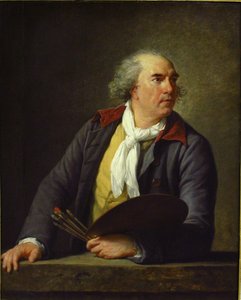
Hubert Robert
1733 - 1808 , France
Quick Facts
- Full Name: Hubert Robert
- Nationality: French
- Date Of Birth: 1733
- Date Of Death: 1808
- Place Of Birth: Paris, France
- Notable Artworks:
- The Port of Rome
- Flight of Galatea
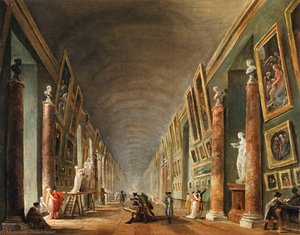
- La Galerie du Louvre
- Artistic Movement Or Style: Romanticism, Neoclassicism
- Artists Who Influenced This Artist:
- Giovanni Panini
- Piranesi
- Artists Or Movements Influenced By This Artist: ['Romanticism']
Related Articles

Romantic Landscapes: 10 Masterpieces for Your Home | OriginalUniqueArt
Journey through 10 Romantic landscape masterpieces by Friedrich, Turner & Cole. Explore emotional art, sublime nature scenes & iconic 19th-century paintings. Find museum-quality reproductions for your home at OriginalUniqueArt.com – discover the full collection online!
Paul Huet: Capturing the Essence of French Romanticism Through Light and Landscape
Explore the captivating world of Paul Huet (1803-1869), a master of French Romantic landscape painting. Discover his influence on Barbizon & Impressionism, and browse high-quality reproductions at OriginalUniqueArt.

John Constable's Masterpieces: Explore 25 Iconic Landscapes for Your Home
Journey through John Constable's 25 most celebrated landscapes. Explore Romanticism, Dedham Vale & his masterful use of light in iconic paintings like 'Hay Wain'. Find museum-quality art reproductions and elevate your home decor on OriginalUniqueArt.com.

Evocations of Place: A Historical Journey Through Landscape Art
Explore the rich history of landscape art with OriginalUniqueArt. Discover renowned artists, movements like Impressionism & Romanticism, and expert guidance for collecting timeless pieces. Find your perfect serene escape today!

Hubert Robert: Picturing Ruins, Preserving Memory – A Study of Romantic Antiquarianism & Artistic Innovation
Explore the captivating world of Hubert Robert, master of Romantic landscape painting & 'capriccio' ruins. Discover his historical context, artistic innovations, and collecting insights with OriginalUniqueArt.