Preview
 Send
Send Share
Share
 Details
 Guide
Guide

 Download
 Similars
 X-Ray
X-Ray Diaporama
 Q&A
Q&A Stats
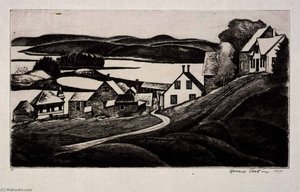
StatsCanyons N.Y

- 31.0 x 13.0 cm

 Read More
The artwork displayed on this page is protected by copyright law, which means we cannot legally create or sell an identical reproduction. This protection is enforced under international agreements such as the Berne Convention and by national laws, including those outlined by the U.S. Copyright Law - Title 17.
This method fully complies with copyright regulations because it does not involve copying or duplicating the protected artwork. Instead, it is a creative reinterpretation - a new painting that is influenced by the original but not identical to it.
Giclée / Art Print
Museum-quality giclée or canvas print with fast production and flexible finish options. ( Buy Hand Made Painting Switch to Digital Image)




































Pick from our preset sizes that match the artwork's original proportions.

Type the width and the height you need, to fit your frame or your wall. A print can only be cut, never made bigger than the picture, so a size with a different shape loses a part of the image. We send you a digital mockup to approve before we print anything. The picture shown on this page does not show the real cut — only the mockup does.
Worldwide Delivery () in 2 weeks instead of standard 4/5 weeks. (8 November)

Free Worldwide Express Shipping

High-Quality Linen Canvas

Full Shipping Insurance

Customs Tax Refund Guarantee

True Color Matching Guarantee

100-Day Return Policy (Defects Only)

100% Money-Back Guarantee

Bulk Discount Offer
 Glass option is only available in size under 110 CM

Canyons N.Y
Giclée / Art Print
Reproduction Size
-


Total Price
$ 81
The Artist and His Work
Howard Cook was an American artist known for his printmaking, painting, and mural work. Born in 1901, he spent much of his life traveling and studying art, which greatly influenced his style. Canyons N.Y. is a prime example of his ability to blend realism with a touch of expressionism, creating a unique and captivating visual experience. The print measures 31 x 13 cm and is made from wood, showcasing the artist's preference for this medium. The scene depicts a city street at night, with a prominent clock tower standing tall amidst other buildings. The absence of cars and the presence of only two figures on the street add to the sense of tranquility and highlight the architectural beauty of the city.Artistic Style and Influences
Howard Cook's work, including Canyons N.Y., reflects his interest in the urban landscape and his ability to find beauty in the mundane. His use of bold lines and geometric shapes gives the print a dynamic feel, while the nighttime setting adds a sense of mystery. For those interested in exploring more of Howard Cook's work or learning about other artists with similar styles, visit OriginalUniqueArt's collection of handmade oil painting reproductions, which includes pieces by various artists such as Paul Delvaux and Madoka Takagi. The Smithsonian American Art Museum also offers a wealth of information on American art, including works by Howard Cook.- View more artworks by Howard Cook at OriginalUniqueArt.
- Learn about the Smithsonian American Art Museum and its collection.
- Discover the works of other artists like Paul Delvaux at OriginalUniqueArt.
For more information on Howard Cook and his artworks, including Canyons N.Y., visit Wikipedia.
Questions & Answers
Can I use augmented reality to see "Canyons N.Y" by Howard Cook in my room?
"Canyons N.Y" has an augmented reality preview: the artwork's AR Preview page shows it in your own space on a compatible device.
Is "Canyons N.Y" by Howard Cook in the public domain?
Regarding copyright, "Canyons N.Y" is still protected by copyright.
What was Howard Cook's age when "Canyons N.Y" was created?
When "Canyons N.Y" was created in 1928, Howard Cook - born in 1901 - was 27 years old.
Artist Biography
A Life Bridging Worlds: The Artistic Journey of Howard Cook
Howard Cook, born in 1901 and passing in 1980, occupies a fascinating, often overlooked space in American art history. He wasn't solely a painter, nor exclusively a composer; his life was a vibrant synthesis of both disciplines, deeply interwoven with the cultural currents of the early to mid-20th century. While perhaps best known for his contributions to Broadway musicals – particularly his long collaboration with Will Marion Cook (his father) – Howard’s artistic vision extended far beyond the stage, manifesting in a body of paintings that reveal a unique sensibility shaped by jazz rhythms, Art Deco aesthetics, and a profound connection to African American heritage. His story is one of navigating racial barriers, embracing innovation, and leaving behind a legacy that continues to resonate with those seeking authentic voices within the American artistic landscape.Early Influences and Musical Foundations
Howard Cook’s upbringing was steeped in music. The son of Will Marion Cook, a celebrated composer, conductor, and violinist – often hailed as one of America's first Black composers – Howard was immersed in a world of syncopation, improvisation, and the burgeoning sounds of jazz. His father’s orchestra, the Southern Syncopated Orchestra, was groundbreaking for its time, blending ragtime, blues, and early jazz forms into sophisticated arrangements. This environment proved formative; young Howard absorbed not only technical musical skills but also an understanding of music as a powerful force for cultural expression and social commentary. He collaborated with his father extensively throughout the 1920s and 30s, contributing arrangements and orchestrations to numerous productions. This early partnership laid the groundwork for Cook’s later artistic endeavors, instilling in him a deep appreciation for rhythm, harmony, and the visual potential of sound. While formally trained in music, Howard also developed an independent passion for painting, pursuing it alongside his musical career.The Intersection of Music and Painting
Cook's paintings are rarely discussed in isolation from his musical work, and rightfully so. They represent a fascinating translation of musical principles onto canvas. His style is characterized by bold colors, geometric shapes reminiscent of Art Deco, and dynamic compositions that evoke the energy of jazz improvisation. He wasn’t simply illustrating music; he was attempting to capture its essence – its emotional weight, its rhythmic pulse, its improvisational spirit – in a visual form. Many of his works feature scenes of African American life, often depicting musicians, dancers, and social gatherings with a vibrant sense of movement and joy. The influence of Aaron Douglas, a leading figure in the Harlem Renaissance, is discernible in some of his compositions, particularly in their use of stylized figures and symbolic imagery. However, Cook’s work possesses a distinct quality – a more fluid, lyrical approach that reflects his musical background.Broadway and Beyond: A Career Defined by Collaboration
Howard Cook's career on Broadway spanned several decades. He worked as an orchestrator, arranger, and composer for numerous productions, contributing to the vibrant soundscape of American musical theatre. His collaborations with his father were particularly significant, resulting in shows that showcased African American talent and challenged prevailing racial stereotypes. Beyond Broadway, Cook continued to paint prolifically, exhibiting his work in galleries and private collections.- His paintings often served as visual companions to his musical compositions, exploring similar themes of identity, community, and cultural pride.
- He embraced a variety of subjects, from portraits and landscapes to abstract compositions inspired by jazz rhythms.
- Cook’s artistic output remained remarkably consistent throughout his life, even as he navigated the challenges of being a Black artist in a racially segregated society.
Legacy and Historical Significance
Howard Cook's historical significance lies in his ability to bridge seemingly disparate worlds – music and painting, high art and popular culture, African American heritage and mainstream artistic expression. He was a pioneer in translating the energy of jazz onto canvas, creating works that capture the spirit of a transformative era. While he may not have achieved the same level of widespread recognition as some of his contemporaries, his contributions to both music and painting are increasingly being acknowledged for their originality and cultural importance. His paintings offer a valuable glimpse into the African American experience during the early 20th century, celebrating Black life with vibrancy, dignity, and artistic flair. As scholars continue to explore the rich tapestry of American art history, Howard Cook’s legacy as a multifaceted artist and innovator is sure to grow, inspiring future generations to embrace creativity across disciplines and challenge conventional boundaries.
Howard Cook
1901 - 1980
Related Articles

Howard Cook: American Regionalism's Pursuit of Artistic Authenticity
Explore the life & art of Howard Cook, a pivotal figure in American Regionalism. Discover his stunning woodcuts, New Deal murals, and evolution from Expressionism – a deep dive for art enthusiasts.

25 Must-See Masterpieces at MoMA New York: A Journey Through Modern Art
Explore 25 iconic MoMA masterpieces, from Picasso to Warhol. Discover museum-quality art at OriginalUniqueArt.com.

Timeless Modernity: The Top 25 Masterpiece Works by Jacques Villedieu
Explore Jacques Villedieu's top 25 masterpieces of modern-classical fusion. Discover museum-quality art on OriginalUniqueArt.com.

Mastering Solitude: The Top 25 Iconic Artworks by Edward Hopper
Step into the quiet world of American Realism with our curated guide to the top 25 Edward Hopper artworks. Explore the light, shadow, and solitude behind his most iconic masterpieces. Find museum-quality reproductions and decor inspiration. Discover all masterpieces on OriginalUniqueArt.com.

25 Must-See Masterpieces at MoMA New York: A Journey Through Modern Art
Explore 25 iconic MoMA masterpieces from Picasso to Warhol. Find museum-quality art inspiration at OriginalUniqueArt.com.