Read More


 For artworks or reproductions larger than 105 cm (approximately 41 inches) on any side, the frame will be shipped as a kit, disassembled. This method ensures safe delivery and prevents damage during transport.


More about this painting
Text size

() ·
A painting made for you, by hand
Hand Made Oil Reproduction
Hand-painted oil on canvas in your size and frame, made to order by our artists. ( Switch to Print Switch to Digital Image)
Artist Biography
French painter Hippolyte Camille Delpy blended Barbizon landscapes with Impressionist color. Known for scenes of rural life & winter, he was a student of Daubigny.
from ·
Chapter 1
How large should it be?
Slide to change the size; the picture on the left shows the frame at its real width. The proportions of the original are kept.
Standard
custom
CM
INCH
Pick from our preset sizes that match the artwork's original proportions.
Loading sizes...

width
height
Type the width and the height you need, to fit your frame or your wall. This is hand-painted, so for a size with a different shape the artist can paint a bit more around the picture, or cut a bit — you choose. We send you a digital mockup to approve before the painting starts. The picture shown on this page does not show the real result — only the mockup does.
Chapter 2
How should it arrive?
Choose the edges of the stretched canvas
Choose your frame

White $1

Blurside $1

Extended $1

P118B $10

P118H $10

P118W $10

P438Z $10

P508JH $12

P508YH $12

P805H $10

P805Z $10

P919BZ $10

P919G $10

P919XJ $10

P959ZH $10

P968JZ $12

W106C $8

W218G $10

W218JH $8

W218Y $10

W307PJ $10

W316G $10

W316PJ $8

W316Y $10

W398PJ $8

W4111J $10

W500HY $15

W500JH $15

W692G $12

W849H $8

W940BG $15

W953PJ $8

H24-GOLD $30

H24-SILVER $30

H36-GOLD $45

H36-SILVER $45
Framed
Moulding: . Overall size with the frame: .
Chapter 3
Who paints it, and should anything change?
Examples of what can be changed: Replace face with customer photo; Add pet (e.g., replace cat with dog); Include hidden message in background; Change background landscape or elements.
After order, OriginalUniqueArt.com team will email client for instructions and provide a mockup preview
After order, OriginalUniqueArt.com team will email client for instructions and provide a mockup preview
Worldwide Delivery () in 3/4 weeks instead of standard 5 weeks. (10 November). No compromise on quality.
Chapter 4
The finishing touches
A nameplate, as in a museum?
Engraved Bronze Plaque Details
This elegant plaque features the artist's name and the title of the artwork, finely engraved for a timeless presentation.
It is made from bronze with a refined, elegant finish. The text is precisely laser-engraved for a sharp and permanent result. Measuring 9x2 cm, the plaque is compact yet easy to read. It's built to be durable and scratch-resistant, offering a professional, museum-quality look. Mounting is simple thanks to the included adhesive backing.
Transparent Acrylic Plaque Details
The plaque includes essential engraved details such as the artist's name, the title of the artwork, the date it was created, the type of media used-like oil on canvas or watercolor-a brief description of the piece, and a QR code that links to the complete artwork information.
It is crafted from clear acrylic, offering a sleek, modern appearance. The text is UV-engraved in black to ensure strong visual contrast. With a size of 10x15 cm, it ensures optimal readability. It comes equipped with two metal hooks for secure wall mounting. The plaque is designed to be weather-resistant, making it suitable for various environments, and it includes interactive features that work seamlessly with smartphone scanning.
Black Acrylic Plaque Details
This elegant plaque includes engraved information such as the artist's name, the title of the artwork, the date it was created, the type of media used (like oil on canvas or watercolor), a short description of the artwork, and a QR code for quick access to more information.
The plaque itself is made from refined black acrylic with a premium finish. The text is laser-engraved in white for high contrast and readability. Its size is 10x15 cm, designed to be easy to read. It comes with two metal hooks for professional mounting. The design is sleek and fits any interior style. It is also weather-resistant and durable, with built-in digital integration for mobile compatibility.
A protective varnish?
When do you need it?
Chapter 5
Your painting, as you ordered it
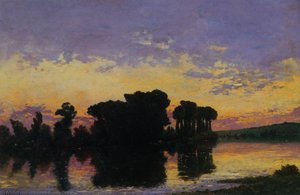
Twilight
Reproduction Medium
Reproduction Size
-
Elite Senior Artist
More detail, finesse, and extra production time
-
Reproduction Frame
-
-
For artworks or reproductions larger than 105 cm (approximately 41 inches) on any side, the frame will be shipped as a kit, disassembled. This method ensures safe delivery and prevents damage during transport.
Professional assembly required - this is not a DIY product.
The kit must be assembled and the canvas stretched by an experienced professional framer, using wood glue (not supplied), a canvas stretching plier and clamps to hold the bars square while the glue dries. Incorrect assembly or uneven canvas tension can permanently damage the artwork and is not covered by our warranty.
All solid wood bars are included, precisely cut to size.
Assembled with the screws provided, plus wood glue for the corner joints, which is not supplied and must be sourced by your framer.
Professional tools are required and not included: a canvas stretching plier (tensioner) and clamps to hold the bars square while the glue dries.
Important:
The corner joints require wood glue, the bars must be held with clamps until the glue is fully dry, and tightening the canvas on the assembled frame requires a canvas stretching plier. None of these are included in the kit. Please arrange an experienced professional framer before ordering this size.
Nameplate
-
-
Protective Varnish
Glossy Varnish (enhances colors, protects against light/moisture)
-
Customize My Artwork
Examples of what can be changed: Replace face with customer photo; Add pet (e.g., replace cat with dog); Include hidden message in background; Change background landscape or elements.
-
Urgent
Worldwide Delivery () in 3/4 weeks instead of standard 5 weeks. (10 November). No compromise on quality.
-
Express Shipping
Worldwide Delivery () in 5 weeks. (17 November).
Included
Total Price
$ 300
Glass option is only available in size under 110 CM
Included with every order
- Free Worldwide Express Shipping
- High-Quality Linen Canvas
- Full Shipping Insurance
- Customs Tax Refund Guarantee
- True Color Matching Guarantee
- 100-Day Return Policy (Defects Only)
- 100% Money-Back Guarantee
- Bulk Discount Offer
 Preview
 Send
Send Share
Share
 Details
 Guide
Guide

 Download
 Similars
 X-Ray
X-Ray Diaporama
 Q&A
Q&A Stats
StatsIn numbers
- 29frames to choose from
- standard sizes, in its own proportions
- 5weeks to paint and deliver it
About the original

Hippolyte Camille Delpy
1842 - 1910, France
Quick facts about Hippolyte Camille Delpy
- Full Name: Hippolyte Camille Delpy
- Nationality: French
- Date Of Birth: 1842
- Date Of Death: 1910
- Place Of Birth: Joigny, France
- Notable Artworks:
- Spring Morning
- Potato Harvesting Scene
- Artistic Movement Or Style: Barbizon-Impressionism
- Artists Who Influenced This Artist:
- Charles-François Daubigny
- Camille Corot
- Artists Or Movements Influenced By This Artist: ['Impressionists']
Artist Biography
Hippolyte Camille Delpy: Bridging Barbizon and Impressionism
Born in Joigny, France, in 1842, Hippolyte Camille Delpy’s artistic journey was profoundly shaped by a confluence of influences – the legacy of Charles-François Daubigny, the guidance of Corot, and the burgeoning spirit of the Impressionists. His early life within a moderately wealthy family provided him with opportunities unavailable to many artists of his time, fostering an appreciation for both art and a comfortable existence that allowed him to dedicate himself fully to his craft. Delpy’s story isn't one of radical innovation but rather a careful synthesis – he took the foundational principles of Barbizon landscape painting and infused them with the vibrant color palettes and looser brushwork characteristic of the Impressionist movement, creating a distinctive style uniquely his own.
Delpy’s formative years were inextricably linked to Daubigny. Introduced around 1855, the older artist took on the young Delpy as an informal student, a rare gesture that proved invaluable. The summers were spent aboard Daubigny's famed “Le Botin,” a small boat serving as both studio and residence, drifting along the Seine and exploring the landscapes of France. This intimate apprenticeship provided Delpy with direct observation of Daubigny’s techniques – his meticulous attention to detail, his ability to capture the subtle shifts in light and atmosphere, and his deep connection to the natural world. Corot, a respected figure within the Parisian art scene, further broadened Delpy's artistic horizons, introducing him to a more abstract approach to landscape painting, emphasizing tonal values and capturing the essence of a scene rather than its literal representation.
Early Career and Salon Recognition
Delpy’s formal training began in Paris in 1858, where he sought guidance from Corot. His early artistic development was marked by a diligent study of traditional techniques, absorbing the lessons imparted by his mentors. In 1869, Delpy made his debut at the Salon, submitting “A Luncheon during Lent,” a still life that signaled the beginning of his career as a landscape painter. This initial success paved the way for continued recognition within the established artistic circles of France. The years following were characterized by extensive travel and experimentation, with Delpy dividing his time between Ville-d’Avray, favored by Corot, and Auvers-sur-Oise, Daubigny's home, immersing himself in the landscapes that had shaped his artistic sensibilities.
Delpy’s work during this period demonstrates a remarkable ability to blend the rigorous observation of Barbizon painting with the Impressionist emphasis on capturing fleeting moments of light and color. His paintings of winter scenes – particularly those created during the harsh winters of 1873-74 – stand out as particularly innovative, showcasing his willingness to embrace brighter hues and looser brushwork while retaining a strong connection to the natural world. These works garnered critical acclaim, with Jules-Antoine Castagnary praising Delpy’s “originality” in December 1875.
A Unique Style and Notable Achievements
Delpy's style is often described as a harmonious blend of Barbizon and Impressionist approaches. He retained the meticulous detail and atmospheric perspective characteristic of the Barbizon school, but infused his paintings with the vibrant colors and broken brushstrokes that defined the Impressionists. His subjects frequently centered on rural life – farmers harvesting crops, women washing laundry by the river, and idyllic landscapes bathed in sunlight. In 1876, he took a bold step, organizing his own sale of paintings at the Hôtel Drouot, an unprecedented event for a relatively unknown artist. The success of this sale—all 45 works sold—demonstrated Delpy’s growing reputation and financial stability.
Delpy's commitment to his craft extended beyond the Salon circuit. He actively sought opportunities to exhibit his work in various galleries, including the Galerie Georges Petit, a prestigious venue in Paris. In 1886, he even participated in a panoramic painting project in Washington D.C., showcasing his versatility and willingness to adapt to new artistic challenges. Throughout his career, Delpy received numerous accolades, including a medal at the Salon of 1884 and an honorable mention at the Exposition Universelle of 1889.
Legacy and Lasting Influence
Hippolyte Camille Delpy died in Paris in 1910, leaving behind a significant body of work that continues to be admired for its evocative depictions of rural France. His paintings offer a glimpse into a bygone era, capturing the beauty of the landscape and the rhythms of daily life with remarkable sensitivity and skill. Delpy’s legacy lies not only in his individual artistic achievements but also in his ability to bridge the gap between two distinct artistic movements – Barbizon and Impressionism – creating a unique and enduring style that reflects the spirit of 19th-century France.
His works are now held in numerous public and private collections, including The Walters Art Museum in Baltimore, the Tokyo Fuji Art Museum, and the Musée Carnavalet in Paris, ensuring that his artistic vision continues to be appreciated by generations to come.
Explore artworks organized by themes, styles, and characteristics.