

 Send
Send Share
Share
 Details
 Guide
Guide

 Download
 Similars
 Diaporama
 Stats
StatsTwo Piece Sculpture No. 7; Pipe


 Read More
The artwork displayed on this page is protected by copyright law, which means we cannot legally create or sell an identical reproduction. This protection is enforced under international agreements such as the Berne Convention and by national laws, including those outlined by the U.S. Copyright Law - Title 17.
As a respectful and legal alternative, we offer custom, hand-painted artworks inspired by the original. Our skilled and professional artists carefully study the original's style, mood, and artistic essence to create a new, unique piece that evokes the same feeling - while remaining an original creation in its own right.
This method fully complies with copyright regulations because it does not involve copying or duplicating the protected artwork. Instead, it is a creative reinterpretation - a new painting that is influenced by the original but not identical to it.
Hand Made Oil Reproduction
Hand-painted oil on canvas in your size and frame, made to order by our artists. ( Switch to Print Switch to Digital Image)




































Pick from our preset sizes that match the artwork's original proportions.

Type the width and the height you need, to fit your frame or your wall. This is hand-painted, so for a size with a different shape the artist can paint a bit more around the picture, or cut a bit — you choose. We send you a digital mockup to approve before the painting starts. The picture shown on this page does not show the real result — only the mockup does.
After order, OriginalUniqueArt.com team will email client for instructions and provide a mockup preview
Worldwide Delivery () in 3/4 weeks instead of standard 5 weeks. (25 October). No compromise on quality.

Free Worldwide Express Shipping

High-Quality Linen Canvas

Full Shipping Insurance

Customs Tax Refund Guarantee

True Color Matching Guarantee

100-Day Return Policy (Defects Only)

100% Money-Back Guarantee

Bulk Discount Offer
 Glass option is only available in size under 110 CM

Two Piece Sculpture No. 7; Pipe
Reproduction Medium
Reproduction Size
-


Total Price
$ 300
A Dance of Forms: Exploring Henry Moore’s ‘Two Piece Sculpture No. 7; Pipe’
This captivating bronze sculpture by Henry Moore exemplifies his mastery of abstract figurative form and his enduring exploration of the human figure and its relationship to landscape. Created in an unknown year, *Two Piece Sculpture No. 7; Pipe* presents two reclining figures intertwined in a dynamic embrace. The composition isn't about literal representation; rather, it’s a poetic suggestion of connection, intimacy, and the inherent tension between individual forms. Moore deliberately avoids precise definition, allowing the viewer to complete the narrative through their own interpretation. The sculpture rests upon a dark brown base, grounding the flowing bronze and providing visual contrast.Modernist Sensibility & Sculptural Technique
Moore’s style is firmly rooted in Modernism, drawing influence from both Surrealism and Abstract Expressionism. However, he forged his own unique path, characterized by simplified forms and a deep engagement with the material itself. Direct carving, a technique Moore championed early in his career, isn't immediately evident here as this is a cast bronze – but the spirit of that approach remains. The sculpture *feels* hand-worked; subtle variations in texture and surface finish suggest the artist’s intimate involvement with the process. The warm gold tones of the bronze, ranging from honey hues to rich browns, are not merely aesthetic choices but integral to conveying a sense of warmth, organic life, and timelessness. The ‘pipe’ element of the title alludes to the way the forms connect and flow into one another, like sections of piping joined together.Moore's Legacy: Reclining Figures & Abstracted Humanity
Henry Moore (1898-1986) is arguably Britain’s greatest sculptor of the 20th century. He revolutionized sculpture by moving away from traditional representational forms and embracing abstraction. His recurring motif – the reclining figure – became synonymous with his name, often evoking primordial landscapes and the enduring power of the human spirit. Two Piece Sculpture No. 7; Pipe builds upon this legacy, presenting a fragmented yet harmonious vision of the body. Moore’s work frequently explores themes of motherhood and family, though in this piece, the connection feels more universal – a celebration of partnership and shared existence. His sculptures are often monumental in scale, but even in an unknown size, this piece possesses a powerful presence.Emotional Resonance & Interior Impact
While abstract, *Two Piece Sculpture No. 7; Pipe* evokes a profound emotional response. The flowing lines and intertwined forms suggest comfort, support, and a sense of belonging. It’s a sculpture that invites contemplation and encourages viewers to project their own feelings onto its ambiguous shapes.- For collectors, this piece represents an investment in a cornerstone of Modern art.
- Interior designers will appreciate its ability to add sophistication and artistic depth to any space.
- Its warm tones and organic forms make it particularly well-suited for modern or contemporary interiors, but its timeless quality allows it to complement a variety of styles.
Questions & Answers
Is "Two Piece Sculpture No. 7; Pipe" one of Henry Moore's most popular works?
"Two Piece Sculpture No. 7; Pipe" by Henry Moore has an iconic popularity level. This classification reflects how widely the work is recognized.
Does "Two Piece Sculpture No. 7; Pipe" show strong light-dark contrasts?
The light-dark contrast of "Two Piece Sculpture No. 7; Pipe" is recorded as statement. Contrast describes how strongly light and dark areas differ.
For what occasion is "Two Piece Sculpture No. 7; Pipe" by Henry Moore suggested as a present?
"Two Piece Sculpture No. 7; Pipe" is suggested as a gift for anniversary.
Artist Biography
A Life Sculpted in Form: The World of Henry Moore
Henry Spencer Moore, born in the Yorkshire mining town of Castleford in 1898, emerged as one of Britain’s most significant and internationally celebrated sculptors of the twentieth century. His journey from humble beginnings to global recognition is a testament to his unwavering dedication to artistic exploration and his profound connection to the human form and the natural world. Moore's father, a self-taught man with a passion for learning, instilled in him a belief in the power of education, steering him away from the life of a miner towards formal schooling. Even as a young boy, Moore demonstrated an innate talent for modeling clay and carving wood, foreshadowing the path his life would take. This early engagement with tactile materials laid the foundation for a career defined by three-dimensional form. His experiences growing up amidst the rolling hills of Yorkshire deeply influenced his aesthetic sensibility, imbuing his work with a sense of organic fluidity that echoes the landscape of his birthplace.Early Influences and Artistic Development
Moore’s artistic education began at Castleford Secondary School, where his art teacher recognized and nurtured his talent. He later attended Leeds School of Art and then the Royal College of Art in London, immersing himself in the study of classical sculpture and modern movements like Cubism. However, Moore wasn't simply a follower of trends; he synthesized these influences into something uniquely his own. A pivotal moment came during a visit to Mexico in 1925, where he encountered pre-Columbian sculptures – particularly those of the Aztec civilization. The powerful simplicity and abstract forms of these works resonated deeply with Moore, liberating him from conventional representational constraints. He began to explore abstraction more fully, focusing on the human figure as a source of inspiration but moving away from strict anatomical accuracy. This period saw the development of his signature style: semi-abstract sculptures characterized by rounded, organic shapes and often featuring openings or voids that played with light and space.The Reclining Figure and Mother and Child
Throughout his career, two recurring motifs dominated Moore’s oeuvre: the reclining figure and the mother and child. The *reclining figure*, in particular, became synonymous with his name. These sculptures are not merely depictions of the human body at rest; they are explorations of form, volume, and the relationship between the figure and its surrounding space. Their undulating curves evoke a sense of timelessness and serenity, while their often fragmented or pierced forms suggest vulnerability and resilience. The *mother and child* theme, equally prevalent in his work, speaks to universal themes of love, protection, and nurturing. Moore’s depictions of mothers and children are imbued with a profound emotional depth, capturing the intimate bond between parent and offspring. These sculptures were not idealized representations but rather honest portrayals of human connection, often reflecting the anxieties and uncertainties of the era in which they were created.Wartime Reflections and Public Commissions
The outbreak of World War II profoundly impacted Moore’s work. He began documenting Londoners sheltering from the Blitz in the Underground stations, creating a series of powerful drawings that captured the fear, resilience, and communal spirit of the time. These *Shelter Drawings* are not only important historical documents but also demonstrate Moore's ability to translate his sculptural sensibility into two-dimensional form. After the war, Moore received numerous public commissions, allowing him to create large-scale sculptures for schools, hospitals, and civic spaces. He believed that art should be accessible to all and actively sought opportunities to integrate his work into everyday life. These monumental bronzes became landmarks, transforming urban landscapes and inspiring generations of artists and viewers. His ability to fulfill these grand projects while remaining true to his artistic vision solidified his reputation as a leading figure in modern sculpture.Legacy and Enduring Influence
Henry Moore’s influence on twentieth-century art is undeniable. He paved the way for subsequent generations of sculptors, challenging conventional notions of form and space and demonstrating the power of abstraction. His work continues to resonate with audiences today, inspiring awe and contemplation. In 1977, Moore established the Henry Moore Foundation, ensuring that his legacy would endure through education and the promotion of the arts. The foundation supports artists, scholars, and institutions worldwide, furthering Moore’s commitment to fostering creativity and artistic innovation. His sculptures stand as enduring monuments to human ingenuity and a testament to the transformative power of art.- Major Themes: Human form, abstraction, mother and child, reclining figures, landscape.
- Key Influences: Classical sculpture, Cubism, pre-Columbian art, the Yorkshire landscape.
- Notable Works: *Reclining Figure: 1951*, *Family Group*, *Shelter Drawings*.

Henry Moore
1898 - 1986 , United Kingdom
Quick Facts
- Full Name: Henry Spencer Moore
- Nationality: British
- Date Of Birth: 1898
- Date Of Death: 1986
- Place Of Birth: Castleford, United Kingdom
- Notable Artworks:
- Reclining Figure
- Shelter Drawings
- Madonna and Child
- Pointed Torso
- Sheep 1
- Artistic Movement Or Style: Modernism, Abstract sculpture
Related Articles
The Enduring Legacy of Bronze: A Historical & Artistic Exploration for the Collector
Explore the rich history & enduring appeal of bronze sculpture with expert insights for collectors at OriginalUniqueArt. Learn about casting techniques, iconic artists, collecting tips & contemporary interpretations.
The Enduring Legacy of Bronze: History, Technique & Artistic Expression for the Collector
Explore the rich history & enduring appeal of bronze sculpture with expert insights for collectors at OriginalUniqueArt. Learn about casting techniques, iconic artists, and collecting tips.

Bronze Age to Modern Masters: 10 Sculptures That Redefined Art | OriginalUniqueArt
Journey through art history with 10 legendary bronze sculptures – from Michelangelo's David to Rodin’s Thinker. Explore the stories, techniques & timeless beauty of these masterpieces. Find museum-quality reproductions & elevate your home decor on OriginalUniqueArt.com.

Bronze Sculptures That Defined Art History | OriginalUniqueArt
Journey through art history with our Top 10 bronze sculptures! Explore masterpieces by Rodin, Michelangelo & more. Discover stories behind iconic statues and find museum-quality reproductions for your home decor at OriginalUniqueArt.com.
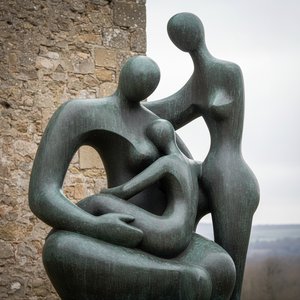
Henry Moore: Sculpting Modernity – Form, Emotion & the Human Condition
Explore the revolutionary sculptures of Henry Moore – abstract forms, reclining figures & powerful expressions of the human condition. Discover his legacy & artistic process with OriginalUniqueArt.


