

 Preview
 Send
Send Share
Share
 Details

 Download
 Similars
 X-Ray
X-Ray Diaporama
 Stats
StatsThe Artist's Hand V
 Lithograph
- WallArt
- Neo-Romanticism
 1979
1979- Modern
 26.0 x 19.0 cm
 Tate Britain
 Read More
Hand Made Oil Reproduction
Hand-painted oil on canvas in your size and frame, made to order by our artists. ( Switch to Print Switch to Digital Image)




P118B $10

P118H $10

P118W $10

P438Z $10

P508JH $12

P508YH $12

P805H $10

P805Z $10

P919BZ $10

P919G $10

P919XJ $10

P959ZH $10

P968JZ $12

W106C $8

W218G $10

W218JH $8

W218Y $10

W307PJ $10

W316G $10

W316PJ $8

W316Y $10

W398PJ $8

W4111J $10

W500HY $15

W500JH $15

W692G $12

W849H $8

W940BG $15

W953PJ $8




Pick from our preset sizes that match the artwork's original proportions.

You may enter your own dimensions to fit a specific frame or space. If your selected size does not match the original image's proportions, we will either crop the artwork or extend the painting with additional hand-painted elements. A digital mockup will be sent for your approval before production begins.
Please note that the on-screen preview does not reflect the actual cropping or extension. Only the mockup will accurately show the final composition.
While custom sizes are available, we recommend selecting a dimension from the predefined list to preserve the original proportions.
After order, OriginalUniqueArt.com team will email client for instructions and provide a mockup preview
Worldwide Delivery () in 3/4 weeks instead of standard 5 weeks. (18 September). No compromise on quality.

Free Worldwide Express Shipping

High-Quality Linen Canvas

Full Shipping Insurance

Customs Tax Refund Guarantee

True Color Matching Guarantee

100-Day Return Policy (Defects Only)

100% Money-Back Guarantee

Bulk Discount Offer
 Glass option is only available in size under 110 CM

The Artist's Hand V
Reproduction Medium
Reproduction Size
-


Total Price
$ 300
A Poignant Meditation on Creation
In the quiet intimacy of Henry Moore’s “The Artist's Hand V,” created in 1979, we are invited into a profound dialogue between the creator and his medium. This exquisite lithograph serves as more than a mere anatomical study; it is a soulful meditation on the very act of making. Through the outstretched gesture of Moore’s own hand, the artwork captures a moment of suspended animation, where the boundary between the sculptor and his subject begins to dissolve. The piece resonates with a sense of reaching—a physical manifestation of the human desire to touch, to shape, and to leave an indelible mark upon the world. For the discerning collector or interior designer, this work offers a sophisticated focal point that brings both intellectual depth and a serene, contemplative energy to any curated space.
Executed in the evocative style of Neo-Romanticism, the print eschews clinical precision in favor of emotional resonance and organic truth. Moore, a master of capturing the essence of form, utilizes a delicate four-color lithograph process—incorporating shades of black, brown, light-brown, and yellow-brown—to breathe life into the Rives paper. This careful selection of tones allows for subtle gradations of shadow and light, creating a sculptural depth that mimics the three-dimensional qualities of his famous bronze works. The texture of the print, achieved through the meticulous printing technique of Curwen Prints Ltd., London, provides a tactile quality that invites the eye to linger on every crease and contour of the reaching fingers.
The Legacy of Form and Nature
To understand the gravity of this work, one must look to the landscape of Moore’s soul. Born in the rugged mining town of Castleford, Yorkshire, Moore’s aesthetic was forever shaped by the undulating hills and weathered stones of his homeland. In “The Artist's Hand V,” we see the echoes of that landscape reflected in the organic, almost geological rhythm of the hand itself. His ability to bridge the gap between the human figure and the natural world is at its zenith here; the hand does not merely represent flesh and bone, but rather a force of nature, much like the trees and animal skeletons that defined his monumental sculptures.
The historical significance of this piece is further heightened by its rarity. As part of an edition of only 50 numbered prints, it carries the prestige of a limited treasure, making it an exceptional acquisition for those who value exclusivity and art historical importance. Whether placed in a sunlit studio or a formal gallery setting, this lithograph acts as a bridge to the twentieth century's most significant sculptural legacy. It is a piece that does not demand attention through loudness, but commands it through its quiet, enduring strength—a timeless tribute to the enduring spirit of human creativity.
Artist Biography
A Life Sculpted in Form: The World of Henry Moore
Henry Spencer Moore, born in the Yorkshire mining town of Castleford in 1898, emerged as one of Britain’s most significant and internationally celebrated sculptors of the twentieth century. His journey from humble beginnings to global recognition is a testament to his unwavering dedication to artistic exploration and his profound connection to the human form and the natural world. Moore's father, a self-taught man with a passion for learning, instilled in him a belief in the power of education, steering him away from the life of a miner towards formal schooling. Even as a young boy, Moore demonstrated an innate talent for modeling clay and carving wood, foreshadowing the path his life would take. This early engagement with tactile materials laid the foundation for a career defined by three-dimensional form. His experiences growing up amidst the rolling hills of Yorkshire deeply influenced his aesthetic sensibility, imbuing his work with a sense of organic fluidity that echoes the landscape of his birthplace.Early Influences and Artistic Development
Moore’s artistic education began at Castleford Secondary School, where his art teacher recognized and nurtured his talent. He later attended Leeds School of Art and then the Royal College of Art in London, immersing himself in the study of classical sculpture and modern movements like Cubism. However, Moore wasn't simply a follower of trends; he synthesized these influences into something uniquely his own. A pivotal moment came during a visit to Mexico in 1925, where he encountered pre-Columbian sculptures – particularly those of the Aztec civilization. The powerful simplicity and abstract forms of these works resonated deeply with Moore, liberating him from conventional representational constraints. He began to explore abstraction more fully, focusing on the human figure as a source of inspiration but moving away from strict anatomical accuracy. This period saw the development of his signature style: semi-abstract sculptures characterized by rounded, organic shapes and often featuring openings or voids that played with light and space.The Reclining Figure and Mother and Child
Throughout his career, two recurring motifs dominated Moore’s oeuvre: the reclining figure and the mother and child. The *reclining figure*, in particular, became synonymous with his name. These sculptures are not merely depictions of the human body at rest; they are explorations of form, volume, and the relationship between the figure and its surrounding space. Their undulating curves evoke a sense of timelessness and serenity, while their often fragmented or pierced forms suggest vulnerability and resilience. The *mother and child* theme, equally prevalent in his work, speaks to universal themes of love, protection, and nurturing. Moore’s depictions of mothers and children are imbued with a profound emotional depth, capturing the intimate bond between parent and offspring. These sculptures were not idealized representations but rather honest portrayals of human connection, often reflecting the anxieties and uncertainties of the era in which they were created.Wartime Reflections and Public Commissions
The outbreak of World War II profoundly impacted Moore’s work. He began documenting Londoners sheltering from the Blitz in the Underground stations, creating a series of powerful drawings that captured the fear, resilience, and communal spirit of the time. These *Shelter Drawings* are not only important historical documents but also demonstrate Moore's ability to translate his sculptural sensibility into two-dimensional form. After the war, Moore received numerous public commissions, allowing him to create large-scale sculptures for schools, hospitals, and civic spaces. He believed that art should be accessible to all and actively sought opportunities to integrate his work into everyday life. These monumental bronzes became landmarks, transforming urban landscapes and inspiring generations of artists and viewers. His ability to fulfill these grand projects while remaining true to his artistic vision solidified his reputation as a leading figure in modern sculpture.Legacy and Enduring Influence
Henry Moore’s influence on twentieth-century art is undeniable. He paved the way for subsequent generations of sculptors, challenging conventional notions of form and space and demonstrating the power of abstraction. His work continues to resonate with audiences today, inspiring awe and contemplation. In 1977, Moore established the Henry Moore Foundation, ensuring that his legacy would endure through education and the promotion of the arts. The foundation supports artists, scholars, and institutions worldwide, furthering Moore’s commitment to fostering creativity and artistic innovation. His sculptures stand as enduring monuments to human ingenuity and a testament to the transformative power of art.- Major Themes: Human form, abstraction, mother and child, reclining figures, landscape.
- Key Influences: Classical sculpture, Cubism, pre-Columbian art, the Yorkshire landscape.
- Notable Works: *Reclining Figure: 1951*, *Family Group*, *Shelter Drawings*.

Henry Moore
1898 - 1986 , United Kingdom
Quick Facts
- Artistic Movement Or Style: Modernism, Abstract sculpture
- Date Of Birth: July 30, 1898
- Date Of Death: August 31, 1986
- Full Name: Henry Spencer Moore
- Nationality: British
- Notable Artworks:
- Reclining Figure
- Shelter Drawings
- Madonna and Child
- Pointed Torso
- Sheep 1
- Place Of Birth: Castleford, UK
Related Articles

Designing Your Forever Space: An Expert Guide to Elevating Your New Home with Neo-Abstract Art
Elevate your first home with the bold energy of Neo-Abstract Art. Our expert guide helps newlyweds master modern geometric compositions, textures, and color palettes. Discover how custom hand-painted oils and multi-panel designs can transform your new space into a curated masterpiece.

Neo-Abstract Art: The High-Impact Evolution of Modern Visual Energy and Geometric Sophistication
Discover the power of Neo-Abstract art. Explore how bold geometric forms and high-impact visual energy are redefining modern design. Learn to curate sophisticated, high-energy spaces with the latest trends in contemporary abstraction and structural color.

Bronze Sculptures That Defined Art History | OriginalUniqueArt
Journey through art history with our Top 10 bronze sculptures! Explore masterpieces by Rodin, Michelangelo & more. Discover stories behind iconic statues and find museum-quality reproductions for your home decor at OriginalUniqueArt.com.
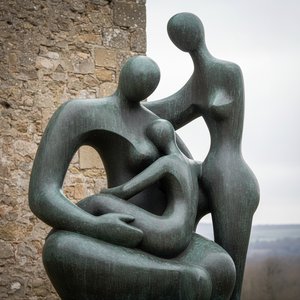
Henry Moore: Sculpting Modernity – Form, Emotion & the Human Condition
Explore the revolutionary sculptures of Henry Moore – abstract forms, reclining figures & powerful expressions of the human condition. Discover his legacy & artistic process with OriginalUniqueArt.

Henri Matisse's Masterpieces: Explore 25 Iconic Paintings & Art Decor Ideas
Journey through Henri Matisse's 25 most iconic paintings! Explore Fauvism, vibrant colors & the stories behind masterpieces like 'The Dance'. Find museum-quality art reproductions and curated decor ideas to elevate your space. Discover all masterpieces on OriginalUniqueArt.com.


