

 Preview
 Send
Send Share
Share
 Details
 Guide
Guide

 Download
 Similars
 X-Ray
X-Ray Diaporama
 Stats
StatsA Bristol Committee
 Oil On Canvas
- WallArt
- Contemporary Realism
 1921
1921 23.0 x 33.0 cm
 Bristol Museum - Art Gallery
 Read More
The artwork displayed on this page is protected by copyright law, which means we cannot legally create or sell an identical reproduction. This protection is enforced under international agreements such as the Berne Convention and by national laws, including those outlined by the U.S. Copyright Law - Title 17.
This method fully complies with copyright regulations because it does not involve copying or duplicating the protected artwork. Instead, it is a creative reinterpretation - a new painting that is influenced by the original but not identical to it.
Giclée / Art Print
Museum-quality giclée or canvas print with fast production and flexible finish options. ( Buy Hand Made Painting Switch to Digital Image)




P118B $10

P118H $10

P118W $10

P438Z $10

P508JH $12

P508YH $12

P805H $10

P805Z $10

P919BZ $10

P919G $10

P919XJ $10

P959ZH $10

P968JZ $12

W106C $8

W218G $10

W218JH $8

W218Y $10

W307PJ $10

W316G $10

W316PJ $8

W316Y $10

W398PJ $8

W4111J $10

W500HY $15

W500JH $15

W692G $12

W849H $8

W940BG $15

W953PJ $8




Pick from our preset sizes that match the artwork's original proportions.

Type the width and the height you need, to fit your frame or your wall. A print can only be cut, never made bigger than the picture, so a size with a different shape loses a part of the image. We send you a digital mockup to approve before we print anything. The picture shown on this page does not show the real cut — only the mockup does.
Worldwide Delivery () in 2 weeks instead of standard 4/5 weeks. (25 October)

Free Worldwide Express Shipping

High-Quality Linen Canvas

Full Shipping Insurance

Customs Tax Refund Guarantee

True Color Matching Guarantee

100-Day Return Policy (Defects Only)

100% Money-Back Guarantee

Bulk Discount Offer
 Glass option is only available in size under 110 CM

A Bristol Committee
Giclée / Art Print
Reproduction Size
-


Total Price
$ 81
A Glimpse into Authority: Henry Lamb’s “A Bristol Committee”
Henry Lamb's "A Bristol Committee," painted in 1921, isn’t merely a depiction of a boardroom meeting; it’s a carefully constructed tableau of power, deliberation, and the quiet weight of professional life. The canvas breathes with an understated formality, capturing a moment suspended between decision and action within the heart of Bristol's burgeoning commercial landscape. Lamb, a key figure in British Primitivism – a movement that sought to capture raw emotion and subjective experience rather than photographic realism – imbues this scene with a palpable sense of seriousness and restrained energy.
The composition immediately draws the eye to the central group of men seated around the imposing wooden table. Their postures, rendered with meticulous detail, suggest both engagement and a certain guardedness. The arrangement isn’t haphazard; it's deliberately structured, reflecting the hierarchical nature of the setting. A window in the background offers a subtle, almost melancholic view of an exterior world – a reminder that these men are bound by duty and responsibility within their enclosed space. Lamb masterfully employs perspective to create depth, drawing the viewer’s eye towards the receding table and hinting at the vastness of the room, while simultaneously anchoring us in the immediate intimacy of the conversation.
The Language of Form: Technique and Style
Lamb's technique is distinctly characterized by a blend of realism and expressive brushwork. He utilizes oil paints with remarkable control, building up layers of color to achieve a rich, textured surface. The muted palette – dominated by browns, greens, and blues – contributes significantly to the painting’s somber atmosphere. Notice how he subtly models forms through variations in tone and shadow, giving each figure a tangible presence. The brushstrokes themselves are visible, adding a layer of immediacy and spontaneity that contrasts with the overall sense of formality. This interplay between meticulous detail and expressive gesture is a hallmark of Lamb's style – a testament to his ability to capture both the objective reality and the subjective experience of his subjects.
- Color Palette: Muted browns, greens, blues - evoking seriousness and restraint.
- Brushwork: Visible yet controlled, blending realism with expressive energy.
- Perspective: Creates depth and anchors the viewer within the scene’s enclosed space.
A Window into a Time: Historical Context
“A Bristol Committee” was painted in 1921, a period of significant social and economic transformation in Britain. Bristol, a major port city with deep roots in trade and industry, was experiencing rapid growth and modernization. The painting reflects this dynamism, capturing the spirit of a city engaged in shaping its future. The presence of these men – likely representatives of local businesses or civic organizations – speaks to the importance of commerce and governance within Bristol’s community. It's a snapshot of a society grappling with the complexities of progress and the responsibilities that come with it.
Lamb’s work is deeply intertwined with the broader context of British Primitivism, a movement that emerged in response to the perceived artificiality of academic art. Artists like Lamb sought to capture raw emotion and subjective experience through direct observation and expressive brushwork, rejecting idealized representations in favor of a more immediate and visceral approach. This commitment to capturing the essence of his subjects is evident in the painting’s powerful sense of atmosphere and its subtle portrayal of human interaction.
Symbolism and Emotional Resonance
Beyond its surface depiction, “A Bristol Committee” carries a wealth of symbolic meaning. The large table serves as a focal point, representing the space for negotiation, decision-making, and the exercise of authority. The men themselves embody the weight of responsibility and the complexities of leadership. The muted colors and somber atmosphere contribute to a sense of seriousness and contemplation – suggesting that these are not frivolous discussions but rather weighty matters at hand. Ultimately, Lamb’s painting invites us to consider the nature of power, the dynamics of human interaction, and the enduring questions surrounding commerce and governance.
Questions & Answers
Are the colors of "A Bristol Committee" by Henry Lamb saturated or muted?
The palette of "A Bristol Committee" is subtle color in saturation.
What mood does "A Bristol Committee" by Henry Lamb express within Contemporary Realism?
"A Bristol Committee" carries a melancholic emotional tone within the Contemporary Realism movement.
What national origin stands behind the Contemporary Realism of "A Bristol Committee"?
"A Bristol Committee" was created by Henry Lamb, born in Australia, within the Contemporary Realism movement. The artist's origin links the work to Contemporary Realism as practiced by artists from Australia.
Artist Biography
A Life Bridging Continents and Eras
Henry Lamb, born in Adelaide, Australia, in 1883, was an artist whose life unfolded as a fascinating intersection of cultures and historical upheaval. The son of Sir Horace Lamb, a renowned mathematician, young Henry’s early years were steeped in intellectual stimulation. However, his path diverged from the purely academic when the family relocated to Manchester, England, in 1885—a move that proved pivotal, exposing him to a burgeoning artistic scene that would ultimately claim his allegiance. Initially pursuing medical studies at both Manchester University and Guy's Hospital, Lamb found himself increasingly drawn to the world of art, an irresistible pull he could no longer deny. By 1906, he decisively abandoned medicine, enrolling at Chelsea School of Art under the tutelage of Augustus John and William Orpen—a decision that would define his creative destiny. Subsequent studies at the Académie de la Palette in Paris further honed his skills, immersing him in the avant-garde currents of early 20th-century European art and introducing him to influential figures like Jean Metzinger and Henri Le Fauconnier.Formative Influences and Artistic Awakening
The influence of Augustus John on Lamb’s artistic development was profound. John's emphasis on drawing from life, a direct lineage from the Slade School tradition, instilled in Lamb a commitment to observation and expressive line work. This foundation became central to his unique style—a style that favored capturing the essence of a subject rather than mere photographic representation. Lamb’s early years were also deeply intertwined with the bohemian circles of London, where he encountered and befriended prominent figures like Lytton Strachey, whose penetrating portrait would become one of Lamb's most celebrated achievements. His relationship with Nina Forrest, known affectionately as “Euphemia,” proved equally significant; she became his muse, model, and a constant source of inspiration—a figure who embodied the spirit of artistic freedom and unconventional beauty that permeated the era. Lamb’s involvement in the Camden Town Group in 1911 and later the London Group in 1913 solidified his position within the progressive art movement challenging conventional artistic norms. These groups provided a platform for experimentation and fostered a spirit of collaboration that shaped Lamb's evolving aesthetic, pushing him to explore new forms of expression and challenge established conventions.War, Witness, and Remembrance
The outbreak of World War I dramatically altered the course of Lamb’s life. Returning to his medical training, he served as a battalion medical officer with the 5th Battalion, Royal Inniskilling Fusiliers, witnessing firsthand the horrors of conflict. Awarded the Military Cross for his bravery, Lamb was also appointed an official war artist, tasked with documenting the realities of warfare. This dual role—healer and observer—profoundly impacted his artistic vision. His wartime paintings, such as “Irish Troops in the Judaean Hills Surprised by a Turkish Bombardment,” are not merely depictions of battle but poignant reflections on the psychological toll of war, capturing moments of vulnerability and unexpected beauty amidst chaos. These works stand as powerful testaments to the human cost of conflict and remain significant historical documents—a stark reminder of the brutality and senselessness of war. The experience imbued his work with a newfound depth and emotional resonance, forever shaping his artistic perspective.A Legacy in Portraiture and Beyond
While Lamb’s wartime experiences left an indelible mark on his work, he is perhaps best known for his evocative portraits. He possessed a remarkable ability to capture not just the physical likeness but also the inner character of his subjects—their thoughts, their emotions, their very souls. His portrait of Lytton Strachey, with its penetrating gaze and psychological depth, remains a masterpiece of 20th-century British portraiture. Throughout his career, Lamb continued to paint portraits, extending his practice to include high-ranking military commanders during World War II. His later years saw him appointed a Trustee of both the National Portrait Gallery and the Tate Gallery, demonstrating his respected position within the art world. Elected an Associate of the Royal Academy in 1940 and a full member in 1949, Lamb continued to paint until arthritis curtailed his ability to work. He died in 1960, leaving behind a rich artistic legacy that continues to resonate with audiences today. His contribution lies not only in his technical skill but also in his profound sensitivity to the human condition and his ability to translate complex emotions onto canvas. Lamb’s art serves as a compelling reminder of the power of observation, empathy, and the enduring relevance of portraiture.Key Characteristics & Artistic Style
- Expressive Line Work: Heavily influenced by Augustus John, Lamb’s work is characterized by a dynamic and expressive use of line, creating a sense of movement and energy.
- Psychological Depth: His portraits are renowned for their ability to capture the inner lives of his subjects, revealing their personalities and emotions with remarkable sensitivity.
- Post-Impressionist Influences: While rooted in traditional techniques, Lamb’s work also exhibits elements of Post-Impressionism, particularly in his use of color and form.
- War Art as Testimony: His wartime paintings are not simply depictions of conflict but powerful statements about the human cost of war, imbued with a sense of empathy and realism.
- Bohemian Spirit: Lamb’s association with the Camden Town Group and his personal life reflect a bohemian spirit—a rejection of conventional norms and an embrace of artistic freedom.

Henry Lamb
1883 - 1960 , Australia
Quick Facts
- Artistic Movement Or Style: Post-Impressionism
- Artists Who Influenced This Artist:
- Augustus John
- William Orpen
- Date Of Birth: 1883
- Date Of Death: 1960
- Full Name: Henry Lamb
- Nationality: British
- Notable Artworks:
- Lytton Strachey
- Irish Troops in the Judean Hills
- Place Of Birth: Adelaide, Australia
Related Articles

Oil on Canvas: A Historical & Technical Exploration of a Timeless Artistic Medium
Explore the rich history & enduring techniques of oil painting on canvas. Discover the science behind its longevity, conservation practices, and contemporary relevance. Expert insights for art enthusiasts.

Henri Matisse's Masterpieces: Explore 25 Iconic Paintings & Art Decor Ideas
Journey through Henri Matisse's 25 most iconic paintings! Explore Fauvism, vibrant colors & the stories behind masterpieces like 'The Dance'. Find museum-quality art reproductions and curated decor ideas to elevate your space. Discover all masterpieces on OriginalUniqueArt.com.
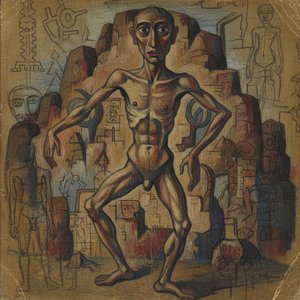
Henry Lamb: Reassessing Modern British Primitivism & the Poetics of Discomfort
Explore the compelling work of Henry Lamb, a key figure in British Primitivism. Discover his unsettling portraits, poignant war art & unique artistic vision. A deep dive into his life and legacy.

The Enduring Power of Painting: A Historical & Contemporary Exploration of Form and Emotion
Explore the rich history & enduring techniques of oil painting with OriginalUniqueArt. Discover masterpieces, learn about art collecting, and find authentic handmade reproductions crafted by skilled artists.

The Enduring Legacy of Oil on Canvas: Technique, History & Aesthetic Impact
Explore the rich history & techniques of oil painting – from Renaissance masters to Impressionism. Discover pigments, layering methods, and why this timeless medium endures. Expert insights for artists & art enthusiasts.


