Preview
 Send
Send Share
Share
 Details

 Download
 Similars
 X-Ray
X-Ray Diaporama
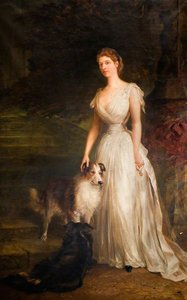
Alderman William Gue (1800–1877)
 1877
1877 200.0 x 180.0 cm
 Andover Guildhall
 Read More
Giclée / Art Print
Museum-quality giclée or canvas print with fast production and flexible finish options. ( Buy Hand Made Painting Buy Image)




































Pick from our preset sizes that match the artwork's original proportions.

You may enter your own dimensions to fit a specific frame or space. If your selected size does not match the original image's proportions, we will either crop the artwork or extend the image with a mirrored or solid-fill edge. A digital mockup will be sent for your approval before production begins.
Please note that the on-screen preview does not reflect the actual cropping or extension. Only the mockup will accurately show the final composition.
While custom sizes are available, we recommend selecting a dimension from the predefined list to preserve the original proportions.
Worldwide Delivery () in 2 weeks instead of standard 4/5 weeks. (17 August)

Free Worldwide Express Shipping

High-Quality Linen Canvas

Full Shipping Insurance

Customs Tax Refund Guarantee

True Color Matching Guarantee

60-Day Return Policy (Defects Only)

100% Money-Back Guarantee

Bulk Discount Offer
 Glass option is only available in size under 110 CM

Alderman William Gue (1800–1877)
Giclée / Art Print
Reproduction Size
-


Total Price
$ 81
Artist Biography
Henry Grant: A Victorian Observer of London’s Soul
Henry Grant (1907–2004) wasn't a name etched in the annals of grand artistic movements, yet his photographic legacy offers an unexpectedly intimate and revealing portrait of late 19th and early 20th century London. A freelance photographer working primarily in black and white, he eschewed the staged grandeur of formal portraits for a remarkably candid approach, capturing everyday life with a keen eye and a subtle, almost intuitive understanding of human behavior. His archive, now housed at the St. Nicholas Grammar School in Northwood, comprises an astonishing 80,000 images – a visual testament to a city undergoing profound transformation, from the lingering shadows of post-war austerity to the burgeoning optimism of the interwar years.
Grant’s early life provided a unique perspective on the world he would later document. Born in Devizes, Wiltshire, into a family with strong artistic leanings – his father was a painter – he developed an early fascination with visual representation. His childhood was marked by a quiet independence and a deep connection to nature, qualities that would inform his photographic style. He wasn’t formally trained as a photographer; instead, he honed his skills through observation and experience, developing a distinctive approach rooted in spontaneity and a respect for the subjects he photographed. His wife, Rose Grant, a journalist with communist sympathies, further shaped his worldview and often collaborated with him on projects, particularly those focused on social and political issues.
The Rise of a Street Photographer
Following World War II, London was a city grappling with rebuilding and redefining itself. Grant seized this moment, establishing himself as a freelance photojournalist for various news agencies. Unlike the polished images produced by official photographers, Grant’s work possessed an immediacy and authenticity that resonated deeply with the public. He wasn't interested in creating heroic narratives; instead, he sought to capture the ordinary moments of Londoners’ lives – their routines, their struggles, their joys. His subjects ranged from dockworkers and market vendors to children playing in the streets and political rallies.
A key element of Grant’s style was his ability to blend seamlessly into his surroundings. He often worked in the background, capturing candid moments without disrupting the flow of events. He famously described his approach as seeking “an uninterrupted flow of movement,” prioritizing a sense of spontaneity and naturalness over posed compositions. This technique allowed him to document significant social shifts – the rise of new communities, the impact of industrialization, and the growing calls for social justice – with remarkable insight.
A Focus on Bermondsey and Social Commentary
Grant’s photographic output was particularly concentrated in the Bermondsey area of South London. This working-class district, a hub of industry and immigration, provided a rich tapestry of subjects for his lens. He documented the lives of its diverse residents – Bengali families, Jewish communities, and African Americans – capturing their daily routines, social interactions, and cultural traditions. His portraits of prominent figures like Mayor Samuel Bourne Bevington and John Molesworth Thomas Dumphreys offer not only visual records but also glimpses into the social fabric of Bermondsey’s civic life.
Beyond documenting everyday life, Grant's work frequently engaged with pressing social issues. He photographed political rallies, protests against poverty, and scenes of industrial hardship, implicitly offering a critique of Victorian society and its inequalities. His photographs served as visual evidence of the challenges faced by London’s working class and fueled calls for reform.
Legacy and Influence
Henry Grant's contribution to photographic history may not be immediately apparent, but his archive represents an invaluable resource for understanding late 19th and early 20th century London. His candid approach, coupled with his keen eye for detail and his ability to capture the essence of human experience, has earned him a place as one of the city’s most insightful chroniclers. His work continues to be studied by historians, sociologists, and photographers alike, offering a unique window into a pivotal period in British history. The collection at St. Nicholas Grammar School stands as a testament to his enduring legacy – a visual record of a city's soul, captured through the lens of a remarkably observant artist.
henry grant
1907 - 2004
Quick Facts
- Artistic Movement Or Style: Victorian realism
- Artists Or Movements Influenced By This Artist: ['Sr. John E. Ferneley']
- Artists Who Influenced This Artist: ['Claude H. B. Grant']
- Date Of Birth: 1907
- Date Of Death: 2004
- Full Name: Henry Grant
- Nationality: British
- Notable Artworks:
- Mayor Portraits
- Bermondsey Artworks
- Place Of Birth: WahooArt