Preview
 Send
Send Share
Share
 Details

 Download
 Similars
 X-Ray
X-Ray Diaporama
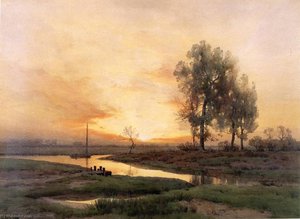
December
 11.0 x 18.0 cm
 Read More
Giclée / Art Print
Museum-quality giclée or canvas print with fast production and flexible finish options. ( Buy Hand Made Painting Buy Image)




































Pick from our preset sizes that match the artwork's original proportions.

You may enter your own dimensions to fit a specific frame or space. If your selected size does not match the original image's proportions, we will either crop the artwork or extend the image with a mirrored or solid-fill edge. A digital mockup will be sent for your approval before production begins.
Please note that the on-screen preview does not reflect the actual cropping or extension. Only the mockup will accurately show the final composition.
While custom sizes are available, we recommend selecting a dimension from the predefined list to preserve the original proportions.
Worldwide Delivery () in 2 weeks instead of standard 4/5 weeks. (21 August)

Free Worldwide Express Shipping

High-Quality Linen Canvas

Full Shipping Insurance

Customs Tax Refund Guarantee

True Color Matching Guarantee

60-Day Return Policy (Defects Only)

100% Money-Back Guarantee

Bulk Discount Offer
 Glass option is only available in size under 110 CM

December
Giclée / Art Print
Reproduction Size
-


Total Price
$ 81
Artist Biography
Henry Farrer: A Master of Twilight
Henry Farrer, a name perhaps less familiar than some of his contemporaries in the American art world, nevertheless stands as a quietly profound figure within the Luminist movement and the broader landscape painting tradition. Born in London in 1844, Farrer’s artistic journey was shaped by a unique confluence of influences – a familial connection to Pre-Raphaelite artistry, a self-taught approach, and an unwavering dedication to capturing the subtle poetry of light and atmosphere. His work, often characterized by its muted tones, hazy perspectives, and evocative sense of stillness, offers a meditative counterpoint to the more overtly dramatic styles prevalent during his time.
Farrer’s early life was marked by a significant shift when he immigrated to America in 1863. This move coincided with a burgeoning artistic community eager for new voices and perspectives. He quickly established himself as a professional artist, initially producing Pre-Raphaelite still lifes and landscapes before gravitating towards the Luminist style – a movement emphasizing the beauty of natural light and the quiet contemplation of rural scenes. Crucially, his brother, Thomas Farrer, a key figure in the Pre-Raphaelite revival in America, provided an initial artistic framework, though Henry forged his own distinctive path within this lineage.
The Language of Light: Technique and Style
Farrer’s artistic signature lies primarily in his masterful manipulation of light and color. He eschewed bright, saturated hues in favor of a restrained palette dominated by browns, grays, greens, and blues – colors that perfectly mirrored the atmospheric conditions he sought to depict. His technique involved layering thin washes of watercolor, building up tones gradually to create an illusion of depth and atmosphere. This approach, coupled with his deliberate use of blurred edges and soft focus, fostered a sense of mystery and tranquility within his paintings.
His landscapes are rarely sharply defined; instead, they exist in a perpetual state of twilight or mist. He frequently depicted marshlands, ponds, and riversides, capturing the fleeting effects of light on water and vegetation. The absence of strong diagonals or dramatic compositions further contributes to this sense of quiet contemplation. Farrer’s work isn't about depicting a specific location with photographic accuracy; it’s about conveying an emotional state – a feeling of serenity, solitude, and connection to the natural world.
Influences and Connections
While largely self-taught, Farrer was undoubtedly influenced by his brother Thomas’s engagement with Pre-Raphaelite ideals. The emphasis on truthfulness in representation, combined with an interest in medieval and Renaissance art, likely shaped Henry's approach to landscape painting. Furthermore, the burgeoning American watercolor society, of which he was a founding member, provided a platform for him to showcase his work and engage with other artists.
Beyond his immediate artistic circle, Farrer’s work reflects broader trends in 19th-century art – a growing interest in Romanticism's emphasis on nature and the sublime, as well as a shift away from academic realism towards more subjective and expressive forms of representation. His connection to the etching revival movement is also noteworthy; he became a prominent figure in promoting etching as a serious artistic medium, producing evocative cityscapes that captured the energy and atmosphere of New York.
Legacy and Significance
Despite not achieving widespread fame during his lifetime, Henry Farrer’s contribution to American art is increasingly recognized. His paintings offer a unique perspective on the Luminist movement, emphasizing the subtle beauty of light and atmosphere in a way that distinguishes him from his more flamboyant contemporaries. His work continues to resonate with viewers today, offering a moment of quiet contemplation amidst the complexities of modern life.
Farrer’s legacy extends beyond his individual paintings; he played a vital role in fostering the development of watercolor painting in America and promoting the artistic value of etching. His dedication to capturing the essence of light and atmosphere serves as an enduring testament to the power of observation, sensitivity, and artistic vision.

henry farrer
1844 - 1903
Quick Facts
- Artistic Movement Or Style: Tonalist landscape
- Artists Or Movements Influenced By This Artist: ['Pre-Raphaelite movement']
- Artists Who Influenced This Artist: ['Thomas C. Farrer']
- Date Of Birth: March 23, 1844
- Date Of Death: February 24, 1903
- Full Name: Henry Farrer
- Nationality: English-born American
- Notable Artworks:
- Winter Scene in Moonlight
- Evening, New York Harbor
- On New York Bay
- Place Of Birth: London, England