Text size

() ·

A painting made for you, by hand

Bathers with a Turtle

Hand Made Oil Reproduction

Hand-painted oil on canvas in your size and frame, made to order by our artists. ( Switch to Print Switch to Digital Image)

Collectible Description

Artist Biography

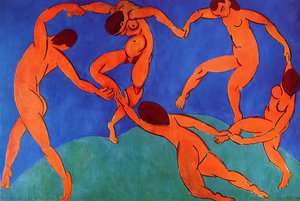
Fauvism master Henri Matisse revolutionized art with vibrant colors like The Dance. Discover his iconic paintings and cut-paper collages now.

from ·

Chapter 1

How large should it be?

Slide to change the size; the picture on the left shows the frame at its real width. The proportions of the original are kept.

Standard
custom
CM
INCH

Pick from our preset sizes that match the artwork's original proportions.

width
height

Type the width and the height you need, to fit your frame or your wall. This is hand-painted, so for a size with a different shape the artist can paint a bit more around the picture, or cut a bit — you choose. We send you a digital mockup to approve before the painting starts. The picture shown on this page does not show the real result — only the mockup does.

Chapter 2

How should it arrive?

Choose the edges of the stretched canvas

Choose your frame

Corner sample of the WhiteWrap canvas edge finish, stretched on solid wood bars
White $1
Corner sample of the BlurSideWrap canvas edge finish, stretched on solid wood bars
Blurside $1
Corner sample of the ExtendedWrap canvas edge finish, stretched on solid wood bars
Extended $1
Corner sample of the P118B picture frame: moulded polystyrene, 5 cm wide and 3 cm thick
P118B $10
Corner sample of the P118H picture frame: moulded polystyrene, 5 cm wide and 3 cm thick
P118H $10
Corner sample of the P118W picture frame: moulded polystyrene, 5 cm wide and 3 cm thick
P118W $10
Corner sample of the P438Z picture frame: moulded polystyrene, 5.5 cm wide and 3.5 cm thick
P438Z $10
Corner sample of the P508JH picture frame: moulded polystyrene, 7 cm wide and 3.5 cm thick
P508JH $12
Corner sample of the P508YH picture frame: moulded polystyrene, 7 cm wide and 3.5 cm thick
P508YH $12
Corner sample of the P805H picture frame: moulded polystyrene, 5 cm wide and 3.5 cm thick
P805H $10
Corner sample of the P805Z picture frame: moulded polystyrene, 5 cm wide and 3.5 cm thick
P805Z $10
Corner sample of the P919BZ picture frame: moulded polystyrene, 7 cm wide and 3.5 cm thick
P919BZ $10
Corner sample of the P919G picture frame: moulded polystyrene, 7 cm wide and 3.5 cm thick
P919G $10
Corner sample of the P919XJ picture frame: moulded polystyrene, 7 cm wide and 3.5 cm thick
P919XJ $10
Corner sample of the P959ZH picture frame: moulded polystyrene, 5 cm wide and 3 cm thick
P959ZH $10
Corner sample of the P968JZ picture frame: moulded polystyrene, 6 cm wide and 4 cm thick
P968JZ $12
Corner sample of the W106C picture frame: solid wood, 5 cm wide and 3 cm thick
W106C $8
Corner sample of the W218G picture frame: solid wood, 5 cm wide and 3 cm thick
W218G $10
Corner sample of the W218JH picture frame: solid wood, 5 cm wide and 3 cm thick
W218JH $8
Corner sample of the W218Y picture frame: solid wood, 5 cm wide and 3 cm thick
W218Y $10
Corner sample of the W307PJ picture frame: solid wood, 6 cm wide and 3 cm thick
W307PJ $10
Corner sample of the W316G picture frame: solid wood, 6 cm wide and 3 cm thick
W316G $10
Corner sample of the W316PJ picture frame: solid wood, 6 cm wide and 3 cm thick
W316PJ $8
Corner sample of the W316Y picture frame: solid wood, 6 cm wide and 3 cm thick
W316Y $10
Corner sample of the W398PJ picture frame: solid wood, 5 cm wide and 3 cm thick
W398PJ $8
Corner sample of the W4111J picture frame: solid wood, 6.5 cm wide and 3.5 cm thick
W4111J $10
Corner sample of the W500HY picture frame: solid wood, 7 cm wide and 5 cm thick
W500HY $15
Corner sample of the W500JH picture frame: solid wood, 7 cm wide and 5 cm thick
W500JH $15
Corner sample of the W692G picture frame: solid wood, 8 cm wide and 4 cm thick
W692G $12
Corner sample of the W849H picture frame: solid wood, 5 cm wide and 3 cm thick
W849H $8
Corner sample of the W940BG picture frame: solid wood, 7.5 cm wide and 4.5 cm thick
W940BG $15
Corner sample of the W953PJ picture frame: solid wood, 6 cm wide and 3.5 cm thick
W953PJ $8
Corner sample of the H24-GOLD picture frame: carved wood with gesso, 10 cm wide and 6 cm thick
H24-GOLD $30
Corner sample of the H24-SILVER picture frame: carved wood with gesso, 10 cm wide and 6 cm thick
H24-SILVER $30
Corner sample of the H36-GOLD picture frame: carved wood with gesso, 15 cm wide and 6.5 cm thick
H36-GOLD $45
Corner sample of the H36-SILVER picture frame: carved wood with gesso, 15 cm wide and 6.5 cm thick
H36-SILVER $45
Frame preview
Framed

Moulding: . Overall size with the frame: .

Chapter 3

Who paints it, and should anything change?

Examples of what can be changed: Replace face with customer photo; Add pet (e.g., replace cat with dog); Include hidden message in background; Change background landscape or elements.
After order, OriginalUniqueArt.com team will email client for instructions and provide a mockup preview

Worldwide Delivery () in 3/4 weeks instead of standard 5 weeks. (31 October). No compromise on quality.

Chapter 4

The finishing touches

A nameplate, as in a museum?

Engraved Bronze Plaque Details

This elegant plaque features the artist's name and the title of the artwork, finely engraved for a timeless presentation.

It is made from bronze with a refined, elegant finish. The text is precisely laser-engraved for a sharp and permanent result. Measuring 9x2 cm, the plaque is compact yet easy to read. It's built to be durable and scratch-resistant, offering a professional, museum-quality look. Mounting is simple thanks to the included adhesive backing.

Transparent Acrylic Plaque Details

The plaque includes essential engraved details such as the artist's name, the title of the artwork, the date it was created, the type of media used-like oil on canvas or watercolor-a brief description of the piece, and a QR code that links to the complete artwork information.

It is crafted from clear acrylic, offering a sleek, modern appearance. The text is UV-engraved in black to ensure strong visual contrast. With a size of 10x15 cm, it ensures optimal readability. It comes equipped with two metal hooks for secure wall mounting. The plaque is designed to be weather-resistant, making it suitable for various environments, and it includes interactive features that work seamlessly with smartphone scanning.

Black Acrylic Plaque Details

This elegant plaque includes engraved information such as the artist's name, the title of the artwork, the date it was created, the type of media used (like oil on canvas or watercolor), a short description of the artwork, and a QR code for quick access to more information.

The plaque itself is made from refined black acrylic with a premium finish. The text is laser-engraved in white for high contrast and readability. Its size is 10x15 cm, designed to be easy to read. It comes with two metal hooks for professional mounting. The design is sleek and fits any interior style. It is also weather-resistant and durable, with built-in digital integration for mobile compatibility.

A protective varnish?

When do you need it?

Chapter 5

Your painting, as you ordered it

Bathers with a Turtle

Reproduction Medium

Reproduction Size

-

Elite Senior Artist

More detail, finesse, and extra production time

-

Reproduction Frame

-

-

For artworks or reproductions larger than 105 cm (approximately 41 inches) on any side, the frame will be shipped as a kit, disassembled. This method ensures safe delivery and prevents damage during transport.

Professional assembly required - this is not a DIY product.
The kit must be assembled and the canvas stretched by an experienced professional framer, using wood glue (not supplied), a canvas stretching plier and clamps to hold the bars square while the glue dries. Incorrect assembly or uneven canvas tension can permanently damage the artwork and is not covered by our warranty.

  • All solid wood bars are included, precisely cut to size.

  • Assembled with the screws provided, plus wood glue for the corner joints, which is not supplied and must be sourced by your framer.

  • Professional tools are required and not included: a canvas stretching plier (tensioner) and clamps to hold the bars square while the glue dries.

Important:
The corner joints require wood glue, the bars must be held with clamps until the glue is fully dry, and tightening the canvas on the assembled frame requires a canvas stretching plier. None of these are included in the kit. Please arrange an experienced professional framer before ordering this size.

Nameplate

-

-

Protective Varnish

Glossy Varnish (enhances colors, protects against light/moisture)

-

Customize My Artwork

Examples of what can be changed: Replace face with customer photo; Add pet (e.g., replace cat with dog); Include hidden message in background; Change background landscape or elements.

-

Urgent

Worldwide Delivery () in 3/4 weeks instead of standard 5 weeks. (31 October). No compromise on quality.

-

Express Shipping

Worldwide Delivery () in 5 weeks. (7 November).

Included

Total Price

$ 300

Total Price $ 300

Glass option is only available in size under 110 CM

Included with every order

  • Free Worldwide Express Shipping
  • High-Quality Linen Canvas
  • Full Shipping Insurance
  • Customs Tax Refund Guarantee
  • True Color Matching Guarantee
  • 100-Day Return Policy (Defects Only)
  • 100% Money-Back Guarantee
  • Bulk Discount Offer

Bathers with a Turtle

Henri Matisse’s *Bathers with a Turtle*, completed in 1907–08 during his fervent embrace of Fauvist principles, stands as an emblem of artistic innovation and emotional resonance—a painting that continues to captivate audiences more than a century later. Measuring 179 x 220 cm and executed in oil on canvas, this monumental work transcends mere representation; it’s a deliberate exploration of color, form, and psychological depth. ### Composition and Style: A Bold Departure from Tradition Matisse deliberately rejected the meticulous realism championed by Impressionism and Cézanne, opting instead for a radically simplified aesthetic that prioritized expressive color over accurate depiction. The painting's horizontal bands of azure, ultramarine, and teal—representing the sea and sky—establish a serene yet subtly unsettling backdrop against which three nude women are positioned. Their poses are deliberately ambiguous, conveying both repose and latent tension. This deliberate lack of detail is characteristic of Fauvist art, where Matisse sought to liberate color from its subservient role in representing reality. The artist’s masterful brushstrokes contribute to the painting's dynamism, creating a textured surface that vibrates with energy—a palpable contrast to the polished surfaces favored by earlier artistic movements. ### Symbolism and Influences: Cézanne’s Legacy The influence of Paul Cézanne is undeniable in *Bathers with a Turtle*. Matisse admired Cézanne’s ability to capture the essence of form through geometric simplification, mirroring this approach in his own depiction of the human figure. However, Matisse pushes beyond Cézanne's stylistic concerns by prioritizing emotional impact above all else. The central woman—whose face is rendered as a mask-like visage—embodies Matisse’s fascination with expressive distortion, reflecting anxieties and uncertainties inherent in the human condition. Furthermore, the inclusion of two turtles adds another layer of symbolic significance. These reptiles represent longevity and resilience—themes that resonate throughout Matisse's oeuvre—and serve as focal points for contemplation within the painting’s carefully constructed space. ### Historical Context: The Rise of Fauvism and Artistic Debate *Bathers with a Turtle* emerged during the burgeoning Fauvist movement, which challenged artistic conventions and championed bold chromatic experimentation. Critics initially denounced Matisse’s audacious use of color as “primitive” and “degenerate,” reflecting broader anxieties about artistic modernity. Yet, despite these criticisms, *Bathers with a Turtle* quickly gained recognition for its expressive power and aesthetic originality—a testament to Matisse's unwavering commitment to his artistic vision. Its acquisition by Karl Ernst Osthaus and subsequent inclusion in the Folkwang Museum solidified its place within German art history. ### Provenance and Significance: From Nazi Confiscation to Saint Louis Legacy The painting’s journey through history is marked by periods of obscurity and rediscovery. It was confiscated by the Nazi government in 1937 as “degenerate art,” a designation intended to discredit avant-garde artistic endeavors. Fortunately, Joseph Pulitzer Jr.’s intervention secured its salvation at auction in Lucerne, Switzerland—a pivotal moment ensuring its preservation for future generations. Today, *Bathers with a Turtle* resides proudly within the Saint Louis Art Museum, where it continues to inspire admiration and provoke contemplation—a timeless masterpiece embodying Matisse’s enduring legacy as one of the most influential artists of the 20th century.

Questions & Answers

Toward which tone does "Bathers with a Turtle" lean?

The dominant hue of "Bathers with a Turtle" by Henri Matisse is green to violet spectrum. The hue is the underlying tone of the palette.

What size is "Bathers with a Turtle" by Henri Matisse in real life?

"Bathers with a Turtle" measures 179 x 220 cm in its original form. Original dimensions are a useful reference when choosing a reproduction size.

How is "Bathers with a Turtle" by Henri Matisse proportioned, and how big is it?

"Bathers with a Turtle" by Henri Matisse is a landscape composition measuring 179 x 220 cm in the original.

More about this painting

Preview AR preview Switch to Print Switch to Digital Image Send
Details Guide Add to favorites Download Similars X-Ray Diaporama Q&A Stats

In numbers

  • 1908the year it was painted
  • 29frames to choose from
  • standard sizes, in its own proportions
  • 5weeks to paint and deliver it
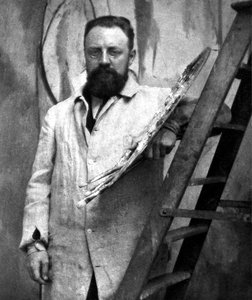
Henri Matisse

Henri Matisse

1869 - 1954, France

Quick facts about Henri Matisse

  • Artistic Movement Or Style:
    • Fauvism
    • Post-impressionism
    • Cubism
  • Artists Or Movements Influenced By This Artist: ['Abstract expressionism']
  • Artists Who Influenced This Artist:
    • Vincent van Gogh
    • Gustave Moreau
    • William-Adolphe Bouguereau
    • John Russell
  • Full Name: Henri Émile Benoît Matisse
  • Nationality: French
  • Notable Artworks:
    • The Gourds
    • La Danse
    • Jazz
    • Goldfish
  • Place Of Birth: Le Cateau-Cambrésis, France
  • Date Of Birth: 1869
  • Date Of Death: 1954

Artist Biography

A Life Immersed in Color: The World of Henri Matisse

Henri Émile Benoît Matisse, born December 31, 1869, in the small northern French town of Le Cateau-Cambrésis, wasn’t destined for a life steeped in pigment and form. Initially pursuing law in Paris after secondary school, his path dramatically altered following an attack of appendicitis in 1889. Confined to recovery, he discovered a latent passion ignited by the simple act of painting with a set of art supplies gifted by his mother. This wasn’t merely a diversion; it was a revelation—a turning point that steered him away from legal briefs and towards a world where color would become his language and canvas his domain. Growing up in Bohain-en-Vermandois, the son of grain merchants, Matisse initially seemed unlikely to embrace the bohemian life of an artist, yet the seed had been sown, nurtured by convalescence and blossoming into a lifelong dedication. He enrolled at the Académie Julian, then later at the École Nationale des Beaux-Arts, studying under William-Adolphe Bouguereau and Gustave Moreau respectively, absorbing classical techniques that would serve as a foundation for his future innovations. Early works reflected this academic training, demonstrating proficiency but lacking the distinctive voice that would soon define him.

The Dawn of Fauvism and Bold Experimentation

A pivotal moment arrived in 1896 during a visit to Belle Île with Australian painter John Russell. This encounter proved transformative. Russell introduced Matisse to the vibrant world of Impressionism, and more importantly, to the emotionally charged canvases of Vincent van Gogh. The impact was profound. Van Gogh’s expressive use of color shattered Matisse's previously restrained palette, urging him towards a bolder, more subjective approach. He began to move away from earth tones, embracing hues that resonated with feeling rather than strict representation. This exploration culminated in the emergence of Fauvism around 1905—a movement where Matisse became a leading figure. The name itself, meaning “wild beasts,” was initially derisive, bestowed by a critic upon the group’s shockingly vibrant and non-naturalistic paintings exhibited at the Salon d'Automne. Matisse, alongside artists like André Derain and Maurice de Vlaminck, championed intense color as an independent element of expression, simplifying forms to amplify its impact. Paintings such as The Gourds (1905) exemplify this style—a riot of reds, greens, and yellows applied with a freedom that disregarded traditional perspective and mimetic accuracy. Key characteristics included intensely saturated palettes, simplified shapes, expressive brushstrokes, and a deliberate rejection of conventional representation in favor of emotional resonance.

Refinement and Decorative Harmony

Following the initial fervor of Fauvism, Matisse’s style underwent a subtle yet significant evolution. While he never abandoned his love for color, his work became more refined, leaning towards a decorative aesthetic that emphasized flattened forms and intricate patterns. He explored themes of leisure, domesticity, and the human figure within tranquil settings, creating compositions that felt both harmonious and emotionally resonant. A move to Nice on the French Riviera in 1917 further influenced this shift, imbuing his work with a sense of serenity and classical balance. He began to focus on creating environments—paintings, sculptures, and decorative objects—that enveloped the viewer in an atmosphere of beauty and calm. This period saw him experimenting with different media, including ceramics and textiles, extending his artistic vision beyond the traditional canvas. He wasn’t merely depicting scenes; he was constructing worlds designed to evoke a specific emotional response.

Late Years: Innovation Through Limitation

As declining health limited Matisse's ability to paint in his conventional manner, he embarked on an extraordinary new chapter in his artistic journey—the creation of cut-paper collages, or *découpages*. Beginning around 1947, these works were born out of necessity. Confined to a wheelchair, he couldn’t physically stand and paint, but he could still manipulate paper with scissors. What began as a practical solution evolved into a groundbreaking artistic technique. He would paint large sheets of paper in vibrant colors, then cut them into shapes—organic forms, leaves, figures—and arrange them on canvas, creating compositions that were both dynamic and deceptively simple. These *découpages* weren’t merely substitutes for painting; they represented a new way of thinking about color, form, and composition. They continued his lifelong exploration of these elements, showcasing an enduring artistic vision even in the face of physical limitations.
  • The cut-paper technique allowed him to achieve a purity of form and color that was difficult to attain with paint.
  • These works often referenced earlier themes and motifs from his paintings, but presented them in a fresh and innovative way.
  • They demonstrated his ability to adapt and evolve as an artist throughout his entire career.

A Lasting Legacy: Matisse’s Impact on Modern Art

Henri Matisse died in Nice in 1954, leaving behind a body of work that continues to inspire and captivate audiences worldwide. His impact on the art world is undeniable; he challenged conventional notions of representation, championed the expressive power of color, and paved the way for future generations of artists. Often considered alongside Pablo Picasso as one of the most influential figures in 20th-century art, Matisse fundamentally shaped modernism. His legacy extends beyond his artworks themselves—it encompasses a philosophy celebrating joy, beauty, and the transformative potential of color. He wasn’t simply painting what he saw; he was creating an emotional experience for the viewer, inviting them to share in his vision of a world bathed in light and vibrant hues. Matisse's influence can be seen in countless works by artists across various disciplines, solidifying his place as a true master of modern art—a painter who dared to see the world not as it is, but as it could be, filled with color, harmony, and boundless possibility.

Quick Facts

  • Location: Saint Louis Art Museum
  • Artistic style: Decorative patterns
  • Artist: Henri Matisse
  • Notable elements or techniques: Simplified forms, dark outlines
  • Dimensions: 71 1/2 × 87 in.
  • Medium: Oil on canvas