

 Preview
 Send
Send Share
Share
 Details
 Guide
Guide

 Download
 Similars
 X-Ray
X-Ray Diaporama
 Q&A
Q&A Stats
StatsCrémieu
 Oil On Canvas
- WallArt
- Romanticism
 1847
1847 38.0 x 46.0 cm
 Fitzwilliam College
 Read More
Get a print-ready file that goes far beyond the web preview. Every digital image we sell comes from a high-resolution master in our stock database — usually 5,000 to 15,000 pixels wide — so you can print large, crop tightly, or reproduce fine detail with confidence.
No file leaves our studio untouched. A digital expert checks the colors against the original painting and corrects them if needed, then improves clarity and detail with professional retouching tools — always staying faithful to the artist's brushwork and style. The result is an image that looks like the painting, not like a filtered scan.
You approve before you're done: our expert sends the image by e-mail within 72 hours for your review. Not satisfied? Ask for improvements or corrections, or request a refund if the quality falls short.
This is the quality relied on by publishers, design studios, galleries and print shops.
Digital Image
Download a high-resolution file for personal display, printing, and creative projects. ( Switch to Print Buy Hand Made Painting)
Included in Every Digital Image Order
Expert Digital Delivery, Guaranteed
When you choose OriginalUniqueArt.com, you're not just getting an image - you're receiving a professionally enhanced digital artwork, crafted with precision and backed by a satisfaction guarantee. Here's everything that comes with your order, automatically:

Fast Email Delivery
Your high-resolution digital image file will be emailed to you within 72 hours of ordering - ready for immediate use.

AI-Enhanced Digital File
Your artwork is professionally optimized using advanced AI tools and manual editing, ensuring maximum detail, clarity, and color accuracy.

Free Lifetime Re-Delivery
Accidentally deleted or lost your file? No worries - we'll resend it to you anytime, free of charge.

No Import Fees - Ever
Enjoy your artwork instantly with zero customs, duties, or delivery fees - digital downloads are always tax-free.

Color Accuracy Guarantee
We ensure your digital image reflects the original colors as closely as possible using professional tools and color management.

100-Day Satisfaction Guarantee
If you're not satisfied with your digital image, we'll revise it or refund 100% within 100 days - no questions asked.

100% Money-Back Guarantee
Not satisfied? Get a full refund within 100 days of receiving your digital file - no questions asked.

Bulk Order Discounts
Buy 3 images, save 10% - Buy 5, save 15% - Buy 10+, save 20%. Great for creative projects, galleries, and agencies.
A Dramatic Vista of the French Countryside
Henri-Joseph Harpignies’ “Crémieu” (1847) is more than just a landscape painting; it's an immersive experience, a carefully constructed tableau that invites contemplation on the relationship between humanity and the vastness of nature. The scene unfolds within the foothills of the French Alps, depicting a rugged, almost primordial terrain dominated by towering cliffs and a winding path that draws the eye relentlessly into the distance. The painting immediately establishes a sense of solitude and grandeur – an emotional resonance deeply rooted in the Romantic tradition, yet subtly informed by Harpignies’ meticulous observation of light and texture.

The composition is masterfully executed, utilizing a strong diagonal line created by the path to guide the viewer’s gaze and establish a dynamic flow through the scene. The foreground, rendered in earthy browns and ochres, features a dirt road and scattered rocks, gradually transitioning into the imposing cliffs that form the central focus of the painting. These cliffs aren't merely geological formations; they possess an almost sculptural quality, their weathered surfaces hinting at centuries of exposure to the elements. In the distance, a subtle atmospheric perspective – a softening of colors and details as depth increases – suggests the immense scale of the landscape and evokes a feeling of both awe and vulnerability.
The Barbizon School and Luminism
Harpignies’ work firmly places him within the context of the Barbizon School, a movement that championed direct observation of nature and a rejection of academic artifice. Unlike earlier landscape painters who relied heavily on idealized representations, the Barbizon artists sought to capture the essence of the French countryside as they experienced it – with its rough textures, subtle shifts in light, and inherent imperfections. “Crémieu” exemplifies this approach, eschewing smooth brushstrokes and carefully blended colors in favor of visible marks that convey a sense of immediacy and spontaneity. Furthermore, the painting’s emphasis on atmospheric effects aligns closely with Luminism, a style characterized by its soft, diffused lighting and focus on capturing the subtle nuances of light and shadow.
Born in Valenciennes in 1819, Harpignies initially pursued a business career before dedicating himself to art. His early training under Jean Achard instilled in him a solid foundation in draughtsmanship, while his subsequent journey to Italy exposed him to the principles of the Barbizon School and fostered a deep appreciation for the Italian landscape tradition. The painting’s muted palette – dominated by browns, greens, and grays – contributes significantly to its evocative atmosphere, creating a sense of quiet contemplation and timelessness.
Symbolism and Emotional Resonance
Beyond its technical merits, “Crémieu” carries a subtle symbolic weight. The solitary path winding through the landscape can be interpreted as a metaphor for the human journey – a quest for meaning and purpose amidst the vast uncertainties of life. The towering cliffs represent both strength and vulnerability, reminding us of our own smallness in the face of nature’s power. The painting's overall mood is one of serene solitude, inviting viewers to pause and reflect on their place within the natural world.
Interestingly, the village of Crémieu itself, depicted in the painting, holds a rich history. Situated near Lyon, it served as an important trading center throughout the Middle Ages, benefiting from its strategic location along trade routes. The presence of a medieval castle and monastic settlements further adds to the painting’s historical context.
A Masterpiece for Collectors
“Crémieu” is a testament to Harpignies' skill as a landscape painter and his ability to capture the beauty and drama of the French countryside. Reproductions of this captivating artwork are available through OriginalUniqueArt, offering an opportunity to bring its evocative atmosphere into your home or office. Its timeless appeal and rich symbolism make it a valuable addition to any art collection.
Questions & Answers
Where can I find a guide to "Crémieu"?
A Guide page is available for "Crémieu" by Henri-Joseph Harpignies: a printable factsheet about the artwork, designed for students and classroom use.
What print size of "Crémieu" by Henri-Joseph Harpignies fits the recommended room?
The recommended pairing for "Crémieu" by Henri-Joseph Harpignies: a medium print in a living room.
Where can I see a preview of "Crémieu"?
A preview of "Crémieu" by Henri-Joseph Harpignies is available on the artwork's Preview page.
Artist Biography
Henri-Joseph Harpignies: A Life in Landscape
Early Life and Training
Born on June 28, 1819, in Valenciennes, France, Henri-Joseph Harpignies initially faced parental expectations to pursue a business career. However, his passion for art proved too strong to ignore. Of Belgian origin, his family’s initial plans were set aside as he dedicated himself to becoming an artist. At the age of twenty-seven, he formally began his artistic training in Paris, entering the atelier of Jean Achard. This foundational period focused on developing solid draughtsmanship skills – a crucial element that would remain central to Harpignies’ work.
The Barbizon School and Italian Influence
After two years under Achard's tutelage, Harpignies embarked on a pivotal journey to Italy in 1848. This experience profoundly shaped his artistic vision. Upon his return in 1850, he became acquainted with the leading figures of the Barbizon School, including Jean-Baptiste-Camille Corot. The Barbizon painters’ emphasis on direct observation of nature and their realistic portrayal of rural life deeply resonated with Harpignies. In 1860, he further cemented his artistic connection with Corot through a collaborative trip back to Italy.
Artistic Development and Style
Harpignies’ style is characterized by its serene and idyllic depictions of the French countryside. He masterfully captured the subtle nuances of light and atmosphere, creating landscapes that evoke a sense of tranquility and harmony. His technique involved careful observation combined with a refined understanding of composition. While influenced by the Barbizon School's realism, Harpignies developed his own distinct voice, often incorporating a poetic sensibility into his work.
Notable Works
- Soir sur les bords de la Loire (Evening on the Banks of the Loire) – 1861: A quintessential example of his atmospheric landscapes, showcasing the beauty of the Loire Valley.
- Les corbeaux (The Ravens) – 1865: Demonstrates his skill in capturing mood and detail within a natural setting.
- Le soir (Evening) – 1866: A captivating portrayal of the quiet beauty of dusk.
- La loire (The Loire) – 1882: Another stunning depiction of the Loire River, highlighting his mastery of light and water.
- Vue de Saint-Privé (View of Saint-Privé) – 1883: A picturesque scene showcasing a charming French village.
Legacy and Influence
Harpignies’ artistic legacy extends beyond his own paintings. He was a dedicated teacher, imparting his knowledge and skills to numerous students, including Émile Appay (1876-1935) and James Wilson Morrice (1865-1924). His influence can be seen in the development of French landscape painting throughout the late 19th and early 20th centuries. He helped to solidify the Barbizon School’s impact on subsequent generations of artists.
Historical Significance
Henri-Joseph Harpignies occupies an important place in the history of French landscape painting. His work reflects a deep appreciation for nature and a commitment to capturing its beauty with honesty and sensitivity. He died in 1916, leaving behind a rich artistic legacy that continues to inspire and captivate audiences today. His paintings are held in prominent museum collections, including the Musée des Beaux-Arts Valence, ensuring his enduring recognition as a master of landscape art.
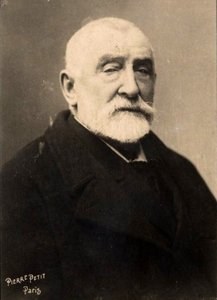
Henri-Joseph Harpignies
1819 - 1916 , France
Quick Facts
- Name: Henri-Joseph Harpignies
- Movement: Barbizon School
- Birth Date: June 28, 1819
- Death Date: 1916
- Influenced:
- Émile Appay
- James Wilson Morrice
- Birth Place: Valenciennes, France
- Nationality: French
- Date Of Birth: 1819
- Date Of Death: 1916
- Influenced By: Jean-Baptiste-Camille Corot
- Notable Works:
- Soir sur les bords de la Loire
- Les corbeaux
- Le soir
- La loire
- Vue de Saint-Privé
- Place Of Birth: Valenciennes, France