Preview
 Send
Send Share
Share
 Details
 Guide
Guide

 Download
 Similars
 X-Ray
X-Ray Diaporama
 Q&A
Q&A Stats
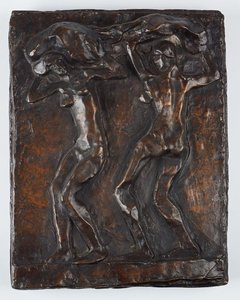
StatsOdalisque

 Read More
Giclée / Art Print
Museum-quality giclée or canvas print with fast production and flexible finish options. ( Buy Hand Made Painting Switch to Digital Image)




































Pick from our preset sizes that match the artwork's original proportions.

Type the width and the height you need, to fit your frame or your wall. A print can only be cut, never made bigger than the picture, so a size with a different shape loses a part of the image. We send you a digital mockup to approve before we print anything. The picture shown on this page does not show the real cut — only the mockup does.
Worldwide Delivery () in 2 weeks instead of standard 4/5 weeks. (5 November)

Free Worldwide Express Shipping

High-Quality Linen Canvas

Full Shipping Insurance

Customs Tax Refund Guarantee

True Color Matching Guarantee

100-Day Return Policy (Defects Only)

100% Money-Back Guarantee

Bulk Discount Offer
 Glass option is only available in size under 110 CM

Odalisque
Giclée / Art Print
Reproduction Size
-


Total Price
$ 81
Artist Biography
Henri Gaudier-Brzeska: Life and Legacy
Early Life and Artistic Beginnings
Henri Gaudier-Brzeska was born as Henri Gaudier in Saint-Jean-de-Braye, France, on October 4, 1891. He later adopted the surname of his lifelong companion, Sophie Brzeska. His father was a carpenter, an influence that would profoundly shape his approach to sculpture. Initially self-taught, Gaudier moved to London in 1910 with Sophie, seeking artistic opportunities and immersing himself in the vibrant art scene. He lacked formal training but possessed an innate talent and relentless drive.Influences and Artistic Development
Gaudier’s early work showed a fascination with Auguste Rodin, but he soon moved away from Rodin's polished style, seeking a more primal and direct form of expression. A pivotal moment came with his encounter with sculptor Jacob Epstein in 1912. Epstein encouraged Gaudier to embrace “direct carving,” a technique where the artist directly shapes the material (stone or wood) without preliminary modeling. This approach became central to Gaudier’s artistic identity, emphasizing the raw physicality of the process and leaving visible tool marks as an integral part of the artwork. He also drew inspiration from non-Western art forms encountered at the British Museum and Victoria & Albert Museum – particularly African and Pacific Island sculptures – appreciating their simplicity and power.Vorticism and Artistic Circle
In London, Gaudier became a key member of the Vorticist movement, founded by Wyndham Lewis and Ezra Pound. Vorticism was a short-lived but influential British avant-garde movement characterized by abstract, geometric forms and an emphasis on energy and dynamism. While his work wasn’t strictly Vorticist in style, Gaudier shared the movement's rejection of traditional artistic conventions and its embrace of modernity. He collaborated with other artists within this circle, contributing illustrations to Haldane MacFall’s book The Splendid Wayfaring in 1913.Major Works and Artistic Style
Gaudier-Brzeska's oeuvre, though tragically short due to his early death, is remarkably diverse. His sculptures range from small, intimate pieces like Seated Nude From Behind to more ambitious works such as Sculptural Head of Brodzky. He also created numerous drawings and sketches, often exploring themes of the human figure, landscapes (like those in St. Tropez), and domestic scenes (Odette Sur Le Transat, L'oustalet, Jeanne With Umbrella Seated In The Garden Of Coulombs). His style is characterized by:- Rough-hewn surfaces reflecting the direct carving technique
- Simplified forms and a focus on essential structures
- A sense of raw energy and emotional intensity
- An exploration of primitive and archetypal themes
Tragic Death and Historical Significance
With the outbreak of World War I, Gaudier-Brzeska enlisted in the French army. He demonstrated bravery in combat but was tragically killed in action at Neuville-Saint-Vaast on June 5, 1915, at just 23 years old. His untimely death cut short a promising career, leaving behind a relatively small but powerfully impactful body of work. Despite his brief life, Henri Gaudier-Brzeska is recognized as an important figure in the development of modern sculpture. He bridged the gap between traditional and avant-garde approaches, influencing subsequent generations of artists with his commitment to direct carving and his exploration of primal forms. His work continues to be celebrated for its originality, emotional depth, and enduring artistic vision.
Henri Gaudier-Brzeska
1891 - 1915 , France
Quick Facts
- L'Oustalet: Jeanne With Umbrella Seated In The Garden Of Coulombs
- Birth Date: 1891-10-04
- Death Date: 1915-06-05
- Influenced: None, 'influenced by': 'Jacob Epstein', 'movement': 'Vorticism, Direct Carving', 'name': 'Henri Gaudier-Brzeska', 'nationality': 'French', 'notable works': ['Sculptural Head of Brodzky',
- Birth Place: Saint-Jean-de-Braye, France
- Date Of Birth: 1891
- Date Of Death: 1915
- Place Of Birth: Saint-Jean-de-Braye, France
Related Articles
The Art of Connection: Capturing Beautiful Gatherings through Impressionist Masterpieces
Explore the profound beauty of human connection through Impressionist and Post-Impressionist masterpieces. Discover how masters like Renoir and Van Gogh captured light, emotion, and communal joy in timeless works of art designed to inspire your home.
Beyond the Light: Capturing Raw Emotion and Subjective Vision in Post-Impressionist Landscapes
Explore the profound emotional depth of Post-Impressionist landscapes. Discover how masters like Van Gogh moved beyond light to capture raw human feeling through vibrant color and expressive texture in this expert art history retrospective.
Capturing Contemplation: The Most Thoughtful Impressionist Masterpieces
Explore the profound emotional depth of Impressionist and Post-Impressionist masterpieces. From Renoir's tranquil landscapes to Van Gogh's vibrant soul, discover how these legendary artists captured the essence of contemplation through light, color, and texture.

Henri Gaudier-Brzeska: A Brief Life, Explosive Forms – Exploring the Radical Modernism of a British Sculptor
Discover the explosive artistry of Henri Gaudier-Brzeska (1891-1915), a key figure in British Modern sculpture and Vorticism. Explore his powerful direct carvings, tragic life & lasting impact. Handmade reproductions available at OriginalUniqueArt.
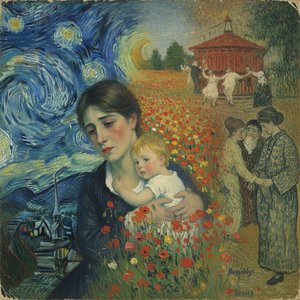
Capturing the Soul: The Most Emotionally Moving Impressionist and Post-Impressionist Masterpieces
Discover the profound emotional depth of Impressionist and Post-Impressionist masterpieces. Explore how legends like Monet, Van Gogh, and Gauguin captured light and soul through evocative landscapes and vibrant brushwork for a timeless connection to art history.