Switch to Print
 Read More







































 For artworks or reproductions larger than 105 cm (approximately 41 inches) on any side, the frame will be shipped as a kit, disassembled. This method ensures safe delivery and prevents damage during transport.


A Symphony of Light and Bloom: Henri Edmond Cross’s “The Flowered Trees”
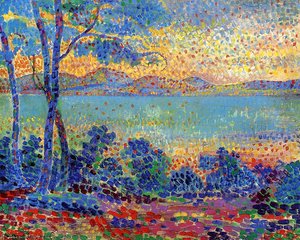
Henri Edmond Cross's "The Flowered Trees," painted in 1905, is more than just a depiction of a tranquil landscape; it’s a profound meditation on the relationship between light, color, and the human experience. This captivating work, brimming with vibrant blossoms and serene figures, offers a window into the burgeoning Neo-Impressionist movement and the artist's deeply personal quest for artistic expression. Born in Douai, France, Cross’s journey began with classical training under Carolus-Duran, a foundation he skillfully adapted to his own revolutionary vision. The painting exemplifies this transition – a masterful blend of traditional observation and innovative technique that anticipates the radical shifts occurring within the art world at the turn of the century.
- Subject Matter: The scene is dominated by a profusion of flowering trees, rendered with an almost obsessive attention to detail. The sheer abundance of blossoms – likely inspired by the gardens surrounding his home – speaks to a desire to capture and celebrate the ephemeral beauty of nature.
- Composition: Two figures are integrated into the landscape, adding a human element to the idyllic scene. Their presence suggests contemplation and appreciation for the natural world, inviting the viewer to share in their peaceful observation.
Neo-Impressionism and the Pursuit of Color
"The Flowered Trees" is firmly rooted within the Neo-Impressionist movement, a reaction against the loose brushwork and subjective interpretations of Impressionism. Cross, like his fellow Neo-Impressionists, embraced the scientific theories of Michel Eugène Chevreul regarding color contrast and simultaneous juxtaposition. This approach is vividly evident in the painting’s palette – the intense blues and purples of the shadows are dramatically offset by the fiery oranges and yellows of the blossoms, creating a dynamic visual effect that pulsates with life. The use of small, unmixed strokes of pure color, meticulously layered to create an optical illusion of shimmering light, is characteristic of this technique.
Symbolism and Emotional Resonance
Beyond its technical brilliance, "The Flowered Trees" resonates with a deep sense of serenity and optimism. The abundance of flowers – often associated with beauty, fertility, and rebirth – suggests a celebration of life’s joys. The figures, seemingly lost in contemplation, evoke a feeling of quiet reflection and connection to the natural world. Cross's ability to capture this emotional atmosphere is testament to his artistic sensitivity and his profound understanding of the power of color to convey meaning.
A Legacy of Light
Painted just before Cross’s death in 1910, “The Flowered Trees” represents a culmination of his artistic journey. It stands as a powerful example of Neo-Impressionism's innovative approach to color and composition, while simultaneously revealing the artist's deeply personal vision. A hand-painted reproduction offers an unparalleled opportunity to experience the full impact of this remarkable work – a timeless testament to the beauty of light, color, and nature’s enduring allure.
Questions & Answers
Which reproduction size is suggested for "The Flowered Trees" by Henri Edmond Cross?
The recommended print size for "The Flowered Trees" by Henri Edmond Cross is large.
Where in Henri Edmond Cross's career does "The Flowered Trees" fall, given its date?
"The Flowered Trees", created in 1905, belongs to the Mature Neo-Impressionism of Henri Edmond Cross's career.
Who created "The Flowered Trees" and in what year?
"The Flowered Trees" was created by Henri Edmond Cross in 1905.
More about this painting
 Preview
 Send
Send Share
Share
 Details
 Guide
Guide

 Download
 Similars
 X-Ray
X-Ray Diaporama
 Q&A
Q&A Stats
Stats