 Read More


 For artworks or reproductions larger than 105 cm (approximately 41 inches) on any side, the frame will be shipped as a kit, disassembled. This method ensures safe delivery and prevents damage during transport.


More about this painting
Text size

() ·
A painting made for you, by hand
Hand Made Oil Reproduction
Hand-painted oil on canvas in your size and frame, made to order by our artists. ( Switch to Print Switch to Digital Image)
Collectible Description
Explore 'Viaduct' by Helen Glassford – a textured abstract landscape painting evoking nature & tranquility. Bold colors, impasto technique, & evocative of the American West.
Artist Biography
Helen Glassford is a contemporary artist known for her evocative watercolor paintings of the American West. Explore landscapes, wildlife, and Native American themes with a focus on light & atmosphere.
from ·
Chapter 1
How large should it be?
Slide to change the size; the picture on the left shows the frame at its real width. The proportions of the original are kept.
Standard
custom
CM
INCH
Pick from our preset sizes that match the artwork's original proportions.
Loading sizes...

width
height
Type the width and the height you need, to fit your frame or your wall. This is hand-painted, so for a size with a different shape the artist can paint a bit more around the picture, or cut a bit — you choose. We send you a digital mockup to approve before the painting starts. The picture shown on this page does not show the real result — only the mockup does.
Chapter 2
How should it arrive?
Choose the edges of the stretched canvas
Choose your frame

White $1

Blurside $1

Extended $1

P118B $10

P118H $10

P118W $10

P438Z $10

P508JH $12

P508YH $12

P805H $10

P805Z $10

P919BZ $10

P919G $10

P919XJ $10

P959ZH $10

P968JZ $12

W106C $8

W218G $10

W218JH $8

W218Y $10

W307PJ $10

W316G $10

W316PJ $8

W316Y $10

W398PJ $8

W4111J $10

W500HY $15

W500JH $15

W692G $12

W849H $8

W940BG $15

W953PJ $8

H24-GOLD $30

H24-SILVER $30

H36-GOLD $45

H36-SILVER $45
Framed
Moulding: . Overall size with the frame: .
Chapter 3
Who paints it, and should anything change?
Examples of what can be changed: Replace face with customer photo; Add pet (e.g., replace cat with dog); Include hidden message in background; Change background landscape or elements.
After order, OriginalUniqueArt.com team will email client for instructions and provide a mockup preview
After order, OriginalUniqueArt.com team will email client for instructions and provide a mockup preview
Worldwide Delivery () in 3/4 weeks instead of standard 5 weeks. (8 November). No compromise on quality.
Chapter 4
The finishing touches
A nameplate, as in a museum?
Engraved Bronze Plaque Details
This elegant plaque features the artist's name and the title of the artwork, finely engraved for a timeless presentation.
It is made from bronze with a refined, elegant finish. The text is precisely laser-engraved for a sharp and permanent result. Measuring 9x2 cm, the plaque is compact yet easy to read. It's built to be durable and scratch-resistant, offering a professional, museum-quality look. Mounting is simple thanks to the included adhesive backing.
Transparent Acrylic Plaque Details
The plaque includes essential engraved details such as the artist's name, the title of the artwork, the date it was created, the type of media used-like oil on canvas or watercolor-a brief description of the piece, and a QR code that links to the complete artwork information.
It is crafted from clear acrylic, offering a sleek, modern appearance. The text is UV-engraved in black to ensure strong visual contrast. With a size of 10x15 cm, it ensures optimal readability. It comes equipped with two metal hooks for secure wall mounting. The plaque is designed to be weather-resistant, making it suitable for various environments, and it includes interactive features that work seamlessly with smartphone scanning.
Black Acrylic Plaque Details
This elegant plaque includes engraved information such as the artist's name, the title of the artwork, the date it was created, the type of media used (like oil on canvas or watercolor), a short description of the artwork, and a QR code for quick access to more information.
The plaque itself is made from refined black acrylic with a premium finish. The text is laser-engraved in white for high contrast and readability. Its size is 10x15 cm, designed to be easy to read. It comes with two metal hooks for professional mounting. The design is sleek and fits any interior style. It is also weather-resistant and durable, with built-in digital integration for mobile compatibility.
A protective varnish?
When do you need it?
Chapter 5
Your painting, as you ordered it
Viaduct
Reproduction Medium
Reproduction Size
-
Elite Senior Artist
More detail, finesse, and extra production time
-
Reproduction Frame
-
-
For artworks or reproductions larger than 105 cm (approximately 41 inches) on any side, the frame will be shipped as a kit, disassembled. This method ensures safe delivery and prevents damage during transport.
Professional assembly required - this is not a DIY product.
The kit must be assembled and the canvas stretched by an experienced professional framer, using wood glue (not supplied), a canvas stretching plier and clamps to hold the bars square while the glue dries. Incorrect assembly or uneven canvas tension can permanently damage the artwork and is not covered by our warranty.
All solid wood bars are included, precisely cut to size.
Assembled with the screws provided, plus wood glue for the corner joints, which is not supplied and must be sourced by your framer.
Professional tools are required and not included: a canvas stretching plier (tensioner) and clamps to hold the bars square while the glue dries.
Important:
The corner joints require wood glue, the bars must be held with clamps until the glue is fully dry, and tightening the canvas on the assembled frame requires a canvas stretching plier. None of these are included in the kit. Please arrange an experienced professional framer before ordering this size.
Nameplate
-
-
Protective Varnish
Glossy Varnish (enhances colors, protects against light/moisture)
-
Customize My Artwork
Examples of what can be changed: Replace face with customer photo; Add pet (e.g., replace cat with dog); Include hidden message in background; Change background landscape or elements.
-
Urgent
Worldwide Delivery () in 3/4 weeks instead of standard 5 weeks. (8 November). No compromise on quality.
-
Express Shipping
Worldwide Delivery () in 5 weeks. (15 November).
Included
Total Price
$ 300
Glass option is only available in size under 110 CM
Included with every order
- Free Worldwide Express Shipping
- High-Quality Linen Canvas
- Full Shipping Insurance
- Customs Tax Refund Guarantee
- True Color Matching Guarantee
- 100-Day Return Policy (Defects Only)
- 100% Money-Back Guarantee
- Bulk Discount Offer
 Preview
 Send
Send Share
Share
 Details
 Guide
Guide

 Download
 Similars
 X-Ray
X-Ray Diaporama
 Q&A
Q&A Stats
StatsIn numbers
- 1998the year it was painted
- 29frames to choose from
- standard sizes, in its own proportions
- 5weeks to paint and deliver it
About the original

- 22.0 x 22.0 cm


This Artwork Is Under Copyright Protection
The artwork displayed on this page is protected by copyright law, which means we cannot legally create or sell an identical reproduction. This protection is enforced under international agreements such as the Berne Convention and by national laws, including those outlined by the U.S. Copyright Law - Title 17.
As a respectful and legal alternative, we offer custom, hand-painted artworks inspired by the original. Our skilled and professional artists carefully study the original's style, mood, and artistic essence to create a new, unique piece that evokes the same feeling - while remaining an original creation in its own right.
This method fully complies with copyright regulations because it does not involve copying or duplicating the protected artwork. Instead, it is a creative reinterpretation - a new painting that is influenced by the original but not identical to it.

Quick facts about Helen Glassford
- Artistic Movement Or Style: Contemporary Western Painting
- Current Meta Description: Watercolor paintings of the American West.
- Current Meta Keywords: Western Art, Landscape Art USA
- Full Name: Helen Glassford
- Nationality: Scottish
- Notable Artworks:
- Viaduct
- Untitled
- The Glen
Artist Biography
A Life Immersed in Landscape: The World of Helen Glassford
Helen Glassford is a contemporary Scottish painter whose work resonates with a profound connection to the natural world, particularly the evocative landscapes of her adopted homeland. Born in Lancaster and raised amidst the beauty of Cumbria’s Lake District, Glassford's artistic journey began early, nurtured by an environment steeped in romantic tradition and dramatic scenery. This formative period instilled within her a deep appreciation for light, atmosphere, and the subtle nuances of place—elements that would become central to her distinctive style. After foundational studies at Carlisle Art College, she pursued further training at Duncan of Jordanstone College of Art in Dundee, where she honed her skills and began to develop a more personal artistic voice. While initially focused on drawing and painting, Glassford’s path led her towards the expressive possibilities of oil paint, allowing for a richer exploration of texture, color, and emotional depth. The establishment of Tatha Gallery in Newport-on-Tay, co-founded with fellow artists, marked a significant chapter, providing both a platform for her own work and a vibrant space for contemporary art within the Scottish community.The Evocative Power of Memory and Place
Glassford’s paintings are not simply representations of landscapes; they are distillations of experience—sensory impressions translated onto canvas. She frequently undertakes journeys to remote areas of Scotland, seeking out locations that possess a particular atmosphere or emotional resonance. However, her work is rarely direct transcription. Instead, she relies on memory and intuition, allowing the essence of a place to emerge through layers of paint and subtle gestures. This process results in paintings that feel both familiar and elusive—landscapes without specific names, yet deeply evocative of time and space. The artist herself describes seeking “the intangible and unseen,” aiming to capture not just what is visible but also the underlying energy and feeling of a location. Her work often explores liminal spaces – the edges between land and sea, sky and horizon – reflecting a fascination with boundaries and transitions.Influences and Artistic Development
While rooted in the traditions of British landscape painting, Glassford’s work is far from imitative. Early influences include J.M.W. Turner's masterful use of light and color, as well as the expressive abstraction of Joan Eardley. However, her artistic development has been shaped by a broader range of sources, including poetry, writing, and an interest in natural systems and complexity theory. This interdisciplinary approach is evident in the multi-layered nature of her paintings, which often incorporate subtle references to personal experiences and art history. Over time, Glassford’s style has evolved from more representational depictions towards a greater emphasis on abstraction, allowing for a more direct expression of emotion and atmosphere. Her technique involves building up layers of paint—wet into wet—creating rich textures and luminous surfaces. She employs a variety of tools, including brushes, rags, and squeegees, to manipulate the paint and create dynamic effects that suggest movement and change.Themes of Belonging and Environmental Consciousness
Beneath the surface beauty of Glassford’s landscapes lie deeper themes of belonging, longing, and our relationship with the natural world. Her paintings often evoke a sense of serenity and melancholy, reflecting a profound awareness of the fragility of ecosystems and the impact of human activity on the environment. The artist's statement reveals an exploration of “the thin line between visibility and obscurity,” suggesting a concern with hidden connections and the unseen forces that shape our surroundings. This sensitivity to environmental issues is not explicitly stated in her work but rather emerges through the evocative power of her imagery, prompting viewers to reflect on their own connection to place and the importance of preserving natural landscapes.Recognition and Historical Significance
Helen Glassford has garnered significant recognition for her contributions to contemporary Scottish painting. She is a professional member of the Royal Scottish Society of Watercolour and Visual Arts Scotland, and her work is held in numerous private collections worldwide, as well as in the public collection of the McManus Art Gallery and Museum in Dundee. Her exhibitions are consistently praised for their emotional depth and technical skill, establishing her as a leading voice within the landscape tradition. Glassford’s historical significance lies in her ability to bridge the gap between abstraction and representation, creating paintings that are both visually compelling and emotionally resonant. By exploring themes of memory, place, and environmental consciousness, she offers a powerful commentary on our relationship with the natural world—a commentary that is increasingly relevant in an age of ecological uncertainty. Her work stands as a testament to the enduring power of landscape painting to evoke emotion, inspire reflection, and connect us to something larger than ourselves.Related Articles

Beyond the Lines: Mastering the High-Impact World of Contemporary Abstraction
Master the high-impact world of contemporary abstraction. Discover how bold colors, textures, and modern movements like Abstract Expressionism can transform your space with premium, high-energy art curated for the design-conscious professional.
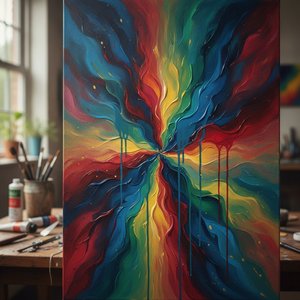
Lyrical Abstraction: The Emotional Power of Color and Form in Modern Art History
Explore the profound emotional depth of Lyrical Abstraction. Discover how masters like Raymond Parker used color and form to bridge Impressionism and Abstract Expressionism. Learn about this pivotal movement through our expert-led art history guide.

Mastering Abstraction: The 25 Most Iconic Works by Wassily Kandinsky
Explore 25 iconic Kandinsky masterpieces and the birth of abstraction. Discover the full collection online at OriginalUniqueArt.com.

Abstract Expressionism's 10 Defining Masterpieces |
Explore 10 defining Abstract Expressionism masterpieces by Pollock, Rothko & de Kooning. Discover the stories behind these iconic paintings and find museum-quality art reproductions to elevate your home decor on .
Explore artworks organized by themes, styles, and characteristics.


