Preview
 Send
Send Share
Share
 Details
 Guide
Guide

 Download
 Similars
 X-Ray
X-Ray Diaporama
 Stats
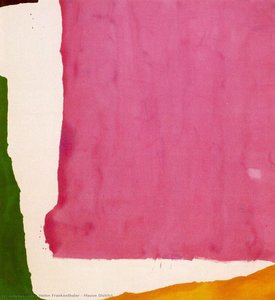
StatsWeeping Crabapple
 Acrylic On Canvas
- WallArt
- Abstract Expressionism
 2009
2009- Contemporary
 64.0 x 94.0 cm
 Nasher Museum of Art at Duke University
 Read More
The artwork displayed on this page is protected by copyright law, which means we cannot legally create or sell an identical reproduction. This protection is enforced under international agreements such as the Berne Convention and by national laws, including those outlined by the U.S. Copyright Law - Title 17.
This method fully complies with copyright regulations because it does not involve copying or duplicating the protected artwork. Instead, it is a creative reinterpretation - a new painting that is influenced by the original but not identical to it.
Giclée / Art Print
Museum-quality giclée or canvas print with fast production and flexible finish options. ( Buy Hand Made Painting Switch to Digital Image)




































Pick from our preset sizes that match the artwork's original proportions.

Type the width and the height you need, to fit your frame or your wall. A print can only be cut, never made bigger than the picture, so a size with a different shape loses a part of the image. We send you a digital mockup to approve before we print anything. The picture shown on this page does not show the real cut — only the mockup does.
Worldwide Delivery () in 2 weeks instead of standard 4/5 weeks. (25 October)

Free Worldwide Express Shipping

High-Quality Linen Canvas

Full Shipping Insurance

Customs Tax Refund Guarantee

True Color Matching Guarantee

100-Day Return Policy (Defects Only)

100% Money-Back Guarantee

Bulk Discount Offer
 Glass option is only available in size under 110 CM

Weeping Crabapple
Giclée / Art Print
Reproduction Size
-


Total Price
$ 81
A Poignant Echo of Zen: The Soul of Weeping Crabapple
In the twilight of her illustrious career, Helen Frankenthaler gifted the art world with Weeping Crabapple, a work that serves as a profound meditation on memory, loss, and the delicate balance of nature. Created in 2009, just two years before her passing, this piece represents a masterful culmination of her lifelong dialogue with abstraction. While Frankenthaler is celebrated as a pioneer who bridged the raw energy of Abstract Expressionism with the serene expanses of Color Field painting, Weeping Crabapple leans into a more introspective, almost spiritual territory. The painting draws deeply from Japanese motifs and the philosophical tenets of Zen Buddhism, utilizing calligraphic marks that suggest a rhythmic, breathing quality. It is not merely an arrangement of pigment on canvas, but an emotional landscape that invites the viewer to pause and reflect within its quiet, melancholic depths.
The visual language of the piece is defined by a breathtaking interplay of texture and translucency. Frankenthaler employs her signature approach to layering, where thin, ethereal washes of color meet heavy, sculptural impasto strokes. This creates a dynamic surface that feels both ancient and immediate. A central, ambiguous form—reminiscent of a drooping branch or a mourning figure—anchors the composition in shades of soft pink and somber grey. Dark, expressive lines dance across the canvas like ink calligraphy, providing a sense of movement and structural instability that keeps the eye wandering through the nebulous space. The palette, dominated by muted earth tones punctuated by sudden, visceral pops of red, evokes the fleeting beauty of a blossom in decay, capturing the very essence of impermanence.
For the discerning collector or interior designer, Weeping Crabapple offers more than just aesthetic brilliance; it provides a focal point of profound emotional resonance. The composition’s use of negative space creates an atmosphere of solitude and stillness, making it an ideal centerpiece for spaces designed for contemplation, such as a private study, a minimalist gallery, or a sophisticated living salon. Because the subject matter remains open to interpretation, the artwork adapts to its surroundings, acting as a mirror for the viewer's own moods. Whether viewed as a tribute to Eastern philosophy or a personal expression of late-career reflection, this reproduction captures the masterful hand of an artist who transformed the canvas into a vessel for the human spirit.
Questions & Answers
How harmonious are the colors of "Weeping Crabapple" by Helen Frankenthaler?
The colors of "Weeping Crabapple" by Helen Frankenthaler show a balanced harmony harmony. Harmony describes how the colors relate to each other.
Is "Weeping Crabapple" typical of what Helen Frankenthaler usually created?
"Weeping Crabapple" depicts abstract expressionism, melancholy art, japanese influence, color wash painting, emotional landscape, weeping figure, layered texture, while Helen Frankenthaler's recorded themes are eastern philosophy influence, zen buddhism references, melancholy & reflection, color as emotion, late career exploration, recurring japanese motifs, spiritual depth, personal expression. Comparing the two shows how the work relates to the artist's usual subjects.
At what age did Helen Frankenthaler make "Weeping Crabapple"?
Helen Frankenthaler made "Weeping Crabapple" at the age of 81. The artist was born in 1928 and the work is dated 2009.
Artist Biography
A Pioneer of Color and Form: The Life and Art of Helen Frankenthaler
Helen Frankenthaler, born in 1928 in Manhattan, emerged as a pivotal figure in postwar American painting, bridging the fervent energy of Abstract Expressionism with the serene expanses of Color Field painting. Raised within a progressive Jewish intellectual family – her father a judge, her mother an immigrant from Germany – she was immersed in a world that valued both tradition and innovation. This upbringing fostered a spirit of inquiry that would define her artistic journey. From an early age, Frankenthaler received rigorous art education, studying under Rufino Tamayo at the Dalton School and later honing her skills at Bennington College with Paul Feeley, alongside brief mentorship from Hans Hofmann. These formative experiences laid the groundwork for her groundbreaking explorations in abstraction.The ‘Soak-Stain’ Revolution
Frankenthaler's most enduring contribution to art history is undoubtedly her development of the “soak-stain” technique in 1952. This revolutionary method involved pouring thinned oil paint directly onto unprimed canvas laid flat on the floor, allowing the pigment to seep into the fabric itself. This was a radical departure from traditional painting practices, which emphasized layering and brushwork. The result was an ethereal quality of translucent color, where forms seemed to float and dissolve within the weave of the canvas. Mountains and Sea, created that same year, is widely considered the seminal work demonstrating this technique – a pivotal moment not only in Frankenthaler’s career but also in the evolution of abstract painting. The painting's expansive washes of color evoked natural landscapes without resorting to representation, hinting at horizons, bodies of water, and geological formations. This innovative approach profoundly influenced artists like Morris Louis and Kenneth Noland, who would go on to become leading figures in the Color Field movement. Frankenthaler didn’t merely paint *on* the canvas; she collaborated with it, allowing the material itself to participate in the creative process.Expanding Artistic Boundaries
While celebrated for her pioneering work with stain painting, Helen Frankenthaler was an artist of relentless experimentation. In the early 1960s, she embraced acrylic paints, drawn to their brighter hues and ability to create sharper delineations between forms. This shift allowed for a greater degree of control and precision in her compositions. However, her artistic curiosity extended far beyond the confines of painting. Throughout her career, Frankenthaler fearlessly explored diverse media, including ceramics, sculpture, tapestry, and printmaking – particularly woodcuts. She even ventured into theatrical design, creating sets and costumes for the Royal Ballet. This willingness to embrace new challenges underscored her belief that art should be a continuous process of discovery and reinvention. She saw no inherent hierarchy between artistic disciplines, viewing each as offering unique possibilities for expression.Recognition and Legacy
Frankenthaler’s impact on the art world was recognized early in her career with inclusion in the influential “Fifteen Unknowns” exhibition in 1950 and her first solo show at Tibor de Nagy Gallery in 1951. Major retrospective exhibitions followed, including those at the Jewish Museum (1960), the Whitney Museum of American Art (1969), and a comprehensive traveling retrospective in 1989. In 1966, she represented the United States at the prestigious Venice Biennale, further solidifying her international reputation. Her contributions were formally acknowledged with the National Medal of Arts in 2001. Helen Frankenthaler died in 2011, leaving behind a vast and influential body of work that continues to inspire artists today. The Helen Frankenthaler Foundation, established during her lifetime, remains dedicated to promoting public interest in the visual arts and preserving her artistic legacy. Her paintings are held in major museum collections worldwide, serving as testaments to her enduring vision and innovative spirit. She is remembered not only for her technical innovations but also for her lyrical sensibility – a quality that imbues her abstract compositions with an emotional resonance that transcends stylistic boundaries.
Helen Frankenthaler
1928 - 2011 , United States of America
Quick Facts
- Full Name: Helen Frankenthaler
- Nationality: American
- Date Of Birth: 1928
- Date Of Death: 2011
- Place Of Birth: Manhattan, United States of America
- Notable Artworks: ['Mountains and Sea']
- Artistic Movement Or Style: Abstract Expressionism, Color Field
- Artists Who Influenced This Artist:
- Jackson Pollock
- Hans Hofmann
- Artists Or Movements Influenced By This Artist:
- Morris Louis
- Kenneth Noland
Related Articles
Beyond Representation: Exploring the Emotional Landscape of Abstract Expressionism
Explore the profound emotional world of Abstract Expressionism with OriginalUniqueArt. Discover key artists like Pollock & Rothko, learn about collecting, and find museum-quality reproductions to inspire your space.

Abstract Expressionism's 10 Defining Masterpieces |
Explore 10 defining Abstract Expressionism masterpieces by Pollock, Rothko & de Kooning. Discover the stories behind these iconic paintings and find museum-quality art reproductions to elevate your home decor on .
The Soul of Color: A Journey into the Emotional Resonance of Lyrical Abstraction
Embark on a cultural journey through Lyrical Abstraction. Explore how masters like Kandinsky used color and motion to translate emotion into visual poetry. Discover the profound beauty of abstract expressionism and learn to curate emotional resonance in your own art collection.
Navigating Abstract Expression: A Guide to Contemporary Movements for Emotional Resonance in Art Selection
Explore the evolution of Abstract Expressionism & discover contemporary movements for emotional resonance. Expert guidance for discerning art collectors seeking lasting value. OriginalUniqueArt.

Kandinsky's Masterpieces: 25 Paintings That Define Abstract Art | OriginalUniqueArt
Journey through Wassily Kandinsky's 25 most iconic abstract paintings. Explore his revolutionary use of color, form & spiritual expressionism. Find museum-quality Kandinsky reproductions and elevate your home decor with OriginalUniqueArt.com. Discover all masterpieces on OriginalUniqueArt.com!