- Home

- Oil Painting Reproduction
- Harrison Fisher
- untitled (8684)
 Preview
 Buy print
 Send
Send Share
Share
 Details

 Download
 Similars
 X-Ray
X-Ray Diaporama
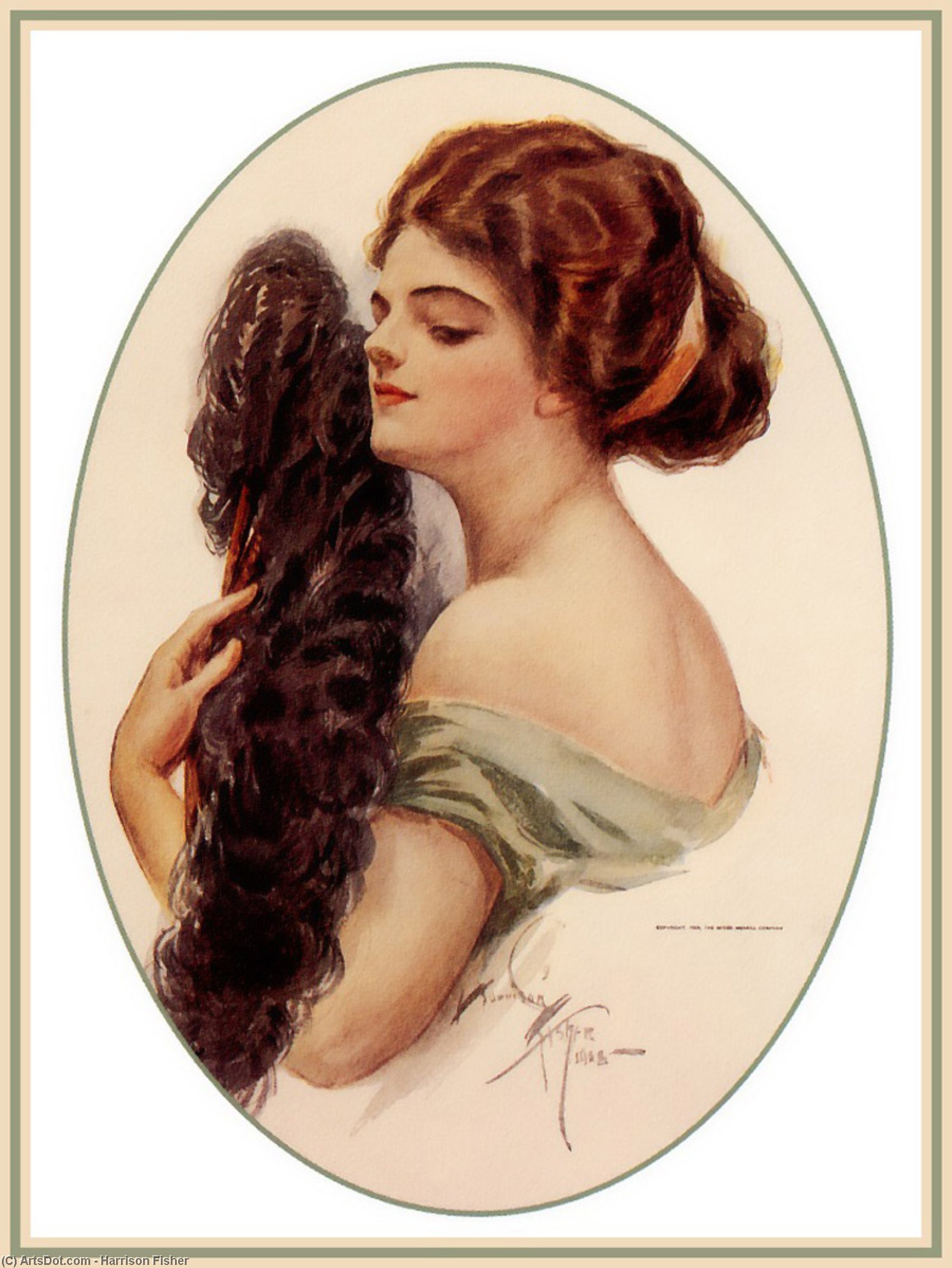
untitled (8684)
 Read More
Hand Made Oil Reproduction
Hand-painted oil on canvas in your size and frame, made to order by our artists.




































Pick from our preset sizes that match the artwork's original proportions.

You may enter your own dimensions to fit a specific frame or space. If your selected size does not match the original image's proportions, we will either crop the artwork or extend the painting with additional hand-painted elements. A digital mockup will be sent for your approval before production begins.
Please note that the on-screen preview does not reflect the actual cropping or extension. Only the mockup will accurately show the final composition.
While custom sizes are available, we recommend selecting a dimension from the predefined list to preserve the original proportions.
After order, OriginalUniqueArt.com team will email client for instructions and provide a mockup preview
Worldwide Delivery () in 3/4 weeks instead of standard 5 weeks. (23 July). No compromise on quality.

Free Worldwide Express Shipping

High-Quality Linen Canvas

Full Shipping Insurance

Customs Tax Refund Guarantee

True Color Matching Guarantee

60-Day Return Policy (Defects Only)

100% Money-Back Guarantee

Bulk Discount Offer
 Glass option is only available in size under 110 CM

untitled (8684)
Reproduction Medium
Reproduction Size
-


Total Price
-
Artist Biography
The Alluring World of Harrison Fisher: Chronicler of American Beauty
Harrison Fisher, a name that resonates with the golden age of American illustration, emerged as a pivotal figure in shaping the nation’s visual culture during the early 20th century. Born in Brooklyn, New York, around 1875 or 1877 – records vary slightly – Fisher inherited an artistic lineage from his father, Felix Xavier Fisher, and grandfather, Hugo Antoine Fisher, both artists of Bohemian descent. This familial encouragement nurtured a talent that blossomed early, leading him to begin drawing at a young age. The family’s relocation to Alameda, California in 1887 proved formative, immersing the young artist in a vibrant landscape that would later influence his aesthetic sensibilities. Formal training followed at the Mark Hopkins Institute of Art in San Francisco under the tutelage of Amédée Joullin, solidifying his technical skills and artistic vision. This period laid the groundwork for a career that would soon captivate the nation with its depictions of feminine grace and modern womanhood. He wasn’t merely replicating beauty; he was interpreting an evolving ideal, one that reflected the shifting social landscape of America.From Newspaper Sketches to National Recognition
Fisher's professional journey began in the bustling world of newspaper illustration, contributing sketches and decorative work to publications like the *San Francisco Call* and the *San Francisco Examiner*. This early experience honed his ability to capture fleeting moments and translate them into compelling visuals. A return to New York City in 1898 marked a turning point, propelling him into the heart of the magazine illustration scene. He quickly gained recognition at *Puck*, a prominent humor magazine, before securing commissions from leading publications such as *The Saturday Evening Post*, *The Woman’s Home Companion*, *Life*, *Collier’s Weekly*, and *The Ladies’ Home Journal*. However, it was his long-standing association with *Cosmopolitan* that truly cemented his fame. For over two decades, Fisher graced the magazine's cover with over 300 illustrations, becoming inextricably linked to its identity and defining its visual style. This consistent presence wasn’t simply about providing artwork; it was about crafting a recognizable brand, an image of sophisticated modernity that *Cosmopolitan* actively cultivated through his work. He understood how to visually communicate aspiration and allure, making him an invaluable asset to the magazine's success.The "Fisher Girl" and the Evolution of an Ideal
It was through his depictions of women that Harrison Fisher achieved lasting renown, giving rise to the term “Fisher Girls.” These illustrations weren’t merely portraits; they were embodiments of a new American ideal. While drawing inspiration from Charles Dana Gibson’s iconic “Gibson Girls,” Fisher carved out his own distinct style. His women possessed an undeniable elegance and sophistication, yet they also radiated independence, intelligence, and a modern sensibility. They were often depicted in fashionable attire, particularly elaborate hats that became a signature element of his work. Fisher's artistic technique, characterized by delicate watercolor washes, soft hues, and graceful poses, contributed to the ethereal quality of these images. He didn’t simply portray beauty; he captured a spirit – a sense of vitality and self-assurance that resonated with a changing society. The “Fisher Girl” represented a departure from earlier, more demure representations of women in art, reflecting a broader cultural shift towards greater female empowerment. These were not passive beauties, but active participants in the modern world.A Lasting Legacy: Defining an Era
Harrison Fisher’s impact extended beyond the realm of illustration; he became a cultural touchstone, defining American beauty standards during the first quarter of the 20th century. His work reflected and shaped societal attitudes toward women, contributing to evolving perceptions of their roles and aspirations. A fascinating anecdote reveals another facet of his influence: Fisher served as a jury member for *Motion Picture Classic* magazine’s “Fame and Fortune” contest in 1921-1922, playing a pivotal role in the discovery of Clara Bow, who would become one of Hollywood's first major sex symbols. Despite his prolific output and widespread acclaim, Fisher remained a bachelor throughout his life, dedicating himself wholeheartedly to his art. He passed away in New York City on January 19, 1934, leaving behind a legacy that continues to inspire and captivate audiences today. His illustrations remain testaments to an era of artistic innovation and enduring beauty, solidifying his place as one of America’s most celebrated illustrators. His work serves not just as art, but as a window into the aspirations and ideals of a nation in transition.Influences and Techniques
Fisher's style was a synthesis of various influences. The Art Nouveau movement, with its emphasis on flowing lines and organic forms, is evident in many of his compositions. He also drew inspiration from Japanese woodblock prints, particularly their use of flat planes of color and elegant simplicity. However, Fisher wasn’t merely imitating these styles; he was adapting them to create something uniquely American. His technique involved a masterful command of watercolor, allowing him to achieve delicate gradations of tone and luminous effects. He often began with a detailed pencil sketch, then layered washes of color over the top, building up depth and texture gradually.- His use of light was particularly noteworthy, creating a sense of atmosphere and highlighting the beauty of his subjects.
- He also paid close attention to detail, meticulously rendering fabrics, jewelry, and hairstyles with remarkable precision.

Harrison Fisher
1877 - 1934 , United States of America
Quick Facts
- Artistic Movement Or Style: Golden Age Illustration
- Artists Or Movements Influenced By This Artist:
- Clara Bow
- American Beauty standards
- Artists Who Influenced This Artist: ['Charles Dana Gibson']
- Date Of Birth: 1875 or 1877
- Date Of Death: 1934
- Full Name: Harrison Fisher
- Nationality: American
- Notable Artworks:
- Untitled (4554)
- Untitled (3074)
- Untitled (6874)
- Place Of Birth: Brooklyn, USA