

 Preview
 Send
Send Share
Share
 Details

 Download
 Similars
 X-Ray
X-Ray Diaporama
Landscape
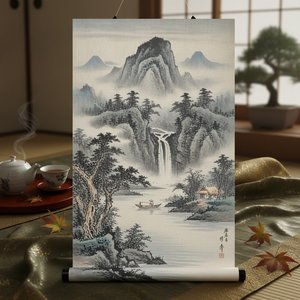
 Shui-mo (Japanese Landscape)
 601
601 32.0cm x 50.0cm
 Read More
Giclée / Art Print
Museum-quality giclée or canvas print with fast production and flexible finish options. ( Buy Hand Made Painting Buy Image)




































Pick from our preset sizes that match the artwork's original proportions.

You may enter your own dimensions to fit a specific frame or space. If your selected size does not match the original image's proportions, we will either crop the artwork or extend the image with a mirrored or solid-fill edge. A digital mockup will be sent for your approval before production begins.
Please note that the on-screen preview does not reflect the actual cropping or extension. Only the mockup will accurately show the final composition.
While custom sizes are available, we recommend selecting a dimension from the predefined list to preserve the original proportions.
Worldwide Delivery () in 2 weeks instead of standard 4/5 weeks. (22 August)

Free Worldwide Express Shipping

High-Quality Linen Canvas

Full Shipping Insurance

Customs Tax Refund Guarantee

True Color Matching Guarantee

60-Day Return Policy (Defects Only)

100% Money-Back Guarantee

Bulk Discount Offer
 Glass option is only available in size under 110 CM

Landscape
Giclée / Art Print
Reproduction Size
-


Total Price
$ 81
Artist Biography
Hara Naoharu: A Pioneer of Monochrome Landscape Painting
Hara Naoharu (1547 – 1618), born in Saga, Japan, stands as a pivotal figure in the history of Japanese art, particularly renowned for his masterful execution of suiboku-ga—water-ink monochrome paintings—during the Momoyama period. He was the second son of Hara Naoe, lord of Nogomi Castle in Hizen Province, establishing him within a noble lineage deeply intertwined with the artistic patronage of the era. His artistic journey began under the tutelage of Sesshu Sesshū (1428–1506), arguably the most influential painter of his time, whose austere style profoundly shaped Naoharu’s approach to composition and tonal gradation—a hallmark of the Unkoku School he founded.- Early Life & Training: Naoharu's formative years were marked by exposure to the refined artistic environment fostered by his father’s castle, where he honed his skills alongside other prominent artists. Sesshu’s teachings instilled in him a dedication to capturing the essence of nature through subtle variations in ink tone—a technique prioritizing observation and conveying mood rather than detailed representation.
- The Unkoku School: Following Sesshu's influence, Naoharu established the Unkoku School (無垢流), which distinguished itself from the prevailing Kanō school’s emphasis on elaborate ornamentation. Instead, Unkoku painters favored simplicity and restraint, focusing on conveying profound spiritual contemplation through landscapes imbued with atmospheric depth and luminosity. This stylistic preference reflected a broader cultural shift towards Zen Buddhism during the Momoyama period.
- Notable Works: Among his celebrated pieces are screens depicting scenes from Buddhist legends, showcasing Naoharu’s ability to integrate narrative elements with artistic subtlety. These works exemplify the Unkoku School's commitment to conveying spiritual contemplation through carefully crafted landscapes.

hara naoharu
1547 - 1618 , Japan
Quick Facts
- Artistic Movement Or Style: Suiboku-ga (Water-Ink Painting)
- Artists Or Movements Influenced By This Artist: kanō school
- Artists Who Influenced This Artist: sesshū
- Date Of Birth: 1547
- Full Name: Hara Naoharu
- Nationality: Japanese
- Notable Artworks: ['Landscape']
- Place Of Birth: Saga, Japan
Related Articles

Hokusai's Masterpieces: 25 Iconic Prints & Paintings for Art Lovers | OriginalUniqueArt
Journey through Katsushika Hokusai’s 25 most iconic artworks, including *The Great Wave*. Explore the ukiyo-e master's history, style & timeless Japanese woodblock prints. Find museum-quality reproductions for your home at OriginalUniqueArt.com.
Serenity on Canvas: A Guide to the Timeless Beauty of Japanese Landscape Painting
Discover the serene beauty of Japanese landscape painting. From Hokusai's iconic woodblock prints to meditative sumi-e ink washes, explore a visual journey through the 'floating world' and learn how to bring this timeless Zen aesthetic into your modern home decor.

Romantic Landscapes: 10 Masterpieces for Your Home | OriginalUniqueArt
Journey through 10 Romantic landscape masterpieces by Friedrich, Turner & Cole. Explore emotional art, sublime nature scenes & iconic 19th-century paintings. Find museum-quality reproductions for your home at OriginalUniqueArt.com – discover the full collection online!

Zen on Canvas: The Timeless Beauty and Spiritual Depth of Japanese Landscape Painting
Explore the profound serenity of Japanese landscape painting. From Hokusai's waves to Zen-inspired ink washes, discover the history, technique, and spiritual depth of Ukiyo-e masters in this expert art historical guide for collectors and enthusiasts.

Evocations of Place: A Historical Journey Through Landscape Art
Explore the rich history of landscape art with OriginalUniqueArt. Discover renowned artists, movements like Impressionism & Romanticism, and expert guidance for collecting timeless pieces. Find your perfect serene escape today!


