Preview
 Send
Send Share
Share
 Details

 Download
 Similars
 X-Ray
X-Ray Diaporama
 Stats
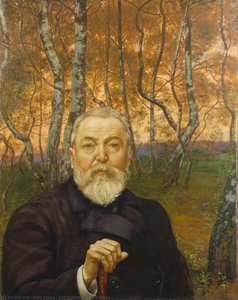
StatsSelf-Portrait in a Birch Grove
 Oil On Canvas
- WallArt
- Romantic Landscape Painting
 1899
1899- 19th Century
 76.0 x 94.0 cm
 Städel Museum
 Read More
Giclée / Art Print
Museum-quality giclée or canvas print with fast production and flexible finish options. ( Buy Hand Made Painting Switch to Digital Image)




P118B $10

P118H $10

P118W $10

P438Z $10

P508JH $12

P508YH $12

P805H $10

P805Z $10

P919BZ $10

P919G $10

P919XJ $10

P959ZH $10

P968JZ $12

W106C $8

W218G $10

W218JH $8

W218Y $10

W307PJ $10

W316G $10

W316PJ $8

W316Y $10

W398PJ $8

W4111J $10

W500HY $15

W500JH $15

W692G $12

W849H $8

W940BG $15

W953PJ $8




Pick from our preset sizes that match the artwork's original proportions.

You may enter your own dimensions to fit a specific frame or space. If your selected size does not match the original image's proportions, we will either crop the artwork or extend the image with a mirrored or solid-fill edge. A digital mockup will be sent for your approval before production begins.
Please note that the on-screen preview does not reflect the actual cropping or extension. Only the mockup will accurately show the final composition.
While custom sizes are available, we recommend selecting a dimension from the predefined list to preserve the original proportions.
Worldwide Delivery () in 2 weeks instead of standard 4/5 weeks. (18 September)

Free Worldwide Express Shipping

High-Quality Linen Canvas

Full Shipping Insurance

Customs Tax Refund Guarantee

True Color Matching Guarantee

100-Day Return Policy (Defects Only)

100% Money-Back Guarantee

Bulk Discount Offer
 Glass option is only available in size under 110 CM

Self-Portrait in a Birch Grove
Giclée / Art Print
Reproduction Size
-


Total Price
$ 81
A Serene Encounter with the Soul of Germany
In the quietude of a sun-dappled grove, Hans Thoma invites us into a moment of profound stillness. His 1899 masterpiece, Self-Portrait in a Birch Grove, is far more than a mere recording of a face; it is an evocative window into the heart of German Romanticism. As we gaze upon the artist, standing with hands clasponed behind him amidst the slender, white trunks of the birch trees, we feel an immediate sense of connection to the natural world. Thoma’s gaze, directed outward toward the viewer, suggests a man caught in deep contemplation, bridging the gap between his internal reflections and the vibrant, living landscape that surrounds him.
The painting serves as a breathtaking testament to the late Romantic movement, an era that sought refuge in emotion and imagination as a response to the encroaching shadows of industrialization. Through this work, Thoma celebrates the enduring harmony of the rural idyll. The birch grove itself is steeped in symbolic resonance; in German folklore, these trees are emblems of purity, resilience, and rebirth. Their upward reach mirrors the artist's own spiritual aspirations, while the subtle presence of other figures wandering in the background reminds us that even in solitary reflection, we remain inextricably linked to our community and heritage.
Mastery of Light and Impressionistic Grace
Technically, the work is a triumph of light and texture. Thoma masterfully blends the meticulous precision of his early training with the burgeoning influences of Impressionism. He employs a delicate, luminous brushwork that captures the way sunlight filters through the canopy, creating a dancing pattern of dappled light across the forest floor and the artist's attire. This interplay of light and shadow imbues the scene with a warmth that feels almost tactile, as if one could feel the gentle summer breeze moving through the leaves.
The color palette is a sophisticated study in subtlety. By favoring muted tones—soft greens, earthy browns, and brilliant whites—Thoma achieves an atmosphere of understated grandeur. There are no jarring pigments here to disrupt the peace; instead, every hue works in concert to build a sense of atmospheric depth. For the discerning collector or interior designer, this painting offers a unique versatility. Its tranquil energy makes it a perfect centerpiece for a space dedicated to relaxation, such as a library or a master suite, providing a sophisticated focal point that commands attention through grace rather than noise.
An Emotional Legacy for the Modern Home
To stand before Self-Portrait in a Birch Grove is to experience a wave of nostalgia for a simpler, more harmonious time. The emotional impact of the piece lies in its ability to transport the viewer away from the anxieties of modern life and into a realm of quietude and peace. It is an invitation to slow down, to breathe, and to find beauty in the subtle rhythms of nature.
For those seeking to curate a collection of high-quality reproductions, this work stands as an essential acquisition. It brings with it not just the prestige of Hans Thoma’s historical significance, but also a palpable sense of serenity that can transform the character of any room. Whether placed in a contemporary setting to provide a soft, organic contrast or in a more traditional gallery-style arrangement, this painting remains a timeless symbol of the enduring bond between the human spirit and the natural world.
Artist Biography
The Soul of the Black Forest: The Life and Vision of Hans Thoma
Hans Thoma stands as a singular figure in German art history, renowned for his evocative landscapes and portraits that capture the spirit of the Black Forest region—a place deeply ingrained within his artistic vision. Born in Bernau bei Berlin in 1839, he embarked on an artistic journey marked by unwavering devotion to his homeland’s traditions and folklore. His life was a delicate balance between meticulous observation and a profound sense of Romantic idealism, creating a body of work that feels both grounded in the earth and elevated by a dreamlike quality.
Thoma's formative years were shaped by the simple rhythms of rural life; his father’s trade as a clockmaker instilled in him a precision and an extraordinary attention to detail that would later permeate every brushstroke. In 1859, he enrolled at the Karlsruhe Academy, where he was mentored by masters such as Johann Wilhelm Schirmer and Ludwig Des Coulbres. This period established his foundational mastery of landscape painting techniques. While his subsequent travels through Düsseldorf, Paris, Italy, Munich, and Frankfurt exposed him to a whirlwind of diverse artistic currents, these international encounters only served to solidify his commitment to capturing the essence of German rural life and the timeless beauty of nature.
A Tapestry of Influence and Technique
Thoma’s distinctive style defies easy categorization, yet it possesses unmistakable affinities with the Pre-Raphaelite movement. Much like the works of Dante Gabriel Rossetti or John Everett Millais, Thoma prioritized capturing atmospheric conditions and conveying deep emotion through subtle tonal variations and luminous color palettes. His fascination with the minute details of the natural world—the texture of a leaf, the light filtering through a canopy, or the quiet presence of grazing cows—reflects a dedication to realism that is frequently tempered by an imaginative, almost mystical vision.
The lineage of German masters also played a pivotal role in shaping his aesthetic. The works of Albrecht Dürer and Lucas Cranach the Elder served as profound influences, informing his compositional choices and his ability to render precise outlines and careful shading. This blend of classical precision and Romantic sentiment allowed him to create scenes that felt both historically rooted and emotionally immediate. Whether through a black and white drawing like his Youthful Self Portrait or a vibrant, color-drenched landscape such as Autumn Tree in front of Wiesental, Thoma’s technical prowess remained centered on the pursuit of truth within nature.
Legacy and Artistic Significance
Throughout his career, Thoma achieved a level of recognition that placed him at the heart of the German art scene. His ability to evoke serenity through lush greenery and fluffy skies—as seen in works like Landscape With Cloud—demonstrates an almost Impressionistic sensitivity to light and air. He did not merely paint scenery; he painted the atmosphere of a culture and a landscape, turning the Black Forest into a symbol of enduring peace and pastoral beauty.
The historical significance of Hans Thoma lies in his ability to bridge the gap between the rigorous academic traditions of the 19th century and the burgeoning emotionality of modern art. His achievements include:
- Mastery of Landscape: Creating a definitive visual language for the German countryside that blended realism with Romanticism.
- Technical Versatility: Moving seamlessly between precise, detailed drawings and atmospheric, painterly landscapes.
- Cultural Preservation: Documenting the folklore, traditions, and natural splendor of the Black Forest region during a period of rapid industrial change.
Today, Thoma’s work continues to resonate with viewers who seek solace in the idyllic and the eternal. His paintings remain windows into a world where nature and humanity exist in a harmonious, beautifully detailed dance.

Hans Thoma
1839 - 1924 , Germany
Quick Facts
- Artistic Movement Or Style: Pre-Raphaelite Style
- Artists Or Movements Influenced By This Artist: ['Walter Conz']
- Artists Who Influenced This Artist:
- Albrecht Dürer
- Lucas Cranach the Elder
- Date Of Birth: October 2, 1839
- Date Of Death: 1924
- Full Name: Hans Thoma
- Nationality: German
- Notable Artworks:
- Youthful Self Portrait
- Wondrous Birds
- The Oed, Holzhausenpark In Frankfurt
- Place Of Birth: Bernau bei Berlin, Germany
Related Articles

Romantic Landscapes: 10 Masterpieces for Your Home | OriginalUniqueArt
Journey through 10 Romantic landscape masterpieces by Friedrich, Turner & Cole. Explore emotional art, sublime nature scenes & iconic 19th-century paintings. Find museum-quality reproductions for your home at OriginalUniqueArt.com – discover the full collection online!

The Sublime and the Picturesque: Exploring Emotion & Nature in Romantic Landscape Painting
Explore the emotional power of Romantic landscape painting! Discover the sublime & picturesque traditions, key artists like Friedrich & Cole, and find your perfect artwork at OriginalUniqueArt.
The Sublime and the Picturesque: Exploring Emotion & Nature in Romantic Landscape Painting
Explore the emotional power of Romantic landscape painting! Discover the sublime & picturesque aesthetics, key artists like Friedrich & Cole, and lasting influence on art history. Find your perfect piece at OriginalUniqueArt.

Evocations of Place: A Historical Journey Through Landscape Art
Explore the rich history of landscape art with OriginalUniqueArt. Discover renowned artists, movements like Impressionism & Romanticism, and expert guidance for collecting timeless pieces. Find your perfect serene escape today!

John Constable's Masterpieces: Explore 25 Iconic Landscapes for Your Home
Journey through John Constable's 25 most celebrated landscapes. Explore Romanticism, Dedham Vale & his masterful use of light in iconic paintings like 'Hay Wain'. Find museum-quality art reproductions and elevate your home decor on OriginalUniqueArt.com.