
 Preview
 Send
Send Share
Share
 Details
 Guide
Guide

 Download
 Similars
 X-Ray
X-Ray Diaporama
 Q&A
Q&A Stats
StatsDie Falknerin


 Read More
Giclée / Art Print
Museum-quality giclée or canvas print with fast production and flexible finish options. ( Buy Hand Made Painting Switch to Digital Image)




P118B $10

P118H $10

P118W $10

P438Z $10

P508JH $12

P508YH $12

P805H $10

P805Z $10

P919BZ $10

P919G $10

P919XJ $10

P959ZH $10

P968JZ $12

W106C $8

W218G $10

W218JH $8

W218Y $10

W307PJ $10

W316G $10

W316PJ $8

W316Y $10

W398PJ $8

W4111J $10

W500HY $15

W500JH $15

W692G $12

W849H $8

W940BG $15

W953PJ $8




Pick from our preset sizes that match the artwork's original proportions.

Type the width and the height you need, to fit your frame or your wall. A print can only be cut, never made bigger than the picture, so a size with a different shape loses a part of the image. We send you a digital mockup to approve before we print anything. The picture shown on this page does not show the real cut — only the mockup does.
Worldwide Delivery () in 2 weeks instead of standard 4/5 weeks. (6 November)

Free Worldwide Express Shipping

High-Quality Linen Canvas

Full Shipping Insurance

Customs Tax Refund Guarantee

True Color Matching Guarantee

100-Day Return Policy (Defects Only)

100% Money-Back Guarantee

Bulk Discount Offer
 Glass option is only available in size under 110 CM

Die Falknerin
Giclée / Art Print
Reproduction Size
-


Total Price
$ 81
Hans Makart: A Visionary Painter Shaping Viennese Aesthetic
Hans Makart (1840-1884), born in Salzburg, Austria, stands as one of the most influential figures within Austrian art history. Though initially hampered by difficulties mastering draughtsmanship at the Vienna Academy – a setback that prompted his departure – Makart swiftly established himself as a champion of color and imagination, forging an artistic style dubbed “Makartstil” that would profoundly impact subsequent generations of artists.
His formative years were marked by exposure to Salzburg’s aristocratic milieu and instilled within him a deep appreciation for grandeur and theatricality. However, it was his relocation to Munich in 1861 where he truly blossomed under the tutelage of Karl Theodor von Piloty, honing his skills and refining his distinctive approach to painting. This mentorship cemented Makartstil – characterized by luminous palettes, dramatic compositions, and a masterful manipulation of light – as his signature aesthetic.
Makart’s artistic explorations extended beyond Munich's borders. Journeys to London, Paris, and Rome immersed him in the burgeoning European art movements of Impressionism and Symbolism, fostering an intellectual curiosity that fueled his creative endeavors. These experiences instilled a sensitivity to visual storytelling and contributed significantly to his ability to convey complex emotions through meticulously crafted imagery.
Die Falknerin: A Study in Power and Mysticism
"Die Falknerin" ("The Falconer"), completed in 1880, exemplifies Makartstil’s core principles. The painting depicts a woman holding aloft a wolf's head – a potent symbol of primal instinct and untamed wilderness – against a backdrop of richly textured drapery and an ethereal sky.
Makart employed oil paints on canvas with exceptional detail, utilizing glazing techniques to achieve unparalleled luminosity and depth. His meticulous brushwork captures the contours of the woman’s form and the wolf's head with remarkable precision, conveying both physicality and psychological intensity. The artist skillfully utilizes chiaroscuro – dramatic contrasts between light and shadow – to heighten the emotional impact of the scene.
Beyond its technical prowess, “Die Falknerin” resonates with symbolic significance. The falcon represents dominion and vigilance, mirroring the woman’s commanding gaze and unwavering resolve. Simultaneously, the wolf embodies untamed forces—challenges to be confronted—suggesting a narrative of courage and resilience. The inclusion of two apples – positioned strategically at the bottom left and top right – adds an element of enigmatic beauty and reinforces the painting's overarching theme of fertility and transformation.
Historical Context & Influence
Makartstil emerged during Vienna’s “Golden Age,” a period characterized by artistic innovation, intellectual ferment, and aristocratic patronage. Influenced by Romanticism and Symbolism, Makart’s work anticipated the stylistic developments championed by Gustav Klimt and Emil Nolde, establishing him as a precursor to Viennese Secession.
His bold use of color and dramatic compositions challenged conventional artistic norms, paving the way for new expressive possibilities. Makart's legacy continues to inspire artists today who seek to convey profound emotions through visually arresting imagery—a testament to his enduring contribution to European art history.
Questions & Answers
Is "Die Falknerin" free of copyright?
Regarding copyright, "Die Falknerin" is in the public domain - its copyright has expired.
Can I examine "Die Falknerin" in more detail?
The X-Ray view of "Die Falknerin" by Hans Makart is on the artwork's X-Ray page: an interactive examination of the image through eleven optical layers.
What medium is "Die Falknerin" by Hans Makart executed in?
The medium of "Die Falknerin" by Hans Makart is acrylic on canvas. Reproductions aim to render the appearance of this technique.
Artist Biography
Hans Makart: A Life in Opulence and Influence
- Born: May 28, 1840, Salzburg, Austria
- Died: October 3, 1884, Vienna, Austria
- Nationality: Austrian
- Movement: Academic Art, Makartstil
Early Life and Training
- Hans Makart's artistic journey began in Salzburg, where he was born into a family with connections to the Habsburg court. Initially showing promise, he enrolled at the Vienna Academy between 1850 and 1851. However, his struggles with draughtsmanship led to his departure from the academy.
- Recognizing his passion for color, Makart studied under Karl Theodor von Piloty in Munich from 1861 to 1865. This period was crucial in shaping his artistic style and developing his distinctive use of vibrant hues.
- Further travels to London, Paris, and Rome broadened his exposure to European art movements and techniques, enriching his artistic perspective.
Artistic Style and Major Works
- Makartstil: Makart's signature style, known as "Makartstil," was characterized by opulent decoration, vibrant colors, and a theatrical flair. It significantly influenced the visual arts in Austria-Hungary and beyond.
- Early Recognition: His early works like Lavoisier in Prison demonstrated his emerging sense of color, while The Knight and the Water Nymphs showcased his decorative talents.
- Rise to Fame: Paintings such as Modern Amoretti and The Plague in Florence solidified his reputation as a leading artist. The purchase of Romeo and Juliet by the Austrian Emperor for the Vienna Museum further cemented his status.
- Notable Works:
- The Entrance of Emperor Charles V into Antwerp in 1520
- Modern Amoretti
- The Plague in Florence
- Romeo and Juliet
Influence, Legacy, and the Makart Parade
- Influences: Makart drew inspiration from Karl Theodor von Piloty, European art movements (including Symbolism and Art Nouveau), and masters like Peter Paul Rubens.
- Social Figure: His luxurious studio in Vienna became a prominent social hub, attracting royalty, politicians, artists, and writers.
- The Makart Parade: A defining moment in his career was the design of the pageant for the silver wedding anniversary of Emperor Franz Joseph I and Empress Elisabeth of Bavaria (Sisi) in 1879. This elaborate spectacle, known as the "Makart Parade," showcased his talent for costume and set design and captivated the public.
- Professor at the Vienna Academy: In 1879, Makart was appointed a professor at the Vienna Academy, solidifying his position within the artistic establishment.
- Influence on Klimt: He profoundly influenced Gustav Klimt, who would later become a leading figure in the Vienna Secession movement and Art Nouveau.
Later Life and Historical Significance
- Makart's untimely death in 1884 at the age of 44 marked the end of an era. His extensive collection of antiques and art was auctioned off, dispersing his legacy across various collections.
- Despite criticisms from some academic circles regarding historical accuracy, Makart’s impact on Viennese culture and artistic trends remains undeniable. He embodied a period of opulent grandeur and aesthetic innovation.
- His work continues to be appreciated for its vibrant colors, decorative richness, and the unique atmosphere he created, solidifying his place as a significant figure in 19th-century Austrian art.

Hans Makart
1840 - 1884 , Austria
Quick Facts
- Full Name: Hans Makart
- Nationality: Austrian
- Date Of Birth: 1840
- Date Of Death: 1884
- Place Of Birth: Salzburg, Austria
- Notable Artworks:
- Lavoisier in Prison
- Modern Amoretti
- The Plague in Florence
- Romeo and Juliet
- Artistic Movement Or Style: Academic history painting
- Artists Who Influenced This Artist:
- Karl Theodor von Piloty
- Johann Fischbach
- Artists Or Movements Influenced By This Artist:
- Gustav Klimt
- Art Nouveau
Related Articles
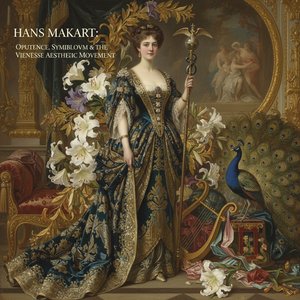
Hans Makart: Opulence, Symbolism & the Viennese Aesthetic Movement
Explore the opulent world of Hans Makart, a pivotal figure in Austrian art history. Discover his influence on Klimt & the Vienna Secession, signature style, and investment potential. Expert insights for collectors.
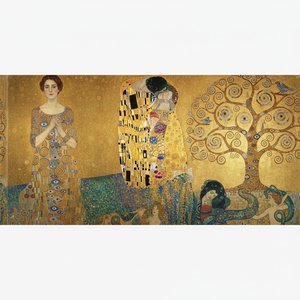
Golden Masterpieces: The Top 25 Greatest Artworks by Gustav Klimt
Explore 25 iconic Gustav Klimt masterpieces from the Golden Phase. Discover museum-quality art on OriginalUniqueArt.com.

The Vienna Secession: A Golden Revolution of Modernism and the Legacy of Gustav Klimt
Explore the profound impact of the Vienna Secession movement. Discover how visionaries like Gustav Klimt revolutionized modern art through symbolism, gold leaf, and the concept of Gesamtkunstwerk in this expert-led historical guide.

The Vienna Secession: A Rebellion of Form & Spirit in Fin-de-Siècle Art
Discover the revolutionary Vienna Secession art movement! Explore Klimt, Olbrich & more. Learn about its history, characteristics & lasting influence on modern art. High-quality reproductions available.

Hans Holbein the Younger: A Renaissance Portraitist's Mastery of Realism & Psychological Insight
Explore the life & art of Hans Holbein the Younger, a Renaissance master renowned for his strikingly realistic portraits and psychological insight. Discover iconic works like 'The Ambassadors' and delve into his lasting legacy.


