Preview
 Send
Send Share
Share
 Details
 Guide
Guide

 Download
 Similars
 X-Ray
X-Ray Diaporama
 Q&A
Q&A Stats
StatsThe Stream at Brème


 Read More
Giclée / Art Print
Museum-quality giclée or canvas print with fast production and flexible finish options. ( Buy Hand Made Painting Switch to Digital Image)




P118B $10

P118H $10

P118W $10

P438Z $10

P508JH $12

P508YH $12

P805H $10

P805Z $10

P919BZ $10

P919G $10

P919XJ $10

P959ZH $10

P968JZ $12

W106C $8

W218G $10

W218JH $8

W218Y $10

W307PJ $10

W316G $10

W316PJ $8

W316Y $10

W398PJ $8

W4111J $10

W500HY $15

W500JH $15

W692G $12

W849H $8

W940BG $15

W953PJ $8




Pick from our preset sizes that match the artwork's original proportions.

Type the width and the height you need, to fit your frame or your wall. A print can only be cut, never made bigger than the picture, so a size with a different shape loses a part of the image. We send you a digital mockup to approve before we print anything. The picture shown on this page does not show the real cut — only the mockup does.
Worldwide Delivery () in 2 weeks instead of standard 4/5 weeks. (5 November)

Free Worldwide Express Shipping

High-Quality Linen Canvas

Full Shipping Insurance

Customs Tax Refund Guarantee

True Color Matching Guarantee

100-Day Return Policy (Defects Only)

100% Money-Back Guarantee

Bulk Discount Offer
 Glass option is only available in size under 110 CM

The Stream at Brème
Giclée / Art Print
Reproduction Size
-


Total Price
$ 81
A Sanctuary of Realism: The Essence of The Stream at Brème
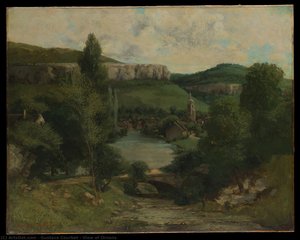
In the heart of the French landscape, where the rugged beauty of nature meets the unyielding gaze of the artist, lies Gustave Courbet’s The Stream at Brème. This masterpiece, emerging from the mid-1860s, serves as a profound window into the soul of the Realist movement. The painting captures a serene, secluded corner of the world near Ornans, where a gentle stream meanders through a dense, verdant forest. It is not merely a landscape; it is an intimate encounter with the tangible reality of the earth. Through his brush, Courbet invites us into a space of quietude, where the lush foliage and heavy rocks create a sense of enclosure and secret vitality, reminiscent of the hidden glades that defined his most cherished motifs.
The atmosphere of the work is one of profound tranquility, yet beneath this stillness lies a dynamic energy. The artist masterfully employs light to breathe life into the scene, allowing soft rays to filter from the upper left, casting gentle shadows that dance across the mossy stones and rippling water. This interplay of light and shadow does more than create depth; it evokes a sense of time passing within a moment of eternal peace. For the collector or the admirer of fine art, the painting offers a meditative escape, a way to bring the restorative power of an unspoiled natural world into any interior space.
Technique and the Texture of Truth
What distinguishes The Stream at Brème from the idealized landscapes of the Romantic era is Courbet’s uncompromising approach to technique. Eschewing the polished, smooth finishes favored by the academic tradition, Courbet utilizes a vigorous palette and broken brushstrokes to build a palpable sense of texture. His use of thick paint application—a signature impasto style—allows the viewer to feel the weight of the rocks and the dampness of the forest floor. The foliage is not merely painted; it is constructed through a complex network of touches, scumbles, and strokes that mimic the organic chaos of nature.
This tactile approach serves a higher purpose: the pursuit of truth. By emphasizing the materiality of the paint itself, Courbet mirrors the rugged materiality of the landscape he depicts. The water in the stream reflects the surrounding greenery with subtle ripples, suggesting a slow, rhythmic current that embodies continuity and fluidity. For interior designers seeking to add character and depth to a room, a high-quality reproduction of this work provides a sophisticated focal point, offering a rich tapestry of color and texture that commands attention through its sheer authenticity and raw, painterly invention.
A Legacy of Observation and Emotion
Historically, The Stream at Brème stands as a defiant statement against the artificiality of contemporary art. Rooted in the philosophy of personal observation, the work reflects Courbet’s belief that an artist should only paint what they can truly see and feel. This dedication to the real—the unembellished, the raw, and the honest—paved the way for the Impressionist revolution. The painting carries a symbolic weight, where the stream acts as a metaphor for the fleeting beauty of life, captured and preserved through the artist's courageous assertion of reality.
To possess or display a reproduction of this work is to engage with a piece of art history that celebrates the dignity of the natural world. It evokes feelings of contemplation and a deep, soulful appreciation for the earth's quiet grandeur. Whether viewed as a study in light or a monument to the Realist spirit, The Stream at Brème remains an enduring inspiration, promising a sense of freshness and spontaneity that continues to resonate with the modern eye.
Questions & Answers
Is there a factsheet about "The Stream at Brème" by Gustave Courbet for students?
The guide to "The Stream at Brème" is the artwork's Guide page - a printable factsheet showing the artwork with its caption, credit line and identity table (artist, dates, medium, original size, collection).
How many people view "The Stream at Brème"?
Statistics about "The Stream at Brème" by Gustave Courbet are on the artwork's Stats page: monthly visits of the artwork, visits of the artist's works, and country and language breakdowns of recent visitors.
What is a reproduction of "The Stream at Brème" by Gustave Courbet recommended for?
The recommended use of a print of "The Stream at Brème" is accent.
Artist Biography
A Rebel’s Brush: The Life and Legacy of Gustave Courbet
Born in the quiet village of Ornans, France, in 1819, Jean Désiré Gustave Courbet emerged as a defiant force against the established artistic norms of his time. His story isn't simply one of paint and canvas; it’s a narrative woven with threads of social commentary, political conviction, and an unwavering commitment to portraying the world exactly as he saw it – unidealized, raw, and profoundly real. Growing up in a relatively prosperous bourgeois family, Courbet received encouragement from his mother to pursue his artistic inclinations, a nurturing that would ultimately fuel a revolution in the art world. His formal training began at the École des Beaux-Arts in Paris in 1839, but he quickly found himself chafing against the academic conventions and Romantic idealism prevalent there. While acknowledging influences like Eugène Delacroix and Théodore Géricault, Courbet forged his own path, one that prioritized observation over imagination and truth over tradition.The Birth of Realism: Challenging Artistic Conventions
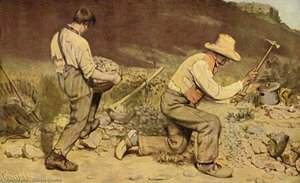
Courbet’s artistic development was marked by a deliberate rejection of the prevailing aesthetic standards. He wasn't interested in mythological narratives or heroic allegories; his gaze was fixed on the everyday lives of ordinary people, particularly those engaged in labor and rural existence. This commitment to depicting the world without embellishment – what would become known as Realism – initially met with scorn and derision from critics accustomed to more polished and idealized representations. Early works explored landscapes and portraits, but soon shifted towards scenes of working-class life, rendered on a monumental scale traditionally reserved for historical or religious paintings. This deliberate choice wasn’t merely stylistic; it was a statement about the inherent dignity and importance of these often-overlooked subjects. The Stone Breakers, completed in 1849 but tragically destroyed during World War II, exemplified this approach – a stark depiction of two laborers toiling away, their faces obscured by exhaustion and hardship. This painting, along with others like A Burial at Ornans (1850), challenged the very definition of what constituted “worthy” subject matter for high art.Major Works and Artistic Philosophy
A Burial at Ornans, a colossal canvas depicting a provincial funeral, caused an uproar when it was exhibited in 1850-51. Its sheer size – typically reserved for grand historical paintings – combined with its unflinching realism and lack of emotional idealization shocked audiences. Courbet didn’t portray the mourners as noble or grief-stricken figures; he presented them as ordinary people, their faces etched with a mixture of sorrow, boredom, and resignation. This honesty was revolutionary. His artistic philosophy extended beyond subject matter to encompass technique. He favored a direct, impasto style – applying paint thickly onto the canvas – that emphasized the materiality of the medium itself. The Painter’s Studio (1855), an allegorical work reflecting his artistic beliefs and engagement with contemporary social issues, further solidified his reputation as a provocative and independent artist. His participation in the Salon des Refusés in 1863 – an exhibition of works rejected by the official Salon – cemented his status as a rebel and champion of artistic freedom. Even landscapes like View in the Forest of Fontainebleau (1855) were imbued with a sense of realism, capturing the natural beauty of the forest without romanticizing it.Legacy and Historical Significance
Gustave Courbet’s influence on subsequent art movements is undeniable. While he drew inspiration from earlier masters like Caravaggio for their dramatic realism and use of light and shadow, his impact extended far beyond mere imitation. He profoundly influenced the Impressionists and Post-Impressionists by liberating them from the constraints of traditional representation, encouraging them to explore new ways of seeing and depicting the world. His emphasis on social commentary paved the way for later socially engaged artists who used their work as a platform for political activism. Courbet wasn’t just a painter; he was a vocal advocate for artistic freedom and political change, actively participating in the tumultuous events of his time, including the Paris Commune of 1871 – an involvement that led to a period of exile in Switzerland. He died in 1877, leaving behind a body of work that continues to inspire and provoke audiences today.- Pioneer of Realism
- Challenged academic conventions
- Influenced Impressionism & Post-Impressionism
- Advocate for artistic freedom

Gustave Courbet
1819 - 1877 , France
Related Articles

Mastering the English Landscape: The Top 25 John Constable Artworks
Experience the soul of English landscapes through John Constable's top 25 works. Explore the full collection online at OriginalUniqueArt.com.

Nature’s Sanctuary: Curating Enchanting Forest Artworks to Transform Your Home into a Serene Woodland Retreat
Transform your home into a serene woodland retreat with enchanting forest artworks. Discover museum-quality oil reproductions and custom landscape commissions designed to bring the peaceful beauty of nature indoors.
Verdant Visions: Exploring the Symbolism & Aesthetic Impact of Green in Art History
Explore the rich history & symbolism of green in art! Discover iconic paintings, techniques, and how to bring verdant harmony into your home with OriginalUniqueArt's expert guide.
Serene Visions: Exploring Themes of Tranquility in Art History & Contemporary Practice
Explore the history of serene landscape art & discover artists who evoke tranquility. Find the perfect calming artwork for your home with expert guidance from OriginalUniqueArt.
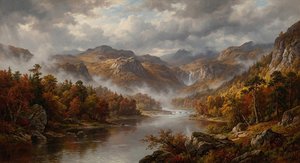
Hudson River School: 10 Masterpieces That Capture America's Wild Beauty | OriginalUniqueArt
Journey through America's breathtaking landscapes with our guide to the Top 10 Hudson River School masterpieces. Explore Thomas Cole, Frederic Church & more! Find museum-quality art reproductions and elevate your home decor at OriginalUniqueArt.com.