
 Preview
 Send
Send Share
Share
 Details
 Guide
Guide

 Download
 Similars
 X-Ray
X-Ray Diaporama
 Q&A
Q&A Stats
StatsCircassian Soldier

- 59.0 x 42.0 cm


 Read More
Giclée / Art Print
Museum-quality giclée or canvas print with fast production and flexible finish options. ( Buy Hand Made Painting Switch to Digital Image)




P118B $10

P118H $10

P118W $10

P438Z $10

P508JH $12

P508YH $12

P805H $10

P805Z $10

P919BZ $10

P919G $10

P919XJ $10

P959ZH $10

P968JZ $12

W106C $8

W218G $10

W218JH $8

W218Y $10

W307PJ $10

W316G $10

W316PJ $8

W316Y $10

W398PJ $8

W4111J $10

W500HY $15

W500JH $15

W692G $12

W849H $8

W940BG $15

W953PJ $8




Pick from our preset sizes that match the artwork's original proportions.

Type the width and the height you need, to fit your frame or your wall. A print can only be cut, never made bigger than the picture, so a size with a different shape loses a part of the image. We send you a digital mockup to approve before we print anything. The picture shown on this page does not show the real cut — only the mockup does.
Worldwide Delivery () in 2 weeks instead of standard 4/5 weeks. (10 November)

Free Worldwide Express Shipping

High-Quality Linen Canvas

Full Shipping Insurance

Customs Tax Refund Guarantee

True Color Matching Guarantee

100-Day Return Policy (Defects Only)

100% Money-Back Guarantee

Bulk Discount Offer
 Glass option is only available in size under 110 CM

Circassian Soldier
Giclée / Art Print
Reproduction Size
-


Total Price
$ 81
Grigory Gagarin’s “Circassian Soldier”: A Portrait of Resilience Amidst Caucasus History
Grigory Gagarin’s “Circassian Soldier,” completed in 1855, stands as a remarkable testament to both artistic skill and historical observation. More than just a depiction of a military figure, it embodies the spirit of the Caucasus region during its turbulent era—a period marked by shifting alliances, imperial ambitions, and cultural encounters that profoundly shaped Russian art.
- Subject Matter: The painting portrays a Circassian soldier in uniform, meticulously rendered with attention to detail. He is positioned on a dirt ground, conveying a sense of immediacy and realism—a characteristic of Gagarin’s style which sought to capture the essence of everyday life within the Caucasus landscape.
- Style & Technique: Gagarin employed guache paint on paper, utilizing a technique known for its luminosity and ability to achieve subtle tonal variations. The artist's brushstrokes are confident yet controlled, conveying a sense of precision and capturing the textures of fabric and skin with remarkable accuracy. Notably, Gagarin’s work echoes the influence of Karl Briullov, whose dramatic realism had already established itself as a dominant aesthetic within Russian painting.
- Historical Context: The artwork emerged during Mikhail Vorontsov’s governorship in Tiflis (modern Tbilisi), Georgia—a time when Russia was actively engaged in consolidating its control over the Caucasus. Gagarin's involvement in the restoration of frescoes at Betania Monastery reflects a broader cultural effort to revive Georgian heritage under imperial patronage. Duma’s observation about the theatre building mirroring Pompey Theatre underscores Gagarin’s artistic ambition and his desire to elevate Russian art to levels of grandeur and sophistication.
- Symbolism & Emotional Impact: Beyond its technical merits, “Circassian Soldier” carries symbolic weight. The soldier represents strength, duty, and resilience—qualities admired during a period of imperial expansion and cultural exchange. Gagarin’s depiction captures not only the physical appearance of the Circassian but also hints at his inner character, conveying an aura of dignity and contemplation.
- Provenance & Significance: Currently housed in the Art Palace of Georgia—Museum of Cultural History—the painting exemplifies the artistic legacy of the Caucasus region during the mid-19th century. Its inclusion within Gagarin’s “Sketches and Drawings of Caucasian People” highlights his dedication to documenting the diverse cultures and landscapes of Russia's frontier territories, cementing its place as a cornerstone of Georgian art history.
The painting’s enduring appeal lies in its ability to transport viewers back to a pivotal moment in Russian cultural history—a period defined by artistic innovation and engagement with the traditions of neighboring nations. Gagarin's masterful execution ensures that “Circassian Soldier” continues to inspire admiration for its beauty, precision, and profound reflection on human experience.
Questions & Answers
Does "Circassian Soldier" have an augmented reality preview?
"Circassian Soldier" by Grigory Grigorievich Gagarin can be previewed on your own wall with the artwork's AR Preview page, using augmented reality on a compatible device.
Can I preview "Circassian Soldier" by Grigory Grigorievich Gagarin before ordering?
The Preview page of "Circassian Soldier" lets you preview the artwork before ordering.
Are the colors of "Circassian Soldier" by Grigory Grigorievich Gagarin vivid or muted?
"Circassian Soldier" by Grigory Grigorievich Gagarin is recorded with a muted saturation and a monochromatic intensity.
Artist Biography
early life and education
grigory grigorievich gagarin, a russian painter, major general, and administrator, was born in 1810 in saint petersburg to the noble rurikid princely gagarin family. his father, prince grigory ivanovich gagarin, was a russian diplomat in france and later the ambassador to italy. despite not receiving a formal artistic education, grigory took private lessons from the renowned russian painter karl briullov.artistic career and notable works
grigory's artistic career is marked by his association with prominent literary figures of his time, including alexander pushkin and mikhail lermontov. he illustrated pushkin's works, such as "the queen of spades" and "the tale of tsar saltan." some of his notable paintings include:- caucasian prince (59 x 42 cm, art palace of georgia - museum of cultural history, tbilisi, georgia, paper) - a testament to his time in the caucasus region.
- circassian woman (59 x 42 cm, art palace of georgia - museum of cultural history, tbilisi, georgia, paper) - reflecting his interest in portraiture and regional studies.
- a prist from armenia (59 x 42 cm, art palace of georgia - museum of cultural history, tbilisi, georgia, paper) - demonstrating his fascination with the diverse cultures of the region.
- kurd from ararat (59 x 42 cm, art palace of georgia - museum of cultural history, tbilisi, georgia, paper) - showcasing his ability to capture the essence of different ethnic groups.
- georgian man (59 x 42 cm, art palace of georgia - museum of cultural history, tbilisi, georgia, paper) - a portrait that highlights his skill in capturing the subtleties of human expression.
military and diplomatic career
grigory served as a russian diplomat in paris, rome, and constantinople, with a notable stint in munich. his return to russia in 1839 marked a significant shift in his career, as he became involved in various administrative roles. key points: * born into the noble rurikid princely gagarin family * trained under karl briullov despite not receiving formal artistic education * associated with alexander pushkin and mikhail lermontov * served as a diplomat in several european cities * notable for his portraits of regional figures and groupslegacy
grigory grigorievich gagarin's legacy is multifaceted, reflecting both his artistic talents and his diplomatic service. his paintings offer a unique window into the cultures and landscapes he encountered during his lifetime.- view more of grigory grigorievich gagarin's artworks on OriginalUniqueArt.com
- explore the collections of the taganrog art museum, which features works by renowned russian artists, on OriginalUniqueArt.com
- discover more about russian art and its history on wikipedia: russian art
references:
- caucasian prince, OriginalUniqueArt.com
- russian art, wikipedia

Grigory Grigorievich Gagarin
1810 - 1893 , Russia
Quick Facts
- Full Name: Grigory Grigorievich Gagarin
- Nationality: Russian
- Date Of Birth: 1810
- Date Of Death: 1893
- Place Of Birth: Saint Petersburg, Russia
- Notable Artworks:
- Caucasian Prince
- Circassian Woman
- A Priest from Armenia
- Kurds from Ararat
- Georgian Man
- Artistic Movement Or Style: Romanticism
- Artists Who Influenced This Artist: ['Karl Briullov']
Related Articles
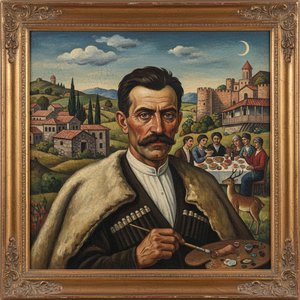
Niko Pirosmani: A Georgian Visionary – Life, Legacy, and the Poetics of Outsider Art
Discover the captivating life & art of Niko Pirosmani, Georgia’s celebrated primitivist painter. Explore his unique oilcloth paintings, lasting influence, and enduring legacy with OriginalUniqueArt.
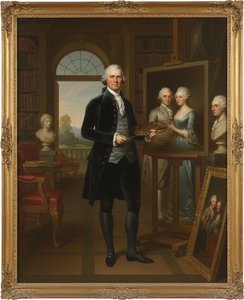
Sir Nathaniel Dance-Holland: Portraiture, Patronage & Georgian Identity
Explore the life & art of Sir Nathaniel Dance-Holland, a leading Georgian portraitist. Discover his masterful technique, influential patrons, and lasting impact on 18th-century British society. A guide for discerning collectors.
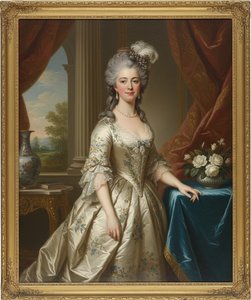
Francis Cotes: Elegance, Portraiture & the Rise of a Georgian Aesthetic
Explore the elegant world of Francis Cotes, pioneer of English pastel painting & celebrated Georgian portraitist. Discover his captivating portraits, artistic techniques, and lasting influence on 18th-century art.
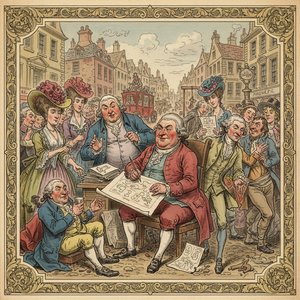
Thomas Rowlandson: Satire, Society & the Art of Caricature in Georgian England
Explore the witty world of Thomas Rowlandson, master Georgian caricaturist! Discover his satirical prints & insightful social commentary on 18th-century England. Learn about his life, techniques, and enduring influence.
John Hoppner: Portraiture, Patronage & British Identity in the Late Georgian Era
Explore the life & work of John Hoppner, a leading Georgian portraitist. Discover his vibrant style, influential patrons, and lasting impact on British art history. Expert insights for collectors.


