Switch to Print
 Read More







































 For artworks or reproductions larger than 105 cm (approximately 41 inches) on any side, the frame will be shipped as a kit, disassembled. This method ensures safe delivery and prevents damage during transport.


Gordon Parks’ Iconic Portrait of Muhammad Ali
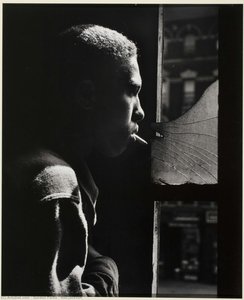
Gordon Parks' photograph of Muhammad Ali remains one of the most enduring images of the 1960s, encapsulating not just the boxer’s physical prowess but also his profound spirit of defiance and resilience. Taken in Miami Beach during a training session in June 1966, the image captures Ali at a moment of intense concentration—a bead of sweat glistening on his forehead as he stares directly into the camera with unwavering determination.
Parks’ decision to portray Ali in black and white was deliberate. He sought to strip away any distractions or embellishments that might overshadow the boxer's raw physicality and emotional intensity. The stark contrast between light and shadow—a hallmark of Parks’ photographic style—highlights the contours of Ali’s muscular physique, emphasizing his strength and projecting an aura of formidable presence.
- Technical Considerations: Parks utilized a gelatin silver print technique, known for its archival stability and tonal range. Careful attention was paid to exposure and printing processes to ensure that the photograph faithfully reproduced the scene as it unfolded.
- Composition & Perspective: The photographer employed a frontal perspective, placing Ali squarely in the frame—a bold choice that immediately establishes eye contact with the viewer and conveys a sense of immediacy. Lines are primarily defined by the musculature of Ali’s torso and face, creating a dynamic interplay between form and texture.
- Symbolism & Context: Parks' photograph emerged during a pivotal moment in American history—the Civil Rights Movement—and specifically addressed Muhammad Ali’s controversial stance against the Vietnam War and his affiliation with the Nation of Islam. The image symbolizes courage, conviction, and unwavering commitment to one’s beliefs amidst societal pressures.
Beyond its technical merits, “Muhammad Ali, Miami Beach, Florida” possesses a remarkable emotional resonance. Parks' masterful use of light and shadow evokes feelings of strength, vulnerability, and introspection—mirroring the complexities of Ali’s character and reflecting the broader anxieties surrounding identity and social justice during the era.
This photograph stands as a testament to Gordon Parks’ ability to transform ordinary moments into extraordinary images—capturing not just what was seen but also conveying the essence of human experience. It continues to inspire admiration for its artistic vision and serves as a powerful reminder of Ali's legacy as an athlete, activist, and cultural icon.
Questions & Answers
Where does "Muhammad Ali, Miami Beach, Florida" stand among Gordon Parks's recurring subjects?
Among Gordon Parks's recorded themes - key civil rights image, early social portraiture, documenting american life, documentary photography, social realism, civil rights movement, black power, athlete icon - "Muhammad Ali, Miami Beach, Florida" brings its own focus on muhammad ali, boxing, athlete, portraiture, sweat, determination, black & white, 1960s.
Is "Muhammad Ali, Miami Beach, Florida" by Gordon Parks among the sought-after Documentary Photography artworks?
"Muhammad Ali, Miami Beach, Florida" by Gordon Parks is classified as iconic and belongs to the Documentary Photography movement.
What print size of "Muhammad Ali, Miami Beach, Florida" by Gordon Parks fits the recommended room?
The recommended pairing for "Muhammad Ali, Miami Beach, Florida" by Gordon Parks: a large print in a living room.
More about this painting
 Preview
 Send
Send Share
Share
 Details
 Guide
Guide

 Download
 Similars
 X-Ray
X-Ray Diaporama
 Q&A
Q&A Stats
Stats