

 Preview
 Send
Send Share
Share
 Details
 Guide
Guide

 Download
 Similars
 X-Ray
X-Ray Diaporama
 Stats
StatsThe Flight into Egypt
 Oil On Panel
- Baroque
 1595
1595 47.0 x 34.0 cm
 Galleria Borghese
 Read More
Hand Made Oil Reproduction
Hand-painted oil on canvas in your size and frame, made to order by our artists. ( Switch to Print Switch to Digital Image)




P118B $10

P118H $10

P118W $10

P438Z $10

P508JH $12

P508YH $12

P805H $10

P805Z $10

P919BZ $10

P919G $10

P919XJ $10

P959ZH $10

P968JZ $12

W106C $8

W218G $10

W218JH $8

W218Y $10

W307PJ $10

W316G $10

W316PJ $8

W316Y $10

W398PJ $8

W4111J $10

W500HY $15

W500JH $15

W692G $12

W849H $8

W940BG $15

W953PJ $8




Pick from our preset sizes that match the artwork's original proportions.

You may enter your own dimensions to fit a specific frame or space. If your selected size does not match the original image's proportions, we will either crop the artwork or extend the painting with additional hand-painted elements. A digital mockup will be sent for your approval before production begins.
Please note that the on-screen preview does not reflect the actual cropping or extension. Only the mockup will accurately show the final composition.
While custom sizes are available, we recommend selecting a dimension from the predefined list to preserve the original proportions.
After order, OriginalUniqueArt.com team will email client for instructions and provide a mockup preview
Worldwide Delivery () in 3/4 weeks instead of standard 5 weeks. (28 September). No compromise on quality.

Free Worldwide Express Shipping

High-Quality Linen Canvas

Full Shipping Insurance

Customs Tax Refund Guarantee

True Color Matching Guarantee

100-Day Return Policy (Defects Only)

100% Money-Back Guarantee

Bulk Discount Offer
 Glass option is only available in size under 110 CM

The Flight into Egypt
Reproduction Medium
Reproduction Size
-


Total Price
$ 300
The Flight into Egypt by Giuseppe Cesari – A Baroque Narrative of Faith and Refuge
Giuseppe Cesari’s “The Flight into Egypt,” completed in 1595, is more than just a biblical scene; it's a meticulously crafted tableau brimming with symbolic depth and the palpable drama characteristic of the late Mannerist and early Baroque periods. Housed within the Galleria Borghese in Rome, this oil-on-panel work offers a rare glimpse into the artistic sensibilities of a master often overshadowed by his more celebrated contemporaries, yet undeniably possessing a profound understanding of light, composition, and emotional resonance.
The painting immediately draws the viewer into a world of heightened realism and carefully orchestrated movement. Cesari’s masterful use of chiaroscuro – the dramatic interplay of light and shadow – dominates the scene, lending it an almost theatrical quality. The figures are bathed in a warm, golden glow emanating from an unseen source, while the surrounding landscape is plunged into relative darkness, creating a powerful sense of depth and emphasizing the urgency of their flight. Notice how the artist subtly employs atmospheric perspective; distant trees recede into a hazy blue, further enhancing the illusion of space and conveying the vastness of the journey.
At the heart of the composition lies Mary, seated on a humble donkey, her posture radiating both vulnerability and unwavering faith. She cradles the infant Jesus with an expression of serene devotion, his face tilted upwards as if receiving guidance from above. Joseph, depicted as a strong and protective figure, guides their way, his hand outstretched to ensure their safety. The figures are not idealized; they possess a tangible humanity – Mary’s slightly furrowed brow, Joseph's weary but determined gaze – which imbues the scene with an immediate sense of connection. The detail in their clothing—Mary’s vibrant red dress contrasting sharply with the muted tones of the landscape—adds to the visual richness and reinforces the narrative’s central theme of refuge and protection.
A Mannerist Foundation, a Baroque Expression
Cesari's work firmly resides within the Mannerist tradition, a transitional period between the High Renaissance and the Baroque. While retaining elements of classical balance and proportion, Mannerism embraced exaggeration, stylized forms, and an intense emotionality – qualities that would be further amplified in the Baroque era. The elongated figures, the dramatic lighting, and the heightened sense of movement all reflect these influences. However, Cesari’s style is distinct from the more overtly theatrical works of artists like Bronzino or Parmigianino; there's a quiet dignity and emotional restraint that sets his work apart.
The painting’s landscape, painted with meticulous detail, isn’t merely a backdrop but an integral part of the narrative. It’s a stylized representation of the countryside, incorporating elements like a temple – likely referencing the Temple of the Sibyl at Tivoli, a frequent motif in Italian art – which symbolizes prophecy and divine guidance. The inclusion of a small bird soaring overhead adds to the sense of movement and urgency, suggesting that their journey is fraught with peril.
Symbolism and Narrative Resonance
“The Flight into Egypt” is rich in symbolic meaning. The flight itself represents not only Mary and Joseph’s escape from Herod's murderous intent but also a deeper allegory of the Holy Family’s rejection of worldly power and their embrace of spiritual truth. The donkey, a humble animal, symbolizes humility and service – qualities essential to the Christian narrative. The infant Jesus, bathed in light, embodies divine grace and salvation.
The painting's enduring appeal lies in its ability to evoke a profound sense of empathy and wonder. It’s a timeless depiction of faith, family, and the struggle for survival—themes that resonate deeply with viewers across cultures and generations. The scene captures a moment of intense vulnerability and unwavering hope, reminding us of the power of love and devotion in the face of adversity.
A Masterpiece for the Collector
Reproductions of “The Flight into Egypt” by Giuseppe Cesari offer an exceptional opportunity to bring this captivating artwork into your home or office. OriginalUniqueArt’s hand-painted reproductions faithfully capture the original's intricate details, vibrant colors, and dramatic lighting, ensuring that you own a piece of art history. Whether displayed in a grand salon or a cozy study, this painting will undoubtedly serve as a source of inspiration and contemplation for years to come.
For more information about Cesari’s life and work, and to explore other stunning reproductions available at OriginalUniqueArt.com, please visit the links provided below:
- The Flight into Egypt
- The Rest on the Flight into Egypt
- The Rest on the Flight into Egypt (Detail)
- Giuseppe Cesari
Explore further with these additional resources:
Artist Biography
Giuseppe Cesari: A Master of Mannerist Grandeur
Giuseppe Cesari, born in Arpino around 1568 and tragically passing away in Rome in 1640, remains a fascinating yet somewhat enigmatic figure within the rich tapestry of Italian art history. While not always celebrated with the fervent acclaim afforded to his contemporaries – particularly those associated with the High Renaissance or the Baroque – Cesari’s career spanned an extraordinary period, witnessing and actively participating in pivotal shifts within artistic style and patronage. His story is one interwoven with ambition, technical skill, and a persistent struggle to establish a lasting legacy amidst the brilliance of Rome's artistic scene. He was a key figure during the Mannerist period, a stylistic bridge between the classical ideals of the Renaissance and the dramatic innovations that would define the Baroque era. Cesari’s early life remains somewhat shrouded in mystery, though it is generally accepted he was born in Arpino, a small town nestled between Rome and Naples. His father, also named Giuseppe, was a painter, providing young Giuseppe with an initial grounding in artistic techniques. However, it was his relocation to Rome that truly shaped his career trajectory. The city, at the heart of papal patronage and a magnet for artists from across Italy and beyond, offered unparalleled opportunities – and fierce competition. He initially apprenticed under Benedetto Cesani, a painter known for his frescoes in the Vatican, before eventually finding himself associated with the renowned architect Carlo Maderno. This connection proved crucial, opening doors to significant commissions and introducing him to influential figures within the Roman art world.The Rise of a Court Painter
Cesari’s career truly ascended during the reign of Pope Clement VIII (1592-1605). He quickly established himself as a highly sought-after painter, securing prestigious commissions that cemented his reputation and brought him considerable wealth. His most celebrated achievement undoubtedly lies in his involvement with the decoration of St. Peter’s Basilica. Between 1603 and 1612, he was entrusted with designing the magnificent mosaics adorning the dome – a monumental undertaking that showcased his technical prowess and artistic ambition. These mosaics, depicting scenes from the life of Christ and the Virgin Mary, are considered among the finest examples of Mannerist mosaic art. Beyond St. Peter’s, Cesari received numerous other commissions, including frescoes for palaces, churches, and private residences throughout Rome. He was a prolific artist, producing a vast body of work that reflects his diverse range of skills and stylistic preferences.Style and Technique
Cesari's artistic style is often described as Mannerist, characterized by its elegance, refinement, and intricate detail. His compositions are typically balanced and symmetrical, reflecting the influence of artists like Giulio Romano and Pontormo. He employed a rich palette of colors, often utilizing gold leaf to create a sense of opulence and grandeur. While he demonstrated considerable skill in fresco painting – particularly evident in his work at St. Peter’s – he was equally adept at producing cabinet pictures (small-scale paintings intended for private display). These works frequently depicted religious or mythological subjects, executed with meticulous attention to detail and a distinctly Flemish influence. His style is often described as polished and somewhat mannered, lacking the raw emotional intensity of later Baroque artists like Caravaggio.Influences and Legacy
Cesari’s artistic development was undoubtedly shaped by his exposure to the diverse styles prevalent in Rome during his time. He absorbed influences from the High Renaissance masters – Raphael and Michelangelo – while also engaging with the more eccentric tendencies of Mannerism. His association with Carlo Maderno, a leading architect of the period, further broadened his artistic horizons, exposing him to innovative architectural concepts and design principles. Despite his considerable success, Cesari’s legacy remains somewhat ambiguous. While he enjoyed widespread popularity during his lifetime, his work is often viewed as technically proficient but lacking in originality or profound emotional depth. However, his contributions to the decoration of St. Peter's Basilica ensure that his name will forever be associated with one of the most iconic landmarks in Christendom.A Forgotten Master?
Giuseppe Cesari’s story serves as a poignant reminder of the challenges faced by artists navigating the complex and competitive world of Renaissance patronage. His career, marked by both triumph and obscurity, offers valuable insights into the dynamics of artistic production and reception during a pivotal period in European art history. Despite being overshadowed by more celebrated contemporaries, Cesari’s work continues to be studied and appreciated for its technical skill, elegant style, and significant contribution to the visual landscape of Rome. Further research and critical reassessment may yet reveal a deeper understanding of this often-overlooked master of Mannerist grandeur.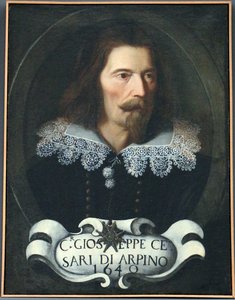
Giuseppe Cesari
1568 - 1640 , Italy
Quick Facts
- Artistic Movement Or Style: Mannerist
- Artists Or Movements Influenced By This Artist: ['Flemish Mannerism']
- Artists Who Influenced This Artist: ['Caravaggio']
- Date Of Birth: 1568
- Date Of Death: 1640
- Full Name: Giuseppe Cesari
- Nationality: Italian
- Notable Artworks: ["St. Peter's mosaics"]
- Place Of Birth: Arpino, Italy
Related Articles
Mannerism's Masters: 10 Artworks That Redefined Renaissance Style | OriginalUniqueArt
Explore 10 defining Mannerism masterpieces – from Pontormo to El Greco. Discover the stories behind these Renaissance paintings, their unique style & symbolism. Find museum-quality art reproductions at OriginalUniqueArt.com and elevate your home decor.

Elegance & Distortion: A Cultural Reflection on the Captivating World of Northern Mannerism
Embark on a cultural journey through Northern Mannerism. Discover how artists moved from Renaissance harmony to an era of elegant distortion, psychological depth, and exquisite tension in the 16th-century European art landscape.
Beyond Perfection: The Dramatic Elegance and Intellectual Tension of Renaissance Mannerism
Explore the captivating world of Renaissance Mannerism. Discover how artists moved beyond High Renaissance harmony into a realm of elegant distortion, psychological tension, and dramatic beauty that bridged the gap to the Baroque era.

Mannerism: Bridging Renaissance Harmony & Baroque Drama – A Study of Style & Affectation
Explore the fascinating world of Mannerism! Discover its key characteristics, pioneering artists like Pontormo & Bronzino, and its pivotal role in bridging Renaissance harmony to Baroque drama. A comprehensive guide for art enthusiasts.

Northern Mannerism: The Dramatic Evolution of European Art through Elegant Distortion and Tension
Explore the dramatic evolution of Northern Mannerism. Discover how 16th-century artists moved from Renaissance harmony to elegant distortion, tension, and complex symbolism in European art history.


