Preview
 Send
Send Share
Share
 Details

 Download
 Similars
 X-Ray
X-Ray Diaporama
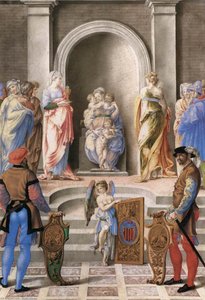
The Rape of Ganymede
 Ink On Paper
- WallArt
- Renaissance Drawing
 Renaissance
 192.0 x 260.0 cm
 Royal Collection
 Read More
Giclée / Art Print
Museum-quality giclée or canvas print with fast production and flexible finish options. ( Buy Hand Made Painting Buy Image)




P118B $10

P118H $10

P118W $10

P438Z $10

P508JH $12

P508YH $12

P805H $10

P805Z $10

P919BZ $10

P919G $10

P919XJ $10

P959ZH $10

P968JZ $12

W106C $8

W218G $10

W218JH $8

W218Y $10

W307PJ $10

W316G $10

W316PJ $8

W316Y $10

W398PJ $8

W4111J $10

W500HY $15

W500JH $15

W692G $12

W849H $8

W940BG $15

W953PJ $8




Pick from our preset sizes that match the artwork's original proportions.

You may enter your own dimensions to fit a specific frame or space. If your selected size does not match the original image's proportions, we will either crop the artwork or extend the image with a mirrored or solid-fill edge. A digital mockup will be sent for your approval before production begins.
Please note that the on-screen preview does not reflect the actual cropping or extension. Only the mockup will accurately show the final composition.
While custom sizes are available, we recommend selecting a dimension from the predefined list to preserve the original proportions.
Worldwide Delivery () in 2 weeks instead of standard 4/5 weeks. (22 August)

Free Worldwide Express Shipping

High-Quality Linen Canvas

Full Shipping Insurance

Customs Tax Refund Guarantee

True Color Matching Guarantee

60-Day Return Policy (Defects Only)

100% Money-Back Guarantee

Bulk Discount Offer
 Glass option is only available in size under 110 CM

The Rape of Ganymede
Giclée / Art Print
Reproduction Size
-


Total Price
$ 81
Collectible Description
A Testament to Renaissance Precision: Giulio Clovio’s “The Rape of Ganymede”
Giulio Clovio's "The Rape of Ganymede," executed around 1563, stands as a breathtaking achievement in High Renaissance drawing—a testament not only to artistic skill but also to the meticulous revival of classical ideals within European art. This monumental folio from the Farnese Hours manuscript resides within the Web Gallery of Art’s impressive collection, offering visitors an unparalleled opportunity to appreciate its beauty and delve into its rich historical significance. More than just a depiction of mythic narrative, it embodies Clovio's mastery of draughtsmanship and his unwavering commitment to elevating miniature painting to new heights.Composition and Technique: Mastering Line and Shadow
The drawing’s central focus is undeniably captivating: Zeus, transformed into an eagle, forcefully seizing Ganymede—the Trojan prince destined to become Apollo’s sacred messenger—from Mount Ida. Clovio employs a masterful technique of hatching and cross-hatching, painstakingly layering lines to achieve astonishing tonal variations. These delicate strokes create a palpable sense of depth and volume, convincingly conveying the muscular contours of Zeus's wings and the vulnerable posture of Ganymede. The diagonal arrangement of figures contributes to dynamism, mirroring the urgency of the abduction itself. Furthermore, Clovio’s use of contour lines delineates the forms with remarkable accuracy, reflecting the humanist influence prevalent during his time—a deliberate harkening back to the anatomical precision championed by Leonardo da Vinci and Michelangelo.Historical Context: Renaissance Revival and Mythological Inspiration
Clovio's work emerged from a fervent period of artistic renewal following the rediscovery of classical texts and sculptures. The Farnese Hours manuscript, commissioned by Cardinal Alessandro Farnese II Gonzaga, exemplifies this revival, aiming to recapture the grandeur and elegance of antiquity. The choice of Ganymede as subject matter is deliberate; Zeus’s abduction symbolizes divine desire and power—themes explored extensively in Greek mythology and subsequently adopted by Renaissance artists seeking moral instruction and aesthetic inspiration. Clovio's meticulous rendering aligns perfectly with the humanist ethos of his era, prioritizing observation and anatomical correctness alongside narrative storytelling.Symbolism: Vulnerability Amidst Divine Might
Beyond its technical brilliance, “The Rape of Ganymede” resonates deeply with symbolic meaning. Ganymede’s pose—clinging desperately to Zeus's wing—represents vulnerability confronted by overwhelming force. This juxtaposition underscores the precariousness of human existence against the backdrop of divine majesty and serves as a poignant reminder of mortality. The eagle itself embodies regal authority, mirroring Zeus’s dominion over Olympus and symbolizing divine providence. Clovio skillfully captures this duality, prompting contemplation on themes of grace, suffering, and transcendence—elements central to Renaissance spiritual thought.Emotional Impact: A Moment Frozen in Time
The drawing's subdued palette – predominantly grayscale – enhances its emotional impact. The absence of vibrant color focuses attention on the intricate details of form and texture, fostering a contemplative gaze. Clovio’s masterful shading creates an illusion of luminescence, subtly illuminating the figures and conveying a sense of drama without resorting to theatrical gestures. Viewing “The Rape of Ganymede” evokes feelings of awe mingled with compassion—a profound appreciation for artistic skill coupled with empathy for the victimized prince. It remains a timeless masterpiece, continuing to inspire admiration for its technical prowess and enduring symbolic resonance.Artist Biography
A Croatian Luminary of the Italian Renaissance
Giulio Clovio, born Juraj Julije Klović in 1498 amidst the rolling hills of Grižane, Croatia, stands as a pivotal figure bridging the late Gothic tradition of manuscript illumination with the burgeoning High Renaissance. Though his origins lay within the Kingdom of Croatia, it was in Italy that Clovio’s artistic genius truly blossomed, earning him renown as arguably the greatest illuminator of his era and the last significant master in a lineage stretching back centuries. His story is one of remarkable talent, astute patronage, and an unwavering dedication to transforming the miniature into a breathtakingly sophisticated art form.
The early years of Clovio’s life remain shrouded in some mystery. It's believed he may have received initial artistic training within monastic circles near Rijeka, but by the age of eighteen, his ambition led him to Italy. Entering the household of Cardinal Marino Grimani proved a turning point; here, under the cardinal’s guidance, Clovio honed his skills as a painter and began to develop the meticulous technique that would define his career. He absorbed influences from leading artists of the time—Giulio Romano and Girolamo dai Libri both played roles in shaping his style—but quickly forged his own path, demonstrating an exceptional aptitude for translating the grandeur of Renaissance painting onto a miniature scale.
The Art of Miniature: A Synthesis of Styles
Clovio’s artistry wasn't merely about replicating existing styles; it was about synthesizing them. He masterfully blended the delicate precision of Northern European illumination with the dynamic compositions and vibrant color palettes characteristic of Italian Renaissance masters like Raphael, Michelangelo, and Titian. This fusion is particularly evident in his illuminated manuscripts, where figures possess a sculptural quality, landscapes recede into atmospheric perspective, and every detail—from the folds of drapery to the glint of jewelry—is rendered with astonishing accuracy.
His work for Cardinal Domenico Grimani, including the exquisitely detailed commentary on St. Paul’s Epistle to the Romans (now housed in the Sir John Soane's Museum), showcased his burgeoning talent and secured his reputation. The miniatures within this manuscript are not simply illustrations; they are miniature paintings in their own right, brimming with narrative power and emotional depth. The conversion of Saint Paul is depicted with a dramatic intensity rarely seen in illuminated manuscripts.
Patronage, Travel, and Artistic Flourishing
Clovio’s career was inextricably linked to the powerful patrons who recognized his exceptional abilities. Following his time with the Grimani family, he served at the Hungarian court of King Louis II, creating works like “The Judgment of Paris” and “Lucretia.” The king's untimely death at the Battle of Mohács propelled Clovio back to Rome, where he continued to attract influential supporters.
His association with Cardinal Alessandro Farnese proved particularly fruitful. It was for Farnese that Clovio created his magnum opus: the Farnese Hours, a lavishly illuminated book of hours completed in 1546 after nine years of painstaking work. This masterpiece, now residing in the Morgan Library in New York, contains twenty-eight miniatures depicting scenes from both the Old and New Testaments, culminating in a spectacular double-page spread representing the Corpus Christi procession in Rome. The Farnese Hours is not only a testament to Clovio’s technical skill but also a reflection of his deep understanding of Renaissance iconography and theological themes.
A Legacy Illuminated
Clovio's influence extended beyond the realm of manuscript illumination. He was a respected figure in artistic circles, befriending artists like Pieter Bruegel the Elder—who even contributed a miniature to one of Clovio’s works—and El Greco, who painted several portraits of the master illuminator, placing him alongside Michelangelo, Raphael and Titian as his influences. These portraits serve as powerful visual statements about Clovio's standing within the artistic community.
Though he worked primarily in miniature, Clovio’s impact on Renaissance art was significant. He elevated the status of illumination from a craft to a fine art, demonstrating its potential for expressive power and technical virtuosity. His ability to capture the spirit of the High Renaissance within the confines of a small-scale format ensured his place as one of the most celebrated artists of his time—a Croatian luminary whose legacy continues to illuminate the world of art today.

Giulio Clovio
1498 - 1578 , Croatia
Quick Facts
- Artistic Movement Or Style: High Renaissance
- Artists Or Movements Influenced By This Artist: ['El Greco']
- Artists Who Influenced This Artist:
- Giulio Romano
- Girolamo dai Libri
- Date Of Birth: 1498
- Date Of Death: 1578
- Full Name: Giulio Clovio
- Nationality: Croatian-Italian
- Notable Artworks:
- Farnese Hours
- Towneley Lectionary
- Soane Manuscript
- Place Of Birth: Grižane, Croatia
Related Articles
Giclée Prints: Archival Quality & Aesthetic Nuances for the Discerning Collector
Explore the world of giclée prints with OriginalUniqueArt. Learn about archival quality, aesthetic nuances & investment potential. Expert guidance for discerning art collectors seeking museum-quality reproductions and lasting value.

The Enduring Legacy of Fine Art Prints: Technique, History & Aesthetic Impact
Explore the rich history & techniques of fine art prints. Discover investment potential, assess authenticity, and learn how to preserve your collection with expert guidance. Trusted insights for discerning collectors.

Echoes of Time: Exploring the Enduring Appeal & Historical Context of Vintage Art Prints
Explore the captivating world of vintage art prints! Discover their history, collecting tips & enduring appeal. Expert insights on chromolithography and building a legacy collection with OriginalUniqueArt.
The Enduring Legacy of Printmaking: Techniques, Themes & Artistic Innovation Across Centuries
Explore the rich history of printmaking with OriginalUniqueArt. Discover techniques from intaglio to lithography, learn about collecting valuable prints & find museum-quality reproductions. Expert insights for art enthusiasts and collectors.

Giclée Prints Explained: The Ultimate Guide to Museum-Quality Art Reproductions
Master the nuances of Giclée printing with our expert guide. Discover how pigment-based inks and museum-grade substrates create fade-resistant, high-fidelity art reproductions designed for discerning collectors seeking unparalleled quality and longevity.