Preview
 Send
Send Share
Share
 Details
 Guide
Guide

 Download
 Similars
 X-Ray
X-Ray Diaporama
 Stats
StatsPulpit


 Read More
Giclée / Art Print
Museum-quality giclée or canvas print with fast production and flexible finish options. ( Buy Hand Made Painting Switch to Digital Image)




































Pick from our preset sizes that match the artwork's original proportions.

Type the width and the height you need, to fit your frame or your wall. A print can only be cut, never made bigger than the picture, so a size with a different shape loses a part of the image. We send you a digital mockup to approve before we print anything. The picture shown on this page does not show the real cut — only the mockup does.
Worldwide Delivery () in 2 weeks instead of standard 4/5 weeks. (23 October)

Free Worldwide Express Shipping

High-Quality Linen Canvas

Full Shipping Insurance

Customs Tax Refund Guarantee

True Color Matching Guarantee

100-Day Return Policy (Defects Only)

100% Money-Back Guarantee

Bulk Discount Offer
 Glass option is only available in size under 110 CM

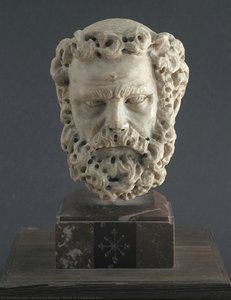
Pulpit
Giclée / Art Print
Reproduction Size
-


Total Price
$ 81
Artist Biography
The Genesis of a Masterpiece: Early Life and Apprenticeship
Giovanni Pisano emerged from the artistic crucible of Pisa, Italy, in 1248. His early life was steeped in the tradition of monumental craftsmanship, as he was the son of the renowned sculptor Nicola Pisano. It is within the very atmosphere of his father's workshop that Giovanni began to absorb the rigorous discipline and soaring ambition characteristic of the Italian Gothic style. These initial years were formative, a period where the echoes of established artistic genius guided his nascent talent. His early collaborations with Nicola on significant works, such as the pulpit in Siena Cathedral (1265–1268) and the fountain fontana maggiore in Perugia (completed 1278), reveal an undeniable mastery of form inherited from his father's hand. While these first pieces bear the unmistakable imprint of Nicola’s style, they serve as a vital prologue to the revolutionary artist Giovanni was destined to become.
A Departure into Innovation: The Shift in Style
The true blossoming of Giovanni Pisano’s individual genius is marked by a palpable shift away from the serene echoes of his father's work. A pivotal moment arrived with his commissions at Pisa Cathedral, where he sculpted the statues adorning the two rows of traceried gables at the baptistry between 1277 and 1284. These figures possess a newfound vivacity, an energy that signals his artistic emancipation. It was here that Giovanni began to weave together disparate threads of history: the soaring verticality of French Gothic architecture mingling with the robust, classical dignity drawn from ancient Roman art. This synthesis was not merely decorative; it represented a profound intellectual leap in sculptural representation.
Architectural Ambition and Civic Patronage
His ambition soon extended beyond mere sculpture to encompass the very structure of sacred spaces. Between 1287 and 1296, Giovanni Pisano was entrusted with the role of chief architect for Siena Cathedral. The facade stands as a monumental testament to his evolving vision—a breathtaking dialogue between Gothic elaboration and classical restraint. His ability to harmonize these seemingly disparate influences gave rise to an aesthetic that defined much of the subsequent Italian artistic trajectory. Later, when he returned to Pisa to begin work on the church of San Giovanni, and subsequently tackled the intricate pulpit at Sant' Andrea in Pistoia (a project initiated earlier), his hand remained decisive. The reliefs adorning this pulpit—depicting scenes from the Annunciation through to the Last Judgement—are masterful narratives carved with both technical brilliance and deep theological resonance.
Legacy: The First Modern Sculptor
Giovanni Pisano’s impact resonated so deeply that even his contemporaries recognized him as a pioneer. Henry Moore, in later times, bestowed upon him the title of "the first modern sculptor," an accolade that speaks volumes about his revolutionary spirit. His work did not simply decorate; it redefined the relationship between art, narrative, and human form. By confidently blending the soaring spirituality of Gothic design with the grounded musculature and idealized forms of Roman antiquity, Giovanni Pisano forged a visual language that bridged the medieval world toward the burgeoning Renaissance. His enduring legacy is one of dynamic transition—a master who guided Italian art from one era into the next.

Giovanni Pisano
1248 - 1318 , Italy
Quick Facts
- Full Name: Giovanni Pisano
- Nationality: Italian
- Date Of Birth: 1248
- Date Of Death: 1318
- Place Of Birth: Pisa, Italy
- Notable Artworks:
- Siena Cathedral statues
- Madonna with Child
- Artistic Movement Or Style: Gothic & Roman blend
- Artists Who Influenced This Artist: ['Nicola Pisano']