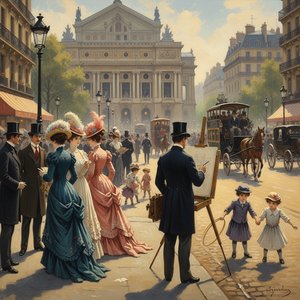
John Singer Sargent
Oil On Panel
Impressionism
1890
19th Century
36.0 x 28.0 cm
Hand Made Oil Reproduction
Hand-painted oil on canvas in your size and frame, made to order by our artists. ( Buy Print
Buy Image)
P118B $10
P118H $10
P118W $10
P438Z $10
P508JH $12
P508YH $12
P805H $10
P805Z $10
P919BZ $10
P919G $10
P919XJ $10
P959ZH $10
P968JZ $12
W106C $8
W218G $10
W218JH $8
W218Y $10
W307PJ $10
W316G $10
W316PJ $8
W316Y $10
W398PJ $8
W4111J $10
W500HY $15
W500JH $15
W692G $12
W849H $8
W940BG $15
W953PJ $8
Pick from our preset sizes that match the artwork's original proportions.
You may enter your own dimensions to fit a specific frame or space. If your selected size does not match the original image's proportions, we will either crop the artwork or extend the painting with additional hand-painted elements. A digital mockup will be sent for your approval before production begins.

Please note that the on-screen preview does not reflect the actual cropping or extension. Only the mockup will accurately show the final composition.
While custom sizes are available, we recommend selecting a dimension from the predefined list to preserve the original proportions.
After order, OriginalUniqueArt.com team will email client for instructions and provide a mockup preview
Worldwide Delivery () in 3/4 weeks instead of standard 5 weeks. (16 August). No compromise on quality.
Free Worldwide Express Shipping
High-Quality Linen Canvas
Full Shipping Insurance
Customs Tax Refund Guarantee
True Color Matching Guarantee
60-Day Return Policy (Defects Only)
100% Money-Back Guarantee
Bulk Discount Offer
John Singer Sargent
Reproduction Medium
Reproduction Size
-
Total Price
$ 300
Artwork Description
The Allure of Elegance: Capturing a Moment with Giovanni Boldini
To stand before this portrait is to step directly into the glittering salons of the late nineteenth century, an era defined by opulent fashion and breathtaking social dynamism. This work, attributed to the masterful hand of Giovanni Boldini, immediately arrests the viewer with its palpable sense of vivacity. It is more than a mere likeness; it is a carefully orchestrated tableau vivant, capturing not just the man in the suit, but the very spirit of refinement that permeated Parisian high society during the Belle Époque. The subject, poised and commanding, holds two pistols—an accoutrement that speaks equally to martial prowess and fashionable display, suggesting a life lived at the intersection of adventure and aristocracy.
Mastery of Brushwork: Boldini's Signature "Swish"
Technically, the painting is a testament to Boldini’s celebrated gift for capturing movement, earning him the moniker 'Master of Swish.' Observe how the fabric of the suit seems to ripple with implied motion, and how the gesture of the hands, cradling the pistols, possesses an effortless grace. While the subject commands attention through his direct gaze and impeccable attire, it is Boldini’s handling of paint that elevates the piece from portraiture to high art. The Impressionistic undercurrent, visible in the play of light across the dirt road and the background figures, suggests a spontaneity that belies the formality of the pose. This fluid technique allows the viewer's eye to wander, appreciating both the sharp focus on the central figure and the atmospheric depth provided by the surrounding activity.
Historical Echoes and Social Context
Dating from 1890, this painting situates itself within a period of immense cultural ferment. The background elements—the other figures engaged in various activities along what appears to be an unpaved thoroughfare—ground the portrait in a specific, bustling reality. Boldini excelled at placing his subjects within these rich social ecosystems. He was not merely documenting faces; he was chronicling a lifestyle. For the collector or designer, this piece offers more than decoration; it provides an immediate narrative anchor, evoking memories of grand gatherings and sophisticated leisure that remain timelessly appealing.
Symbolism of Poise and Power
The juxtaposition within the portrait is fascinating: the formal elegance suggested by the tailored suit contrasts subtly with the raw, earthy setting of the dirt road and the inherent symbolism of the pistols. These objects suggest a duality—the polished veneer of civilization balanced against an underlying readiness for action. The overall atmosphere is one of controlled power; the subject exudes confidence without arrogance. It speaks to a refined masculinity, a blend of gentlemanly charm and latent capability. To own this reproduction is to invite that same sense of sophisticated drama into your own space.
A Reproduction for Modern Adoration
For those seeking to replicate the breathtaking impact of an original masterwork, our hand-painted reproductions allow you to bring Boldini’s genius home. The careful attention paid to reproducing the luminosity and the signature fluidity of his brushstrokes ensures that this piece retains its emotional resonance. It serves beautifully as a focal point in a drawing-room or study, adding an undeniable layer of historical glamour and artistic depth to any interior design scheme.
Artist Biography
A Master of Swish: The Life and Art of Giovanni Boldini
Giovanni Boldini, a name synonymous with the elegance and allure of the Belle Époque, was an Italian artist who carved his niche in Parisian society as a celebrated portraitist. Born on December 31, 1842, in Ferrara, Italy, Boldini’s artistic journey began under the guidance of his father, a painter specializing in religious subjects. This early exposure instilled in him a foundational understanding of technique and composition, yet it was his move to Florence in 1862 that truly ignited his creative spirit. There, he encountered the Macchiaioli—a group of Italian realist painters who foreshadowed Impressionism with their emphasis on light, color, and spontaneous execution. This encounter proved pivotal, influencing Boldini’s landscapes with a newfound vibrancy and responsiveness to nature. However, it was in capturing the essence of his subjects through portraiture that he would ultimately achieve lasting renown.From Florence to Parisian Society
Boldini's artistic path led him first to London, where he quickly gained recognition for his portraits of prominent figures like Lady Holland and the Duchess of Westminster. This early success paved the way for his relocation to Paris in 1872—a city that would become both his home and his muse. In Paris, Boldini immersed himself in the artistic milieu, befriending Edgar Degas and navigating the complex social landscape of the French capital. He developed a distinctive style characterized by its fluidity, dynamism, and an almost theatrical flair. His brushstrokes were not merely descriptive; they seemed to capture movement, personality, and the very air surrounding his subjects. This unique approach earned him the moniker “Master of Swish” in 1933, a testament to the graceful energy that permeated his work. He became *the* portraitist for Parisian high society, immortalizing the glamorous lives of actresses, socialites, and members of the aristocracy.Technique and Influences
Boldini’s technique was as captivating as the personalities he portrayed. His canvases were often large in scale, allowing him to convey a sense of grandeur and presence. He employed a loose, expressive brushstroke, building up layers of color to create texture and depth. This approach, combined with his keen eye for detail and ability to capture fleeting expressions, resulted in portraits that were both strikingly realistic and imbued with an undeniable sense of style. While influenced by the Macchiaioli’s emphasis on light and spontaneity, Boldini also drew inspiration from artists like John Singer Sargent and Paul Helleu, whose own dynamic brushwork resonated with his artistic sensibilities. He wasn't simply replicating likenesses; he was creating impressions—evocative representations of character and social standing. His portraits weren’t just images; they were statements.Legacy and Rediscovery
Throughout his career, Boldini exhibited widely, including at the Venice Biennale in 1895, 1903, 1905, and 1912. He received the Légion d'honneur for his contributions to the arts, solidifying his position as a leading figure in the Parisian art world. However, towards the end of his life, Boldini’s popularity waned as artistic tastes shifted. He continued to paint, but his work fell somewhat into obscurity until recent decades have witnessed a remarkable resurgence of interest. The rediscovery of lost works, such as the captivating portrait of Marthe de Florian found hidden away in a Parisian apartment in 2010, has reignited appreciation for Boldini’s artistry and brought renewed attention to his significant contribution to Belle Époque art. The story surrounding this painting—a forgotten treasure unearthed after decades of seclusion—only adds to the mystique that surrounds both the artist and his subjects.A Lasting Impression
Giovanni Boldini passed away in Paris on January 11, 1931, leaving behind a legacy as one of the most fashionable and innovative portrait painters of his time. His work continues to inspire artists and art enthusiasts alike, offering a glimpse into a bygone era of elegance, sophistication, and artistic brilliance. He wasn’t merely documenting society; he was celebrating it—capturing its beauty, its energy, and its enduring allure on canvas. Boldini's portraits remain powerful testaments to his skill, his vision, and his ability to transform the act of painting into a captivating performance.- Boldini’s influence can be seen in contemporary portraiture.
- His work is featured in major museums worldwide.
- The rediscovery of lost works continues to fuel scholarly interest.
Giovanni Boldini
1842 - 1931 , Italy
Quick Facts
- Artistic Movement Or Style: Impressionism
- Artists Or Movements Influenced By This Artist: ['John Singer Sargent']
- Artists Who Influenced This Artist: ['Macchiaioli painters']
- Date Of Birth: December 31, 1842
- Date Of Death: July 11, 1931
- Full Name: Giovanni Boldini
- Nationality: Italian
- Notable Artworks:
- Countess de Rasty
- The Machine at Marly
- Place Of Birth: Ferrara, Italy

Glass option is only available in size under 110 CM