
 Send
Send Share
Share
 Details
 Guide
Guide

 Download
 Similars
 Diaporama
 Q&A
Q&A Stats
StatsCamera obscura


 Read More
Giclée / Art Print
Museum-quality giclée or canvas print with fast production and flexible finish options. ( Buy Hand Made Painting Switch to Digital Image)




































Pick from our preset sizes that match the artwork's original proportions.

Type the width and the height you need, to fit your frame or your wall. A print can only be cut, never made bigger than the picture, so a size with a different shape loses a part of the image. We send you a digital mockup to approve before we print anything. The picture shown on this page does not show the real cut — only the mockup does.
Worldwide Delivery () in 2 weeks instead of standard 4/5 weeks. (3 November)

Free Worldwide Express Shipping

High-Quality Linen Canvas

Full Shipping Insurance

Customs Tax Refund Guarantee

True Color Matching Guarantee

100-Day Return Policy (Defects Only)

100% Money-Back Guarantee

Bulk Discount Offer
 Glass option is only available in size under 110 CM

Camera obscura
Giclée / Art Print
Reproduction Size
-


Total Price
$ 81
Canaletto's Intimate Glimpse: The Camera Obscura
Giovanni Antonio Canal, better known as Canaletto, was a master of observation, a chronicler of Venice and its surrounding landscapes with an unparalleled eye for detail. This remarkable painting, depicting a camera obscura – a device he himself possessed and meticulously documented – offers a rare and intimate window into the artist’s creative process and the burgeoning science of optics in the early 18th century. The image, currently housed within the Museo Correr in Venice, isn't merely a representation of a scientific instrument; it’s a testament to Canaletto’s intellectual curiosity and his pioneering approach to landscape painting.
- The Mechanics of Vision: The camera obscura, essentially a darkened room with a pinhole lens, projected an inverted image of the outside world onto its walls. Canaletto's depiction captures this phenomenon precisely – a wooden box constructed with a glass front, meticulously arranged to capture and display this ethereal projection.
- A Tool for Observation: Canaletto utilized the camera obscura not just as a scientific curiosity but as an invaluable tool for his artistic practice. It allowed him to study light, shadow, perspective, and composition before committing them to canvas, resulting in the remarkably accurate and detailed renderings that define his style.
- Historical Context: Created around 1700, this painting reflects a period of intense scientific inquiry into optics and visual perception. The camera obscura was gaining popularity among artists and scientists alike, offering a new method for understanding and replicating the natural world.
Canaletto’s Topographical Style & Artistic Technique
Canaletto's artistic style is immediately recognizable – characterized by its meticulous detail, precise perspective, and atmospheric clarity. This particular depiction of the camera obscura exemplifies his mastery of topographical painting, a genre he essentially invented. The artist employed a technique of layering thin glazes of oil paint, building up color gradually to achieve remarkable luminosity and depth. Note the subtle gradations in tone, particularly within the wooden construction of the device itself, demonstrating Canaletto’s painstaking attention to texture and form. The inverted projection is rendered with astonishing accuracy, showcasing his keen observational skills and his ability to translate three-dimensional reality onto a two-dimensional surface.
- Oil on Panel: The artwork is executed in oil paint on a wooden panel, a common medium for Canaletto’s work during this period.
- Layered Glazes: The use of numerous thin layers of translucent paint creates a rich and luminous effect, characteristic of Canaletto's style.
- Precise Perspective: The meticulous rendering of perspective demonstrates Canaletto’s mastery of linear perspective, a key element in creating the illusion of depth and realism.
Symbolism & Emotional Resonance
Beyond its technical brilliance, the painting carries symbolic weight. It represents not just a scientific instrument but also the artist's relentless pursuit of knowledge and his desire to capture the beauty and complexity of the world around him. The camera obscura itself can be interpreted as a metaphor for artistic creation – a device that transforms an external reality into an internal representation. The image evokes a sense of quiet contemplation, inviting viewers to consider the fundamental principles of vision and the creative process. Canaletto’s work consistently conveys a feeling of serene order and intellectual curiosity, reflecting his deep connection to Venice and its rich cultural heritage.
A Legacy of Observation
This reproduction offers an exceptional opportunity to own a piece of art history – a tangible link to one of the most celebrated topographical painters of all time. Whether you are an art collector seeking to expand your collection, an interior designer looking for a unique and historically significant artwork to adorn your space, or simply someone captivated by Canaletto’s genius, this painting provides a profound connection to the artist's world and his remarkable ability to capture the essence of Venice.
Questions & Answers
What use is suggested for "Camera obscura" by Canaletto?
The suggested use for "Camera obscura" by Canaletto is accent. It can serve other purposes as well.
Does the copyright of "Camera obscura" by Canaletto allow reproductions?
The original "Camera obscura" is at the Museo Correr, and the work is in the public domain - its copyright has expired.
Who created "Camera obscura" and what style is it in?
Behind "Camera obscura" stand Canaletto and the Baroque topographical painting movement.
Artist Biography
early life and training
giovanni antonio canal, commonly known as canaletto, was born on october 18, 1697, in venice, italy. he was the son of bernardo canal, a painter of theatrical scene settings, and artemisia barbieri. canaletto's early training in painting began with his father, who taught him the fundamentals of art.
the making of a master
in 1718, canaletto traveled to rome, where he worked on producing scenery for two operas by alessandro scarlatti. this experience had a profound impact on his development as an artist. upon returning to venice, canaletto began painting in his signature topographical style, which would eventually make him famous.
notable works and collaborations
some of canaletto's most notable works include:
- the stonemason's yard (c. 1725), a masterpiece showcasing his early skill.
- regatta on the grand canal, a vivid depiction of venetian public ceremonies.
- eton college (1746-1756), a testament to his influence in england. collaboration with his nephew bellotto, who became an accomplished artist in his own right.
artistic style and technique
canaletto's use of precise perspective and meticulous preparatory drawings has led some experts to believe he may have employed a camera obscura for topographical accuracy. however, his primary concern remained the compositional design, ensuring his works were not merely accurate recordings but also visually stunning.
legacy and collections
canaletto's work can be found in various museums, including the national gallery, london, which showcases his influence on 18th-century art. his legacy extends to the numerous artists he inspired, cementing his place as a master of venetian landscapes.
- view canaletto's works at https://OriginalUniqueArt.com/@/giovanni-antonio-canal
- explore more about canaletto on wikipedia
- discover the beauty of venetian art at the palumbo-fossati collection (venice, italy)
key dates
- october 18, 1697: born in venice, italy
- 1718: traveled to rome
- 1725: painted the stonemason's yard
- 1746-1756: visited england, painting notable works like eton college
- april 19, 1768: passed away in venice, italy
remember to explore the world of art at https://OriginalUniqueArt.com for more biographies and artworks.
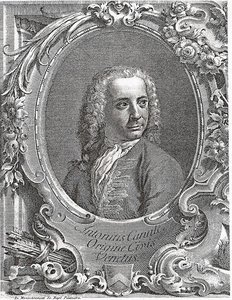
Canaletto
1697 - 1768 , Italy
Quick Facts
- Full Name: Giovanni Antonio Canal
- Nationality: Italian
- Date Of Birth: 1697
- Date Of Death: 1768
- Place Of Birth: Venice, Italy
- Notable Artworks:
- The Stonemason's Yard
- Regatta on the Grand Canal
- Eton College
- Artistic Movement Or Style: Vedute Venice
- Artists Who Influenced This Artist: ['Giovanni Paolo Pannini']
- Artists Or Movements Influenced By This Artist: ['Tintoretto']
Related Articles

Pietro Longhi's Venetian Scenes: A Study of Rococo Society & Domestic Life
Explore the captivating world of Pietro Longhi's Venetian scenes! Discover insightful analysis of his Rococo masterpieces & social commentary on 18th-century life. Learn about this 'Venetian Hogarth' and his lasting artistic legacy.

Baroque Drama: Bringing Opulence & Emotion into Contemporary Interiors
Explore the opulent world of Baroque interior design! Discover key elements, modern applications & how to bring dramatic elegance into your home with OriginalUniqueArt.com's authentic reproductions.

The Dramatic Flourish: Exploring the Baroque Movement's Enduring Legacy in Art History
Explore the dramatic world of Baroque art! Discover iconic artists like Caravaggio & Rubens, defining techniques, and its lasting impact on art history. Expert insights for collectors & enthusiasts at OriginalUniqueArt.

Master of Drama: The 25 Greatest Artworks by Jacopo Tintoretto
Explore 25 dramatic Tintoretto masterpieces of the Venetian Renaissance. Discover museum-quality art on OriginalUniqueArt.com.

Giovanni Antonio Canal (Canaletto): A Venetian Master of Light, Space & Societal Observation
Explore the life & art of Giovanni Antonio Canal (Canaletto), a Venetian master renowned for his breathtaking cityscapes. Discover his techniques, legacy, and captivating depictions of 18th-century Venice & London.


